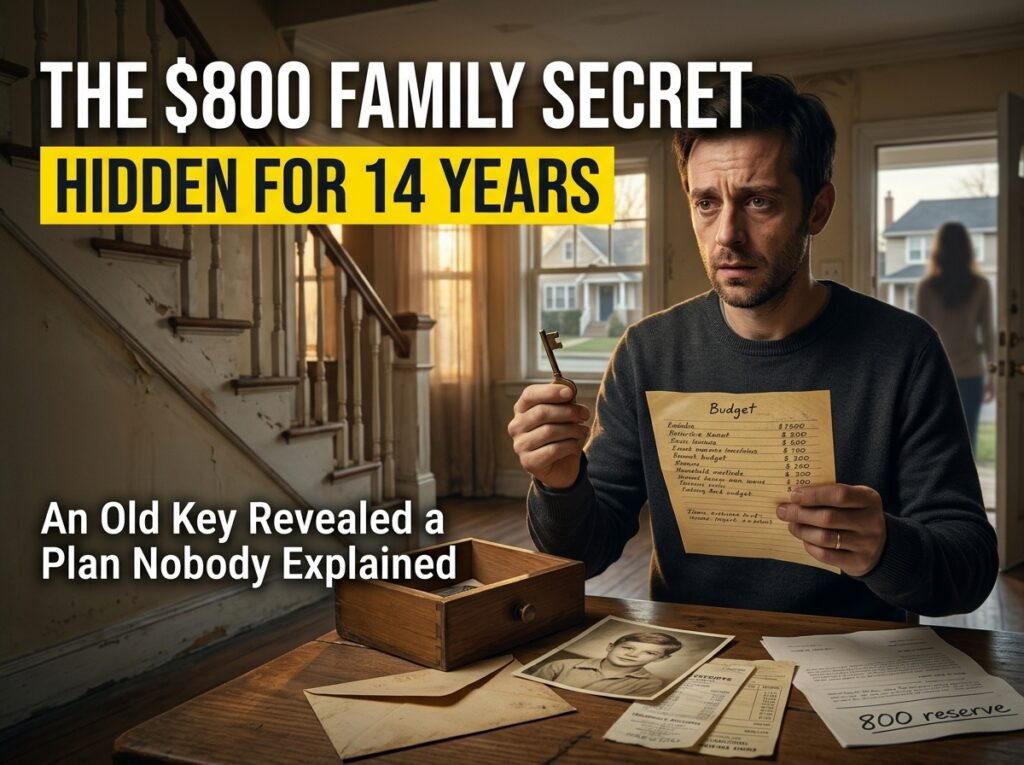
Luis had spent most of his adult life believing that the family house would always be there.
It was not a grand property. The paint had faded around the windows, the kitchen tiles were older than some of the neighbors, and the wooden staircase creaked whenever someone climbed it after dark. But the house held the kind of memories that made a place feel irreplaceable.
Luis was thirty-nine when he learned that those memories might not be enough to save it.
The decision to sell had not come suddenly. Bills had accumulated, repairs had been postponed, and conversations about money had become increasingly uncomfortable. The people involved all seemed to agree that selling the property was the most practical solution.
Luis understood the practical reasons.
He knew that memories could not pay outstanding bills. He knew that a house required money to maintain it and that sometimes the hardest decision was the one nobody wanted to make.
Still, he could not shake the feeling that something about the family’s situation had never been properly explained.
There was an $800 discrepancy that had appeared in old conversations years earlier. It was not a fortune, especially compared with the cost of maintaining the property, but nobody had ever provided a satisfactory explanation for it.
Whenever Luis asked, someone changed the subject.
His relatives told him that the amount had been dealt with long ago. One insisted that it had been part of an ordinary household expense. Another said the records were too old to be worth examining.
Luis had tried to accept those answers.
He had a job, bills of his own, and people who depended on him. He could not spend every day investigating an old family disagreement.
But the house was different.
Now that it was scheduled to be sold, every forgotten detail seemed to matter.
Luis began sorting through cupboards and drawers, looking for documents that might be needed during the sale. He found old utility statements, faded photographs, repair receipts, and letters that had been kept long after anyone remembered why they mattered.
Most of it was ordinary paperwork.
Then he found the handwritten budget.
It was tucked inside a folder behind several bank statements. The paper had yellowed around the edges, and the handwriting was neat but unfamiliar in places.
At the top was a date from fourteen years earlier.
Luis recognized the period immediately.
That had been the year the family began experiencing the financial difficulties that eventually led to the current crisis. He remembered conversations held behind closed doors, relatives speaking in lowered voices, and a sudden change in the way everyone discussed the future.
He had been younger then, but not too young to notice that something was wrong.
The budget listed household expenses, anticipated payments, and several amounts that had been crossed out and rewritten. Near the bottom, someone had written $800 beside a brief note.
Luis read the note twice.
It did not fit the explanation he had heard for years.
He carried the paper to the kitchen table and spread out the other documents.
The handwriting appeared on more than one page. Some entries had been added later, while others seemed to belong to the original plan. Whoever had written the budget had been trying to prepare for something before the family crisis became obvious.
Luis wondered what that something had been.
He checked the dates.
The budget had been written before the first major disagreement about money, not afterward as he had assumed.
That changed the way he understood the document.
If the plan had existed before the crisis, then someone might have anticipated the difficulties before the rest of the family knew they were coming.
Or perhaps the budget had been created for an entirely different reason.
Luis refused to jump to conclusions.
He turned the paper over, hoping to find a name or an explanation. There was nothing on the back except a faint impression of writing from another sheet.
He returned to the folder and examined the remaining papers.
A small brass key fell onto the table.
Luis picked it up.
It was old, with a narrow shaft and a worn head. He did not immediately recognize it, but something about its shape seemed familiar.
He searched the drawer where he had found the budget.
At the back was a small wooden compartment that he had never noticed before. It was locked.
The key fitted.
Luis hesitated before turning it.
The lock resisted at first, then clicked.
Inside the compartment was a folded sheet of paper, a small envelope, and a list of dates.
He opened the folded paper.
It appeared to be a plan written before the family crisis began. Several entries matched the amounts in the handwritten budget, including the mysterious $800.
But the final section had been removed.
Luis stared at the torn edge.
Someone had kept the plan in the locked compartment, yet the part that might explain its purpose was missing.
He sat very still.
The family house was scheduled to be sold because everyone believed the financial situation had become impossible to manage.
But this document suggested that someone had been preparing for a crisis fourteen years earlier.
Luis gathered the papers and placed them in a folder.
He wanted to ask his relatives what they knew, but he remembered how quickly conversations about the past became uncomfortable.
He needed to understand the documents before deciding whom to approach.
As he examined the small envelope, he noticed a name written across the front.
It belonged to a bank clerk he remembered hearing about years earlier.
According to the family story, the clerk had helped with a transaction connected to the house. Nobody had explained what that transaction involved, and the subject had gradually disappeared from family conversations.
Luis had assumed the clerk was no longer relevant.
Now he wondered whether that person could explain the handwritten budget.
He turned the envelope over.
There was a date and a short sentence written beneath it.
Ask her what she remembers.
Luis stared at the words.
The family house had not yet been sold, but the process was moving forward. He could not afford to delay everything without a reason.
At the same time, he could not ignore evidence that the family’s explanation might be incomplete.
He placed the envelope beside the key.
For the first time, he wondered whether saving the house required more than finding money.
Perhaps it required discovering why someone had prepared for the crisis before it began.
And if the answer lay with the bank clerk, Luis needed to find her before the sale made the past impossible to revisit.
Part 2
The following morning, Luis began searching for the bank clerk.
He remembered hearing her name during family conversations, but he was uncertain whether she still worked at the same branch. The bank had changed its signs over the years, and the neighborhood around it had developed considerably.
He started with the documents.
The envelope contained a partial reference to a bank transaction, along with a date that matched one of the entries in the handwritten budget. It did not include an account number or enough information to establish what had happened to the money.
Luis knew that a bank could not simply reveal another person’s private financial records because a relative asked questions. He would need to respect those limits and focus on information he was entitled to request.
Still, the documents gave him a starting point.
He visited the branch near the town center and explained that he was trying to understand an old family transaction connected to a property scheduled for sale.
The employee at the service desk listened carefully.
“Do you have the original transaction documents?” she asked.
“I have a handwritten budget and an old reference, but not the complete records.”
“Then we may be able to explain the process for requesting records, depending on your connection to the account and what documentation remains available.”
Luis showed her the reference.
She checked the details but could not confirm the transaction from the information he had brought.
“I’m sorry,” she said. “This isn’t enough for me to identify the complete history.”
Luis thanked her.
He had not expected an immediate solution, but he asked whether the branch employed anyone who had worked there fourteen years earlier.
The employee checked the available information.
“Some staff records are no longer held at this location,” she explained. “If you know the person’s name, I can tell you whether there is a public contact route or whether you should make a formal inquiry.”
Luis provided the name from the envelope.
The employee paused.
“I recognize that name,” she said. “She doesn’t work here anymore, but I believe she retired.”
“Do you know how I could contact her?”
“I’m afraid I can’t provide personal contact details. You might be able to reach her through a public directory or an appropriate professional contact.”
Luis understood.
He left the branch with no new financial information, but he had confirmed that the name was not simply an invention in an old family story.
The clerk had existed.
She might still be able to remember something about the transaction.
That afternoon, Luis returned to the house and examined the handwritten budget again.
He compared the figures with the list of dates from the locked compartment. Several payments appeared in both places, but one entry was different.
The $800 was not recorded as an ordinary household expense.
It was described as a reserve.
The word had been written in the margin beside a date that fell several weeks before the family’s difficulties became public.
Luis wondered why anyone would set aside that amount and then leave it unexplained.
He searched the remaining documents for another reference to the reserve.
After an hour, he found a faded note folded inside an old bank statement.
It mentioned a promise that was supposed to be kept until a particular date.
The note did not identify the person who had made the promise.
Luis placed it beside the budget.
The documents were beginning to form a pattern, but the pattern was incomplete.
Someone had created a financial plan before the crisis.
Someone had kept a key and locked the plan away.
Someone had recorded an $800 reserve.
And someone had left instructions directing him toward the bank clerk.
He wondered whether the plan had been intended to protect the family house or to prepare for its eventual sale.
Both possibilities were troubling.
If the plan had been designed to protect the property, why had it never been mentioned when the family began struggling?
If it had been designed to prepare for a sale, why had the family been told that the crisis was unexpected?
Luis could not answer either question.
That evening, he asked his aunt whether she remembered the bank clerk.
His aunt was sitting in the living room, sorting through a stack of old photographs.
“The bank clerk?” she repeated.
“Yes. She was involved in something connected to the house.”
His aunt’s hands stopped moving.
“Why are you asking about her?”
“I found some old papers.”
“What papers?”
“A budget from fourteen years ago. It mentions a reserve of $800.”
His aunt looked away.
“Those papers should have been thrown out years ago.”
“Why?”
“Because they won’t help you now.”
Luis felt his frustration rising.
“Everyone keeps telling me the past won’t help. But the house is being sold, and I still don’t understand what happened.”
His aunt placed the photographs on the table.
“Sometimes there are reasons people don’t talk about certain things.”
“Then tell me the reasons.”
She shook her head.
“Not everything is mine to explain.”
Luis studied her face.
It was not the answer he wanted, but it told him something important.
His aunt knew about the documents.
She might not know everything, but the subject was not unfamiliar to her.
“Did you know the budget existed?” he asked.
“I remember that there were papers.”
“Did you know about the key?”
“No.”
“Did you know about the $800?”
His aunt stood up.
“I think you should stop looking through those records.”
Luis watched her leave the room.
He had expected resistance, but not such a direct request to stop.
He returned to the kitchen and opened the folder.
The envelope was still there.
Ask her what she remembers.
Luis looked at the name of the bank clerk.
If the family would not explain the past, perhaps someone outside it could provide a clearer account.
He decided to continue searching for the clerk through appropriate public channels.
But before he could make another call, he discovered something else inside the folder.
A small photograph had been tucked behind the budget.
It showed a woman standing outside the family house.
On the back was a date from twenty years earlier.
Beneath it was a name Luis had not spoken in twenty years.
His childhood friend.
The person whose departure had become one of the family’s most painful and least discussed memories.
Luis stared at the photograph, unable to understand why it had been kept with the financial records.
The $800, the bank clerk, and the locked drawer suddenly seemed connected to a memory he had tried hard to forget.
And he began to fear that the house was not the only thing his family had been trying to protect.
Part 3
Luis did not sleep well that night.
The photograph lay on his bedside table, facing upward. Every time he looked at it, he remembered the person he had tried not to think about for twenty years.
Her name was Elena.
They had grown up in the same neighborhood, attended the same school, and spent countless afternoons around the family house. Elena had been the kind of friend who knew when something was wrong even when Luis insisted he was fine.
She had also been connected to the period when the family crisis began.
Twenty years earlier, Elena had left the neighborhood after a disagreement that nobody ever explained properly. Luis remembered that she had been upset, but he could no longer recall every detail of their last conversation.
He remembered waiting for her to contact him.
She never did.
Eventually, people stopped mentioning her name. The family moved on, or at least appeared to. Luis learned to do the same.
He had told himself that Elena’s departure belonged to another part of his life, one that had nothing to do with the financial problems that followed.
Now her photograph had appeared beside a handwritten budget and a plan written fourteen years earlier.
The dates did not immediately fit together.
The photograph was twenty years old. The budget had been written fourteen years ago. The $800 reserve appeared to connect the budget to the family’s financial crisis.
Why would Elena’s photograph have been kept with those records?
Luis picked it up again.
The photograph showed Elena standing near the front gate, wearing a light-colored jacket. She was looking toward the person taking the picture, but her expression was serious rather than cheerful.
He turned it over.
There was no message beyond her name and the date.
Luis decided to contact an old neighbor who had known both of them.
The neighbor, Mr. Alvarez, answered after several rings.
“Elena?” he said when Luis mentioned the name. “I haven’t heard that name in years.”
“Do you remember why she left?”
“I remember that there was an argument. People were saying different things.”
“What kind of things?”
“That she was leaving because of a family disagreement. Someone else said she was going away to help a relative.”
Luis frowned.
“Did anyone say anything about money?”
Mr. Alvarez paused.
“I remember hearing about money, but I couldn’t tell you what it was connected to. It was a long time ago.”
Luis asked whether he knew how to contact Elena.
Mr. Alvarez did not have a current number, but he remembered that Elena had once stayed with relatives in another part of the region.
It was not much, but it was more than Luis had known the day before.
After the call, Luis examined the photograph again.
He noticed a small detail near the edge. Elena was holding a folded piece of paper.
The image was too faded to reveal what was written on it, but the paper looked similar to the envelope he had found in the locked drawer.
Luis enlarged the photograph on his phone.
He could not identify any writing, but he began to wonder whether Elena had been involved in the original plan.
Perhaps she had known about the $800 reserve.
Perhaps she had been expected to help with something that was never completed.
Or perhaps the photograph had simply been stored with the wrong documents.
Luis refused to treat speculation as proof.
He placed the photograph in a separate sleeve and returned to the budget.
The more he examined the dates, the more he realized that the family crisis had not begun at a single moment. There had been a series of decisions, some made years apart, that eventually led to the planned sale of the house.
The budget had been written before the difficulties became obvious.
Elena had left the neighborhood six years before that budget was created.
And the bank clerk had apparently been involved in a transaction connected to the property.
Luis needed to understand how those events related to one another.
He returned to the bank the following day and asked whether there was an official way to forward a letter to a retired employee.
The staff member explained that she could not disclose private contact information, but Luis could submit a general inquiry if he had a legitimate reason for contacting the former employee.
He wrote a brief letter explaining that he had found an old budget and a reference to a transaction connected to his family’s house. He included the date and the clerk’s name.
He did not mention Elena or the family dispute.
He simply asked whether the former clerk would be willing to speak with him about what she remembered, without requesting confidential information about anyone else’s account.
A week passed.
Luis continued preparing the house for the sale. He sorted through cupboards, packed books, and separated documents that might be needed by the people handling the property.
The practical work made it easier to avoid thinking about Elena.
Then, one afternoon, he received a telephone call.
The woman introduced herself as the former bank clerk.
“My name is Clara,” she said. “The branch forwarded your inquiry. I don’t know whether I can help you, but I remember the family name.”
Luis sat down.
“What do you remember?”
Clara was quiet for a moment.
“I remember a transaction that involved a small amount being set aside. I also remember that someone wanted the arrangement kept separate from the main account.”
Luis felt his heart beating faster.
“Was it $800?”
“I can’t confirm private banking details over the phone. But I remember the circumstances surrounding a request like that.”
“Do you remember Elena?”
There was a pause.
“Yes,” Clara said. “I remember her.”
Luis gripped the edge of the table.
“Why was she connected to the family house?”
Clara took a breath.
“That is a question I think you should ask the person who wrote the budget.”
Luis looked toward the locked drawer.
The person who wrote it might have been a relative.
But Clara’s answer suggested that Elena had not simply been an old friend whose photograph had ended up in the wrong folder.
She had been part of something the family had planned.
And Luis was beginning to understand why nobody wanted him to find out.
Part 4
Clara agreed to meet Luis in person.
She made it clear that she could not disclose confidential banking information or provide records belonging to other people. She was willing, however, to discuss what she remembered about the family and the circumstances surrounding the old paperwork.
They met at a café near the bank.
Clara was older than Luis expected, with silver hair and a careful way of speaking. She brought no documents, explaining that she did not have access to the bank’s old records and did not want to rely on paperwork she no longer possessed.
Luis showed her a copy of the handwritten budget.
Clara studied it for several seconds.
“I remember seeing a document like this,” she said.
“Was it connected to the $800?”
“I remember that someone wanted to make sure a specific amount was accounted for. I cannot tell you whether the amount in your document corresponds to a transaction I handled.”
Luis nodded.
He had not expected her to confirm the financial details.
“What about Elena?”
Clara looked at the photograph.
“She came to the branch with someone from your family. I remember that because she was younger than the other person, and she seemed worried.”
“What did she want?”
“I can’t recall the exact conversation. I remember that she asked whether an arrangement could be kept in writing so there would be no misunderstanding later.”
Luis felt a chill.
“An arrangement involving the house?”
“I don’t know whether the house was the main issue. I remember the family name and the concern about making sure something was recorded properly.”
“Was it a loan?”
“I can’t say.”
Luis looked down at the photograph.
For years, he had believed Elena left because she wanted nothing more to do with the family. Now he was hearing that she might have been involved in a plan that had never been fully explained.
“Did she leave because of the money?” he asked.
Clara considered the question.
“I don’t know. But I remember her saying that she didn’t want people to misunderstand what she had agreed to do.”
Luis wrote the sentence in his notebook.
It sounded important, although he could not yet determine what it meant.
He asked Clara whether she remembered who had accompanied Elena.
She gave him the name of a family member who had been involved in managing the household finances.
Luis recognized the name immediately.
The same person had told him years earlier that the $800 was an ordinary expense and that the matter had been settled.
He thanked Clara for her time.
Outside the café, he called his aunt.
“I spoke to Clara,” he said.
His aunt was silent.
“She remembers Elena,” Luis continued. “She remembers an arrangement that someone wanted documented properly.”
“Clara shouldn’t be discussing those things.”
“She didn’t give me private banking information. She told me what she remembered.”
“Then leave it there.”
Luis closed his eyes.
“Why does everyone keep telling me to stop?”
“Because you don’t understand what happened.”
“Then explain it to me.”
His aunt’s voice became strained.
“I wasn’t the person who made the arrangements.”
“But you knew about them.”
“I knew that people were trying to help.”
“Who was being helped?”
There was a long silence.
Finally, his aunt said, “Your family was in trouble. People were trying to find a way through it.”
Luis felt his frustration give way to sadness.
He had spent years assuming that everyone had agreed to sell the house because there was no other option. But if someone had created a plan before the crisis became public, perhaps the family had once believed there was another way.
“Was Elena part of that plan?” he asked.
His aunt did not answer.
Instead, she said that she had to go and ended the call.
Luis returned home and opened the folder.
The handwritten budget contained a list of anticipated expenses, but the final page of the plan was still missing.
He searched the drawer again, carefully examining its corners and the space beneath the wooden lining.
There was nothing else.
Then he remembered the key.
He examined its worn surface and noticed a small number engraved near the head. It was almost invisible unless the light struck it at the right angle.
The number matched a reference written on the back of the photograph.
Luis stared at both items.
The key and the photograph had been stored together for a reason.
He wondered whether the key had originally belonged to a different drawer, a storage box, or a cabinet that was no longer in the house.
He searched the rooms and checked the old furniture.
Behind a stack of folded blankets, he found a small metal cash box.
The lock was rusty, but the key fitted.
Inside were several receipts, a folded sheet of paper, and a sealed envelope bearing Elena’s name.
Luis held the envelope carefully.
The date was from twenty years earlier, around the time Elena had left the neighborhood.
He did not open it immediately.
For the first time, he understood that he might be holding a letter that had been kept for two decades.
He sat at the kitchen table and looked at the envelope.
If Elena had written it, why had nobody delivered it?
And if it had been meant for someone else, why had it been stored with the family budget?
Luis turned the envelope over.
There was a sentence written on the back.
Keep this until the house is safe.
Luis felt his hands go cold.
The house had been scheduled for sale because the family believed it could no longer be saved.
But someone had once instructed another person to keep a letter until the house was safe.
He opened his notebook and wrote the words down.
For the first time, the mystery seemed to involve more than an old financial disagreement.
It might involve a promise made to protect the family home.
And the person who could explain that promise had been absent from Luis’s life for twenty years.
Part 5
Luis spent the next day trying to determine whether Elena was still living in the region.
He began with the public contact information Clara had suggested and asked old neighbors whether they had heard from her.
Most remembered her only vaguely.
One person recalled that Elena had moved away to care for a relative. Another believed she had married and changed her surname. Neither could provide a reliable current address.
Luis understood that twenty years was a long time.
People changed jobs, moved homes, formed families, and sometimes chose not to remain connected to the places where they had grown up.
He did not want to intrude on Elena’s life simply because he had discovered an old letter.
But the envelope had been kept for a reason, and the words on its back suggested that it was connected to the family house.
He needed to know whether she wanted the message delivered.
After several days, an old neighbor gave him a possible lead. Elena had once worked at a local community center, and a former colleague might know how to contact her.
Luis wrote a short message explaining that he had found an old letter bearing Elena’s name and wanted to ask whether she would be comfortable speaking with him.
He did not mention the money or the family dispute.
He waited.
Meanwhile, the sale of the house moved forward.
The people handling the property requested additional paperwork, and Luis spent hours checking documents to ensure that nothing important was missing.
The practical demands made the search more urgent.
If the house were sold before he understood the old arrangement, he feared that the papers might become separated or lost. He did not know whether the documents had any legal effect, but he wanted them reviewed before anyone treated the matter as fully resolved.
He contacted the appropriate property adviser and explained that he had found historical records connected to the house. He asked whether the planned sale could proceed while the documents were being reviewed and whether any formal steps were necessary.
The adviser told him that the answer would depend on the contents of the documents and the property’s legal circumstances. Luis was advised to preserve the originals and seek a qualified review rather than assuming that the papers changed the status of the sale.
Luis followed that advice.
He made copies, recorded where each document had been found, and kept the originals in a secure place.
Three days later, he received a reply from the community center’s former colleague.
The message was brief.
Elena had been contacted, and she was willing to receive a letter from Luis.
He sat down before replying.
He had imagined this moment for years without admitting it to himself. He had wondered what he would say if Elena ever returned or if he ever learned why she had left.
Now he had an opportunity to contact her, but he did not want to fill the letter with accusations.
He wrote carefully.
He explained that he had found an envelope bearing her name among old family documents. He mentioned the handwritten budget and the fact that the house was scheduled to be sold.
He asked whether she remembered an arrangement involving the house and whether she would be willing to explain what she knew.
He did not demand an answer.
He did not assume that she owed him a conversation after twenty years.
He simply asked.
A week passed.
Then another.
Luis continued preparing the house and checking the documents. He tried to accept that Elena might choose not to respond.
Then, on a Thursday evening, he received a telephone call from an unfamiliar number.
“Is this Luis?” a woman asked.
“Yes.”
“My name is Elena.”
He could not speak.
For a moment, the room seemed to disappear around him. He heard only the sound of his own breathing and the faint traffic outside.
Finally, he managed to answer.
“I found your letter.”
“I thought someone might eventually find it.”
“Did you write it?”
“Yes.”
Luis looked at the envelope on the table.
“Why was it kept in the house?”
Elena paused.
“Because I was told it needed to remain there until the arrangement had been completed.”
“What arrangement?”
“The one your family was trying to make before everything went wrong.”
Luis closed his eyes.
“Was it about the $800?”
“Partly.”
“And the house?”
“Yes.”
He felt his chest tighten.
“What was the plan?”
Elena did not answer immediately.
“I can explain what I remember,” she said. “But I need you to understand that I wasn’t the only person involved, and I don’t know what happened to every document afterward.”
Luis agreed.
They arranged to meet the following week.
After the call, he sat in silence for a long time.
For twenty years, Elena had existed in his memory as someone who had left without explaining why.
Now she was preparing to tell him what she knew about the house, the money, and the plan written before the family crisis began.
But there was one thing she had said that troubled him.
She had not claimed that the plan failed because of an argument.
She had said it failed because something went wrong.
And Luis was beginning to suspect that the family had never agreed on what that something was.
Part 6
Elena chose a small café near the old neighborhood for their meeting.
Luis arrived early and took a table beside the window. He had brought copies of the handwritten budget, the photograph, and the letter, but he kept them inside his folder.
He did not want the first conversation to become an interrogation.
When Elena entered, he recognized her immediately.
She had changed, as anyone would after twenty years, but there was something familiar in the way she looked around the room before approaching him.
“Hello, Luis.”
“Hello, Elena.”
They sat down.
For several minutes, they spoke about ordinary things. Elena asked about his work and his family. Luis asked where she had lived and whether she still had friends in the neighborhood.
They were polite, almost careful.
The years between them had created a distance that neither knew how to cross.
Eventually, Luis placed the photograph on the table.
“I found this with the budget.”
Elena looked at it.
“I remember that day.”
“Why were you at the house?”
She folded her hands.
“Because your family had asked me to help with something. I was younger, and I believed I could make a difference.”
“What kind of help?”
Elena explained that the family had been worried about its finances long before the crisis became public. There had been concerns about expenses, the cost of maintaining the house, and the possibility that a difficult period might force the family to sell.
Several people had discussed a plan to prevent that from happening.
The handwritten budget had been part of their preparations.
“It was supposed to be a practical plan,” Elena said. “Nothing mysterious. People wanted to know what they could afford, what needed to be paid, and what money had to be kept aside.”
“Why was the plan locked away?”
“Because it included private financial details. At least, that was what I was told.”
Luis took out the budget.
“What about the $800?”
Elena looked at the entry.
“It was meant to be a reserve for a specific expense connected to the plan. I remember that much. But I can’t tell you whether the money was eventually used as intended.”
“Who was responsible for it?”
“Several people had responsibilities. I was not in charge of the family’s accounts.”
Luis studied her face.
“Why didn’t anyone tell me about the plan?”
Elena looked down.
“Because I think they believed it would work. They didn’t want everyone worrying about something that might never become a problem.”
“But it did become a problem.”
“Yes.”
She explained that the plan had depended on cooperation. The family needed to keep certain expenses under control, make agreed payments, and avoid decisions that would put the house at risk.
At first, the arrangement appeared manageable.
Then disagreements developed.
Some people believed the money should be used immediately. Others wanted to keep it reserved until the original plan had been reviewed.
The $800 became one of several points of confusion.
“Was that why you left?” Luis asked.
Elena hesitated.
“That was part of it.”
“What was the other part?”
She looked toward the window.
“I thought you believed I had made a promise and then broken it.”
Luis felt a sharp ache in his chest.
“I was told you left because you didn’t want to be involved anymore.”
“I was told you wanted nothing more to do with me.”
Neither spoke.
The café continued around them. Cups clinked against saucers, and someone near the counter laughed at a conversation that had nothing to do with the past.
Luis stared at the photograph.
“Who told us those things?”
“I don’t know whether it was one person or several. I heard different explanations from different relatives.”
“Did you ever try to contact me?”
“Yes.”
Luis looked up.
“What?”
“I tried once, shortly after I left. I sent a letter to the house.”
“Why didn’t I receive it?”
“I don’t know.”
He thought of the envelope he had found.
“Was it this one?”
Elena shook her head.
“No. That was another letter. The one I sent back then was supposed to explain what had happened, but I never received a reply.”
Luis felt his throat tighten.
He had never seen that letter.
He had never known it existed.
For twenty years, he had believed Elena had left without trying to explain.
She had believed he had chosen not to respond.
Both had built their understanding of the past around silence.
“Do you remember what you wrote?” he asked.
“Yes. I explained that I hadn’t broken the promise. I wanted to discuss the plan before anyone made a final decision.”
Luis looked down at the budget.
“Did you know the house might be sold?”
“I knew it was at risk. I thought the plan could prevent that.”
“What happened to it?”
Elena sighed.
“I can’t give you the complete answer. I left before everything was resolved. I didn’t know what happened to the money afterward, and I didn’t know whether the plan had been followed.”
Luis understood that she could explain her own part, but she could not account for every decision made after she left.
He asked why she had agreed to meet now.
“Because you found the letter,” she said. “And because I never wanted the family to believe that I had deliberately abandoned the plan.”
Luis felt the weight of those words.
He had spent years believing that Elena’s departure was a personal rejection.
Now he understood that the financial disagreement and the relationship had become tangled together. Each had received incomplete explanations, and neither had known how to correct them.
But he still needed to understand the missing part of the plan.
“Who wrote the final page?” he asked.
Elena looked at the budget.
“I didn’t write it.”
“Do you know who did?”
She paused.
“I think your father did.”
Luis stared at her.
His father had been part of the family discussions, but he had rarely spoken about the details. He had died before Luis could ask many of the questions that now seemed important.
Elena continued.
“Your father believed the house could be saved if everyone followed the plan. He was worried about what would happen if people started making decisions without understanding the agreement.”
Luis felt a deep sadness.
He had always remembered his father as a practical man who disliked unnecessary arguments. Now he wondered whether his silence had been an attempt to protect the family from worry—or whether it had unintentionally allowed confusion to grow.
“Did my father know why you left?”
“I believe he knew part of the reason. But I don’t know what he was told afterward.”
Elena placed the photograph back on the table.
“There’s something else,” she said. “When I left, I was told that the plan would be kept safe until the family was ready to use it.”
Luis remembered the words on the envelope.
Keep this until the house is safe.
For years, he had thought the phrase was simply a reminder to preserve a letter.
Now it sounded like the central promise behind the entire arrangement.
The house had never been just a building.
It had been the thing everyone was trying to protect.
And the plan had been created because the family feared losing it long before the current crisis began.
Part 7
Luis returned home with Elena’s explanation written in his notebook.
He felt relief that she had finally spoken to him, but the conversation had not answered every question.
The handwritten budget had been part of an effort to protect the house. The $800 had been reserved for a specific expense. Elena had believed the arrangement would work, while other people had apparently disagreed about how the money should be used.
The plan had eventually fallen apart.
But nobody had yet established exactly why.
Luis spread the documents across the kitchen table.
He began comparing the handwritten budget with the dates on the receipts and notes. The figures did not provide a complete financial record, but they showed that the plan had involved several stages.
An initial reserve had been established.
A payment had been anticipated.
A later decision was supposed to be made after the arrangement had been reviewed.
The final page, which might have explained the purpose of the $800 and the conditions attached to the plan, was missing.
Luis wondered whether his father had kept it separately.
He searched through the remaining papers and found an old notebook containing household expenses. The notebook had been used for years, with entries written in different inks and handwriting styles.
Several pages referred to repairs and bills.
Near the middle, he found an entry dated fourteen years earlier.
It mentioned a meeting about the house and referred to a document that needed to be returned.
There was no name beside the entry.
Luis copied the date into his notebook.
He then called his aunt.
“I spoke to Elena,” he said.
His aunt became quiet.
“What did she tell you?”
“She said the budget was part of a plan to protect the house.”
“That was a long time ago.”
“She also said the $800 was a reserve for a specific expense.”
His aunt sighed.
“I remember that there was money set aside.”
“Why didn’t you tell me?”
“Because I didn’t know what happened to it afterward.”
Luis paused.
That was the first time his aunt had acknowledged that the reserve existed.
“Who was responsible for the money?”
“I thought your father was handling the overall plan. Other people were supposed to take care of individual payments.”
“Was Elena responsible for anything?”
“She was helping with the arrangements, but she wasn’t in charge of the family accounts.”
Luis wrote that down.
His aunt explained that the original plan had depended on everyone understanding their responsibilities. When disagreements began, people stopped sharing information freely. Some believed the arrangement had failed, while others thought it had simply been delayed.
Over time, the family began treating the plan as an embarrassing mistake.
Nobody wanted to discuss it.
The $800 became an amount people remembered without remembering what it was for.
“Do you know who removed the last page?” Luis asked.
“I don’t know that anyone removed it.”
“Then where is it?”
His aunt did not answer.
Luis realized that the missing page might not have been deliberately taken. It could have been misplaced or separated from the budget years earlier.
But its absence had allowed everyone to remember the plan differently.
He thanked his aunt and ended the call.
The next day, he visited a relative who had helped his father organize household papers. The relative remembered a box of documents that had been moved when the family rearranged the house.
The box might still exist in a storage room.
Luis asked whether he could look for it.
They agreed.
Inside the storage room, several cardboard boxes were stacked against the wall. Some contained old books, others household items, and a few held papers that had not been touched in years.
Luis searched carefully.
He found receipts, insurance documents, and a collection of letters tied with string.
Then he discovered a thin folder bearing his father’s handwriting.
The folder contained notes about the house and a list of expenses that matched the figures in the budget.
There was also a page titled Plan for the House.
Luis’s hands trembled as he unfolded it.
The page described a series of steps intended to keep the property financially stable. The $800 reserve was mentioned, along with a condition that required the people involved to agree before the money could be used for anything else.
The wording was clear enough to explain why the reserve mattered.
It was not simply spare money.
It had been set aside for a purpose that everyone was supposed to respect.
But the page did not explain whether the money had been spent or whether the condition had ever been fulfilled.
Luis turned it over.
On the back, his father had written a short note.
If the plan fails, make sure the family understands why before anyone decides to sell.
Luis sat down among the boxes.
His father had anticipated that the plan might fail. He had specifically wanted the family to understand the reasons before making a decision about the house.
Yet fourteen years later, the family was preparing to sell without agreeing on what had happened.
Luis felt a mixture of grief and determination.
He could not assume that the house could still be saved. The financial circumstances had changed, and the documents did not prove that the original plan remained practical.
But his father had left a clear instruction: understand what happened before deciding that there was no alternative.
Luis photographed the page and placed it in the folder.
Then he noticed a second sheet tucked behind it.
It contained a name and a short reference to a meeting that had taken place before Elena left.
The name belonged to someone Luis had not expected to find in his father’s notes.
Someone who had been involved in the family discussions but had always insisted that the plan had failed because Elena had walked away.
Luis stared at the page.
If his father had written this note before the crisis, then he might have known that the problem was more complicated than the family story suggested.
And the person named in the notes might know what happened to the missing money.
Part 8
Luis spent the next two days considering whether to contact the person named in his father’s notes.
He had known this relative for most of his life. They had always spoken confidently about the family finances and had insisted that the decision to sell the house was unavoidable.
Whenever Luis asked about the original plan, the relative dismissed it as something that had failed long ago.
Now Luis had a document showing that his father wanted the family to understand why the plan had failed before making a final decision.
He decided to arrange a meeting.
They met in the living room of the family house, where boxes were still stacked against the walls.
Luis placed the handwritten budget on the table, followed by his father’s note.
“I found these among the old records,” he said.
The relative looked at the papers.
“I told you those documents were old.”
“I know. But they explain that the $800 was reserved for a specific purpose.”
The relative said nothing.
“They also show that my father wanted us to understand why the plan failed before deciding to sell.”
The relative folded their arms.
“Your father was trying to keep everyone hopeful. That doesn’t mean the plan would have worked.”
“I’m not saying it would have. I’m asking what happened to it.”
The relative looked toward the window.
“The situation changed. Bills came due, people disagreed, and the money wasn’t enough to solve everything.”
“What happened to the reserve?”
“I don’t remember exactly.”
Luis felt his frustration rise.
“Was it used?”
“It may have been.”
“For what?”
“I don’t know.”
Luis took a breath.
“Then how can you be certain that selling the house is the only option if we never established what happened to the original plan?”
The relative’s expression hardened.
“Because the family can’t live on old promises.”
Luis looked down at the documents.
That was true in one sense. A plan written fourteen years earlier could not automatically solve the family’s current financial problems.
But the fact that the plan was old did not make the unanswered questions irrelevant.
“I agree that we have to deal with the current bills,” Luis said. “I’m not asking everyone to pretend the money will appear. I’m asking for a clear account of what happened before we make an irreversible decision.”
The relative stood.
“You should stop bringing Elena into this.”
Luis looked up.
“Why?”
“Because she left. Whatever arrangement existed, she was no longer involved.”
“She says she was never given a chance to explain.”
“That’s her version.”
“And this is yours. But the documents don’t match either version completely.”
The relative’s face changed.
For a moment, Luis thought they might finally explain what had happened.
Instead, the relative said, “Some things are better left alone.”
Luis felt a familiar disappointment.
He had heard those words from his aunt, from other relatives, and from people who had apparently been involved in the original plan.
He had spent years believing that silence meant there was nothing left to discover.
Now he understood that silence could also mean people were uncomfortable with the questions.
He gathered the documents.
“I’m not accusing you of anything,” he said. “But I’m not going to stop looking at the records just because the subject is uncomfortable.”
The relative did not reply.
After the meeting, Luis contacted the person responsible for handling the planned sale. He explained that he had discovered historical documents and wanted to ensure they were reviewed before the transaction proceeded.
He did not claim that the documents proved ownership rights or invalidated the sale. He simply requested appropriate guidance about whether anything required further examination.
He was told that the sale process and the old financial arrangement would need to be considered separately unless a qualified review established a relevant connection.
Luis understood.
He would not assume that a handwritten plan could stop the sale. But he wanted the documents preserved so that no one could later claim the family had never questioned the history.
That evening, Elena called.
“I’ve been thinking about what you told me,” she said. “I remember another detail.”
Luis sat down.
“What is it?”
“When the plan was first discussed, your father asked that a copy be kept somewhere separate from the household records. He was worried that people would lose track of the conditions if the papers were moved.”
“Do you know where he kept it?”
“No. But I remember that the person responsible for organizing the documents was supposed to return a signed copy after the meeting.”
Luis looked at the folder.
“Do you remember who that was?”
Elena gave him a name.
It was the same person who had insisted that the plan had failed because she had left.
Luis felt the pieces drawing closer together, but he reminded himself that a connection was not proof of wrongdoing.
He needed to ask the person about the signed copy.
Before he could make the call, Elena added one more detail.
“There was another person at that meeting,” she said. “Someone who wasn’t part of the family but who understood the financial arrangement.”
“Who?”
“I think it was the bank clerk.”
Luis looked at the old envelope bearing Clara’s name.
Clara had remembered the transaction and Elena’s concern about documenting the arrangement.
Now Elena was suggesting that Clara might have attended the meeting where the plan was discussed.
If that was true, Clara might remember something about the conditions attached to the $800 reserve.
Luis decided to contact her again, not to ask for confidential banking information, but to see whether she remembered the meeting and whether she could suggest a lawful way to verify the remaining facts.
For the first time, he felt that he was approaching the central question.
The family had created a plan to protect the house.
The plan included a reserve and conditions that were supposed to be followed.
But the plan had failed, and the family had never agreed on why.
If Luis could establish what happened to the signed copy, he might finally understand whether the failure had been unavoidable—or whether the family had abandoned the plan before everyone understood it.
Part 9
Clara agreed to speak with Luis again.
She remembered the general circumstances surrounding the arrangement, although she could not independently confirm every detail from records that were no longer available to her.
“I remember that your father wanted everything written down,” she said. “He was concerned that a verbal understanding would lead to arguments later.”
“Did you attend a meeting about the plan?”
“I remember discussing the importance of documenting the arrangement. I can’t say with certainty which meeting you mean.”
Luis showed her a copy of his father’s note.
Clara studied it carefully.
“The wording sounds familiar,” she said. “But I don’t want to pretend I remember the exact document.”
Luis appreciated her caution.
He asked whether a signed copy of the arrangement might have been retained by the bank.
Clara explained that the answer depended on the nature of the arrangement and whether it had been part of a formal banking transaction. She could not confirm that a record existed, but she suggested that Luis follow the bank’s official process for requesting information he was entitled to obtain.
Luis thanked her.
The meeting did not solve the mystery, but it reinforced something important: his father had wanted the arrangement documented, and the family had been aware that clear records were necessary.
Luis returned to the house and organized everything he had found.
He created a timeline beginning with Elena’s departure twenty years earlier, followed by the handwritten budget from fourteen years ago, the notes about the $800 reserve, and the later discussions about selling the property.
The timeline did not establish exactly when the plan failed, but it showed that the family had been dealing with uncertainty for years.
He also separated confirmed information from unanswered questions.
Confirmed: the budget existed.
Confirmed: the plan referred to a reserve.
Confirmed: his father had wanted the reasons for the plan’s failure understood before the house was sold.
Confirmed: Elena had been involved in discussions about the arrangement.
Unresolved: what happened to the $800.
Unresolved: whether the signed copy had been returned.
Unresolved: why the family had come to believe Elena was responsible for the plan’s failure.
Unresolved: whether the original arrangement could have changed the outcome.
Writing the questions down helped Luis resist the temptation to treat every discovery as proof of a hidden conspiracy.
The evidence suggested confusion, incomplete communication, and a family that had stopped examining its assumptions. It did not yet establish that anyone had deliberately taken money or sabotaged the plan.
That distinction mattered.
Later that week, the relative who had taken the folder away years earlier contacted Luis.
They had found another envelope while sorting through old possessions.
Inside was a signed copy of the original plan.
Luis arranged to collect it.
The signature belonged to the relative who had been responsible for returning the document after the meeting.
The copy included the conditions attached to the $800 reserve and described how the plan was supposed to be reviewed if the family’s circumstances changed.
It also contained a line confirming that the people involved had agreed to discuss any changes before the reserve was used for another purpose.
Luis read the line several times.
The document did not establish whether the reserve had been spent properly, but it confirmed that the money was not supposed to be used without discussion.
He asked the relative who had found it whether they knew why the copy had remained in storage.
“I thought it had been returned years ago,” the relative said. “I didn’t realize it was still here.”
Luis could not determine whether that explanation was correct.
But he now had a document that clarified the terms of the original arrangement.
He took it to the person advising the family about the property sale and asked whether it had any bearing on the current process.
The adviser explained that the document would need to be reviewed in context and that its existence did not automatically prevent the sale. The family’s present financial circumstances still had to be addressed.
Luis accepted that.
He was not looking for a magical piece of paper that would erase the bills.
He wanted the family to make its decision with a clear understanding of the past.
That evening, he gathered the relatives who were willing to meet.
He placed the signed copy on the table.
“This is what the original plan actually said,” he began. “The $800 was a reserve, and any change to its purpose was supposed to be discussed.”
His aunt read the document.
The relative who had previously insisted that the plan had failed because Elena left remained silent.
Luis continued.
“We still don’t know exactly what happened to the money. But we now know that the plan was supposed to be reviewed before the reserve was used differently.”
His aunt looked up.
“Then we need to find the record of that discussion.”
Luis nodded.
“Yes. And if there isn’t one, we need to be honest about what we cannot establish.”
For the first time, nobody told him to stop asking questions.
They agreed to continue reviewing the records and to address the current financial situation separately from the historical dispute.
It was not a complete resolution, but it was a change.
The family was finally willing to acknowledge that the old plan had not been fully understood.
After the meeting, Luis returned to the kitchen and looked at the photograph of Elena.
He had spent twenty years believing that she had abandoned the family when the plan failed.
Now he understood that she had been one of the people trying to make it work.
He did not know whether the house could be saved.
He did not know whether the missing details about the $800 would ever be established.
But he no longer believed that the family had to choose between selling the property and pretending the past did not matter.
There was one final conversation he needed to have.
He wanted to ask his aunt why she had accepted the explanation that Elena was responsible for the failure.
And he wanted to understand whether the family had ever given Elena a fair chance to explain her part.
Part 10
Luis found his aunt in the living room the following morning.
She was sitting beside a box of photographs, sorting them into piles.
He sat opposite her and placed the signed plan on the table.
“I want to talk about Elena,” he said.
His aunt sighed.
“I thought we’d finished discussing this.”
“We’ve only just started discussing it honestly.”
She looked at him.
Luis continued.
“For years, I believed Elena left because she didn’t care what happened to the family. She believed I had chosen to walk away. Now we know that both of us were given incomplete explanations.”
His aunt said nothing.
“Why did you believe she was responsible for the plan failing?”
His aunt looked down at the photographs.
“Because that’s what I was told.”
“By whom?”
“By the people who were handling the arrangements.”
“Did you ever ask Elena what happened?”
His aunt shook her head.
“No.”
“Why not?”
She took a long breath.
“At the time, everyone was frightened. The bills were piling up, the house needed repairs, and people were arguing about money. When Elena left, it seemed easier to believe that she had decided not to help anymore.”
Luis listened quietly.
His aunt explained that she had not known about every detail of the agreement. She remembered that the $800 had been set aside, but she did not know whether it had been spent according to the original plan.
She had assumed that someone else had checked the records.
Then, as the years passed, the assumption became part of the family story.
Nobody wanted to reopen the disagreement. The house remained in the family, and the immediate crisis seemed to pass. Eventually, the old plan became something people remembered only when the financial situation grew difficult again.
“I thought staying quiet would keep the family together,” his aunt said. “I didn’t realize it was leaving you with questions that would never go away.”
Luis felt a deep sadness.
He had wanted someone to admit that the family had made a mistake, but hearing his aunt describe the fear behind the silence made the situation more complicated.
People had been worried about losing the house.
They had been frightened by the financial difficulties.
And rather than examine the evidence, they had accepted the explanation that seemed easiest to live with.
That did not erase the harm caused by their silence.
But it helped Luis understand how the story had become distorted.
“What do we do now?” his aunt asked.
Luis looked at the signed plan.
“We preserve the records. We find out what we can about the money. And we make the decision about the house based on the facts we have today, not on a story nobody can fully explain.”
His aunt nodded slowly.
For the first time, Luis felt that they were talking about the same problem.
The family continued reviewing the documents. The signed plan was kept with the other records, and the people involved sought appropriate advice about the historical arrangement and the current property sale.
They did not discover a hidden fortune.
They did not establish that anyone had deliberately taken the $800.
And they did not find a document that automatically made the house safe from financial pressure.
Some questions remained unanswered.
The family still had bills to pay, and the property decision could not be postponed indefinitely. Luis understood that the house might eventually be sold, even if everyone finally agreed about the past.
But the atmosphere had changed.
The relatives no longer treated the handwritten budget as an embarrassment that should be discarded. They recognized it as evidence of an earlier attempt to protect the house.
They also stopped repeating the claim that Elena had simply abandoned them.
A few weeks later, Luis met Elena again.
They walked through the house together, looking at the rooms where they had spent so much time as children.
Elena stopped beside the kitchen doorway.
“I used to think that if I explained everything, people would understand,” she said.
Luis nodded.
“I thought that if you wanted to explain, you would have come back.”
“I tried to reach you.”
“I know.”
They stood quietly for a moment.
There was no dramatic reconciliation, no promise that the past could be restored, and no certainty about what their relationship would become.
There was simply an honest acknowledgment that both had spent years believing a story that neither had been given the chance to question.
Luis showed Elena the signed plan.
She read it carefully.
“This is what your father wanted,” she said. “He wanted everyone to understand the arrangement before making a decision.”
“I think so.”
“He was trying to protect the house.”
Luis looked around the kitchen.
For most of his life, he had believed that protecting the house meant keeping it within the family at any cost.
Now he understood that the house mattered because of what it represented: the people who had lived there, the promises they had made, and the memories that had shaped their lives.
Keeping the building would not repair every broken relationship.
Selling it would not erase those memories.
The real loss had begun years earlier, when the family stopped talking openly and allowed assumptions to replace understanding.
Luis could not change that history.
But he could refuse to repeat it.
He would continue dealing with the current financial problems responsibly. He would preserve the records and seek answers where evidence still existed. If the house had to be sold, he wanted the decision to be made with a clear understanding of the family’s circumstances rather than a mistaken belief that one person had caused everything to go wrong.
He looked at Elena.
“I wish we’d talked twenty years ago.”
“So do I,” she replied.
There was sadness in her voice, but no accusation.
Luis realized that he had spent years waiting for the past to give him a perfect explanation. He had wanted one person to identify the mistake, one document to reveal the truth, and one conversation to restore everything that had been lost.
Life did not work that way.
The budget had provided clues.
The key had opened a drawer.
The signed plan had clarified the purpose of the reserve.
And the people who had once been afraid to discuss the past had finally begun to speak honestly.
But the documents could not return the years that had passed.
They could only help Luis understand them.
That evening, he placed the handwritten budget in a folder with his father’s notes and the signed plan. He added a copy of Elena’s photograph, then closed the folder carefully.
The family house was still facing an uncertain future.
The $800 remained part of a historical arrangement whose full financial outcome had not been established. The reasons the plan had failed were clearer in some respects, but not every detail could be recovered.
Luis accepted that.
He no longer needed to invent an answer simply to make the story feel complete.
He had learned that an unanswered question was not proof of betrayal, just as silence was not proof that everything had been settled.
Sometimes, people stayed quiet because they were afraid.
Sometimes, they repeated an explanation because it was easier than admitting they did not know the whole truth.
And sometimes, the most important discovery was not a missing fortune or a secret document, but the realization that an entire family had misunderstood one another for years.
Luis turned off the kitchen light and stood for a moment in the doorway.
He did not know whether the house would remain in the family.
But he knew that whatever happened next, he would not allow the decision to be shaped by a story that nobody had properly examined.
The handwritten budget had seemed like a small discovery.
Instead, it had opened a door to a forgotten plan, an old promise, and a name he had not spoken in twenty years.
It had not solved every problem.
It had given him the chance to face them honestly.
And for Luis, that was where everything truly changed.