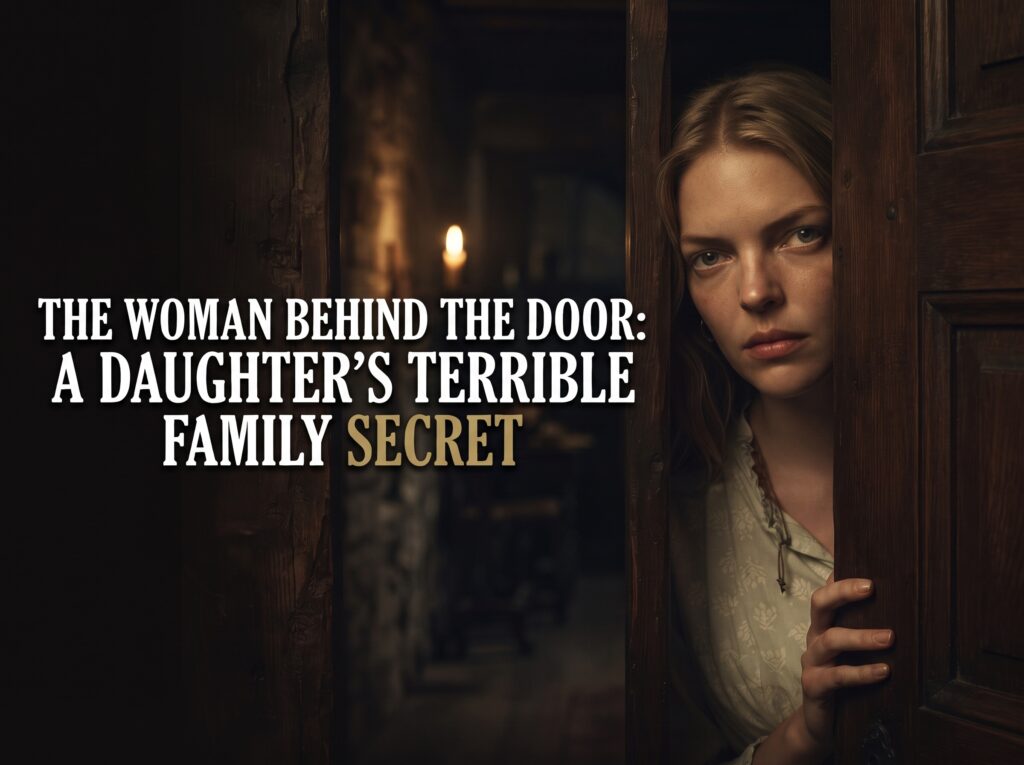
Clara Whitmore had grown up believing that obedience was the highest form of goodness.
Her father, Lord Edmund Whitmore, had taught her that a respectable woman did not question her elders, did not speak of private family matters, and did not allow curiosity to overcome duty.
At twenty-three, Clara could recite every rule of Ashcombe Manor without thinking.
She knew which servants were permitted to enter the east wing, which visitors were to be received in the drawing room, and which subjects made her father’s expression turn cold.
Her mother’s name belonged to the last category.
Eleanor Whitmore had died when Clara was six years old. At least, that was the story Edmund had repeated since the funeral. Clara remembered only fragments of her mother: the scent of lavender, a gentle voice reading beside the fireplace, and warm fingers brushing her hair away from her forehead.
She also remembered a promise.
“Whatever happens, my darling, never believe that love makes you weak.”
For years, Clara had treasured those words without understanding them.
After Eleanor’s death, Ashcombe Manor became a colder place. Her father devoted himself to his estate, his business interests, and the political influence he hoped to secure through a marriage between Clara and the wealthy James Harrington.
Clara had never loved James.
He was handsome enough, well dressed, and admired by the men who gathered at her father’s dinner parties. But his compliments always seemed rehearsed, and his eyes lingered on the manor’s property deeds longer than they lingered on Clara’s face.
Whenever she tried to postpone the engagement, Edmund reminded her how much the family owed the Harringtons.
“A marriage is not a romantic adventure,” he told her one afternoon. “It is an agreement between families.”
“And what if I do not wish to marry him?”
Her father lowered his newspaper.
“You are my daughter. You will do what is necessary.”
The conversation ended there.
Clara had no siblings, no close friends nearby, and no relatives willing to challenge Edmund. Her father’s authority extended beyond the manor gates. He employed half the village, controlled several farms, and regularly attended meetings with the magistrate.
Even the local vicar seemed reluctant to contradict him.
Only Mrs. Agnes Bell, the housekeeper, occasionally showed Clara a tenderness that reminded her of childhood.
Agnes had worked at Ashcombe Manor for more than thirty years. She had cared for Clara after Eleanor’s supposed death and had remained loyal to the family through every change in fortune.
But Agnes had one peculiar habit.
Whenever Clara asked about her mother, the housekeeper would glance toward the east wing and change the subject.
On the evening Clara heard the crying, Agnes was nowhere to be found.
The woman behind the door, meanwhile, had gone silent.
Clara stood in the dim corridor, the brass key trembling between her fingers.
“Who are you?” she whispered.
A moment passed.
Then the woman answered.
“My name is Eleanor.”
Clara nearly dropped the key.
“No.”
“My darling, please listen.”
“My mother is dead.”
“I know what your father told you.”
Clara gripped the doorframe.
“Prove it.”
From the darkness came the faint sound of a chain moving across the floor. Then a hand appeared through the opening, holding a small silver locket.
Clara recognized it immediately.
She had seen the locket in her father’s study many times. He kept it inside a locked drawer, wrapped in a piece of faded blue silk.
She had never been permitted to touch it.
Now it rested in the palm of the woman behind the door.
Clara took it.
The locket opened with a tiny click.
Inside was a miniature portrait of a young woman with gentle eyes and dark hair. Beside it was a faded lock of brown hair, tied with a ribbon.
On the back, a date had been engraved.
It was the year Clara had been born.
“How did you get this?” Clara whispered.
“It was mine before your father took everything from me.”
Footsteps sounded at the far end of the corridor.
Clara closed the door immediately.
She hid the key inside her sleeve just as Agnes appeared around the corner, carrying a tray of candles.
The housekeeper stopped.
Her eyes moved to the locket in Clara’s hand.
All the color drained from her face.
“Where did you find that?”
Clara stared at her.
“In my mother’s room.”
Agnes placed the tray on a nearby table.
For several seconds, neither woman spoke.
Then Agnes whispered, “You must forget what you heard tonight.”
“Why?”
“Because some truths do not set people free. Some truths get them killed.”
Before Clara could answer, the front door slammed downstairs.
Her father had returned.
Agnes hurried away, leaving Clara alone in the corridor.
From behind the locked door came a soft knock.
Three times.
Clara looked at the locket again.
For the first time in seventeen years, she began to wonder whether her mother had ever truly left her.
And if Eleanor Whitmore was alive, why had her father been keeping her prisoner?
4. Part 2 — The Housekeeper’s Promise
Clara did not sleep that night.
She sat beside her bedroom window, holding the silver locket while the wind moved through the bare trees outside. Every sound from the corridor made her turn toward the door.
At half past midnight, someone knocked.
It was Agnes.
The housekeeper entered carrying a small lamp and closed the bedroom door behind her.
“You cannot go back to the east wing,” she said.
“Then tell me what is happening.”
Agnes remained silent.
Clara stood.
“That woman knew my name. She had my mother’s locket. She knew things about my childhood that nobody else could know.”
“Your father will send you away if he discovers what you have done.”
“Send me where?”
“To the Harrington estate, perhaps. Or somewhere even farther away.”
Clara felt a sudden anger she had never allowed herself to express.
“Why does everyone speak as if I have no right to know my own family?”
Agnes looked at her with tired eyes.
“Because your father has spent seventeen years making certain that you never ask the right questions.”
Clara moved closer.
“Is she my mother?”
The housekeeper closed her eyes.
“Yes.”
The word was barely audible.
Clara sat down heavily.
For a moment, she could not understand the room around her. The furniture, the curtains, the portrait of her father above the fireplace—all seemed to belong to a world that had just disappeared.
“Why did he tell me she died?”
Agnes drew a chair closer to the bed.
“Your mother married your father against the wishes of her own family. She was a gentle woman, but she was not weak. When she discovered that Edmund was using the estate to cover debts and manipulate land agreements, she confronted him.”
“That sounds like something he would deny.”
“He did deny it. Then he accused her of being unstable.”
Agnes explained that Edmund had arranged for Eleanor to be examined by a private physician. The physician claimed she suffered from a serious mental disorder, although Agnes had never seen any evidence of it.
Soon afterward, Eleanor disappeared from public life.
Edmund announced that she had died following a long illness.
The funeral was private. The coffin remained closed.
The servants were instructed not to discuss her.
Anyone who questioned the story was dismissed.
“Why didn’t you tell me?” Clara asked.
Agnes’s eyes filled with tears.
“Because I was afraid. Your father had the power to destroy my life, and I believed that keeping you safe meant keeping you ignorant.”
“But she was here. All this time.”
Agnes nodded.
“Your mother was moved into the east wing after the village physician refused to sign the final certificate that your father wanted. Edmund said he was protecting the family from scandal. Later, when the physician died, he claimed Eleanor needed permanent care.”
“Who else knows?”
“Your father, the solicitor, and two men who were paid to guard the east wing. Perhaps James Harrington knows something. His family has been involved in your father’s affairs for years.”
Clara looked at the locket.
“Can we free her?”
Agnes hesitated.
“Not without proof. If your father accuses us of helping your mother escape, we could both be arrested. He has friends in the magistrate’s office.”
Clara rose and walked toward the window.
Outside, the manor’s gardens lay beneath the moonlight. Beyond them were the farms, cottages, and fields that had belonged to generations of Whitmores.
She had always believed that inheritance meant receiving something valuable from the past.
Now she wondered how much suffering had been hidden behind the family name.
“What if I refuse to marry James?”
Agnes looked alarmed.
“Your father will never permit it.”
“Then perhaps it is time someone stopped asking his permission.”
The housekeeper studied Clara for a long moment.
At last, she opened a small pocket inside her apron and removed a folded piece of paper.
“I have kept this for seventeen years.”
It was a letter written by Eleanor.
The paper was yellowed, and the ink had faded, but the handwriting was unmistakable.
Agnes, if my daughter ever asks what happened to me, tell her that I loved her more than anything in this world. Tell her that I tried to protect her. And tell her that the truth lies beneath the chapel floor.
Clara read the letter twice.
“The chapel?”
Agnes nodded.
“Your mother asked me to hide something there before she was taken away. I never found the courage to look.”
Clara folded the letter and placed it inside her dress.
For the first time, she had a plan.
She would discover what lay beneath the chapel floor, find a way to free her mother, and uncover the truth about her father’s dealings.
But before she could do any of that, she needed to know whether she could trust James Harrington.
The man she was expected to marry might be the only person outside Ashcombe Manor who could help her.
Or he might be the next person who tried to silence her.
5. Part 3 — The Fiancé Who Knew Too Much
James Harrington arrived the following afternoon.
He came in a polished carriage, carrying flowers and a box of expensive chocolates. His smile was perfect, his coat immaculate, and his manners so carefully practiced that Clara felt she was speaking to a man who had memorized every word before leaving home.
They met in the drawing room.
“Clara, you look tired,” he said.
“I did not sleep well.”
“Your father tells me the wedding arrangements are nearly complete.”
Clara placed her teacup on its saucer.
“Does my father tell you everything?”
James smiled faintly.
“Your families have been connected for years. There are very few secrets between us.”
“Then perhaps you can answer a question.”
“Of course.”
“Did you know my mother was alive?”
The smile vanished.
Only for a second, but Clara noticed.
James set his cup down.
“Why would you ask such a thing?”
“Because I heard her voice last night.”
He looked toward the drawing-room door.
“Clara, grief can make people imagine things.”
“My mother has been dead for seventeen years.”
“Precisely.”
“Then why are you afraid of the question?”
James stood and walked toward the fireplace.
For a long moment, he watched the flames.
“My father told me that your mother had been unwell. He said she had been sent away for treatment, but that the details were private.”
“Did he say where?”
“No.”
“Did he tell you she had died?”
James turned.
“Yes.”
Clara felt a chill.
“And you believed him?”
“I had no reason not to.”
“Would you believe me if I told you she was locked in the east wing?”
James stared at her.
Then he asked a question that made her heart stop.
“Did you open the door?”
Clara said nothing.
James rubbed a hand across his face.
“Good God.”
“You knew.”
“Not everything.”
“Then tell me what you know.”
He looked at the window again.
“My father and Lord Whitmore have been involved in a land agreement for years. The agreement concerns several farms that were once part of your mother’s inheritance. There have been disputes over the original deeds, and some of the documents appear to have been altered.”
“Altered by whom?”
“I don’t know.”
“Do you believe my father did it?”
James did not answer immediately.
That was answer enough.
Clara felt her anger rise.
“You were willing to marry me while knowing that your family was benefiting from a dispute involving my mother.”
“I was told the documents were legitimate.”
“But you never checked.”
“No.”
“Because it was easier not to know.”
James flinched.
For the first time, Clara saw something human beneath his polished manners: shame.
“I am not proud of what I ignored,” he said. “But I did not know she was imprisoned.”
“Would you help me prove it?”
James looked at her.
“If I help you, I will be going against my father.”
“Yes.”
“And against yours.”
“Yes.”
He walked back to the table.
“What do you need?”
Clara explained the letter, the locked room, and the mysterious message about the chapel floor.
James listened carefully.
When she finished, he removed a folded map from his coat.
“This is a survey of Ashcombe Manor made twelve years ago. The chapel is marked here.”
He pointed to a small area beneath the altar.
“There’s a sealed compartment beneath the stonework. My father mentioned it once during a meeting. He said it contained old documents relating to the original estate boundaries.”
“Why would he know that?”
“Because he was helping your father negotiate the land transfers.”
Clara examined the map.
“Can we get inside?”
“Perhaps. But if your father discovers what we’re doing, he will know immediately.”
“Then we must be careful.”
James nodded.
“I will arrange to meet you near the chapel after midnight.”
Clara studied him.
“Why are you helping me?”
He hesitated.
“Because I have spent years convincing myself that I was a good man simply because I never committed the worst things my father did.”
He looked directly at her.
“Perhaps it is time I stopped confusing silence with innocence.”
For the first time, Clara wondered whether James might become something other than the husband her father had chosen for her.
But as he left the drawing room, she noticed that he had forgotten something on the table.
A folded letter.
She opened it.
The first line was written in a familiar hand.
Edmund, the girl must marry James before she discovers the original deed. Once the marriage is completed, control of the property will pass to the Harrington trustees.
Clara’s hands began to shake.
The letter was signed by James’s father.
And the date was three weeks earlier.
Her fiancé might be willing to help her uncover the truth.
But his family had already planned to take everything she possessed.
6. Part 4 — What Lay Beneath the Chapel
At midnight, Clara slipped out of her bedroom wearing a plain ivory dress and a dark wool shawl.
She carried the brass key, her mother’s letter, and the map James had given her. Agnes had agreed to distract the night guard by reporting a leak in the servants’ quarters.
The chapel stood beyond the manor’s eastern garden.
It had not been used for regular services since Clara’s childhood. Ivy covered its outer walls, and the narrow windows admitted little light. Inside, the air smelled of dust, cold stone, and extinguished candles.
James waited near the altar.
“You came,” he whispered.
“I told you I would.”
Together, they examined the floor beneath the altar. James found a narrow iron ring hidden beneath a loose stone. When he pulled it, a wooden panel rose a few inches.
Below lay a small compartment.
Inside was a leather-bound ledger, a bundle of letters, and a document wrapped in faded linen.
Clara opened the document first.
It was the original deed to Ashcombe Manor.
Unlike the copy stored in her father’s study, this document named Eleanor Whitmore as the rightful owner of a substantial portion of the estate through an inheritance from her mother.
Clara frowned.
“If my mother owned this land, why did my father control it?”
James examined the signature.
“Because the marriage agreement granted him temporary management of the estate. It did not grant him ownership.”
“And the agreement could not be transferred to your family without her consent.”
“Exactly.”
Clara turned to the ledger.
The entries showed payments made to the solicitor who had handled Eleanor’s inheritance. Several payments had been made shortly before the land transfers were recorded.
One entry referred to a payment for a medical certificate.
Another referred to the “permanent removal of E. W.”
Clara felt sick.
“They planned this.”
James looked at the ledger.
“Your father and mine may have been working together for years.”
Clara opened the first letter.
It was addressed to Edmund Whitmore and written by James’s father, Sir Arthur Harrington.
Once Eleanor has been declared incapable of managing her affairs, the transfer can proceed without further objection. The daughter must remain under your supervision until the marriage agreement is complete.
Clara read the passage again.
Her father had not merely hidden her mother’s existence.
He had used the law, his connections, and his daughter’s future marriage to secure control of property that did not belong entirely to him.
She opened another letter.
This one was written by her mother.
Edmund, I know what you and Arthur intend to do. I will not sign away my inheritance, and I will not allow Clara to be used as a means of securing it. If you continue, I will take the documents to the magistrate myself.
The letter ended abruptly.
Clara imagined her mother sitting at a desk, writing those words before someone took her away.
She had fought for her daughter.
She had fought for the truth.
And the price had been seventeen years of imprisonment.
James placed a hand on Clara’s shoulder.
“We have enough to begin a legal challenge.”
“Not enough to free her.”
“We have the original deed, the ledger, and the letters.”
“We need proof that she is being held against her will.”
James nodded.
“Then we must obtain a statement from the physician who signed the certificate.”
Clara looked at the ledger again.
A name appeared beside several payments.
Dr. Samuel Price.
She recognized it.
The doctor had visited Ashcombe Manor during her childhood. He had once given her mother medicine and told Clara that Eleanor needed rest.
If he was still alive, he might know the truth.
A sound came from outside.
Footsteps.
James extinguished the lantern.
They stood motionless as someone approached the chapel door.
A key turned in the lock.
Clara pressed herself against the wall, holding the letters beneath her shawl.
The door opened.
Her father entered.
He carried a candle and a walking stick.
For a moment, he stood beneath the archway, examining the chapel.
Then he spoke into the darkness.
“Come out, Clara. I know you are here.”
James moved forward.
“Lord Whitmore—”
Edmund turned sharply.
“You.”
His gaze fell to the open compartment.
Then to the documents in Clara’s hands.
His face changed.
“Give me those papers.”
Clara held them tighter.
“No.”
Edmund stepped closer.
“You have no idea what you are interfering with.”
“I know that my mother is alive.”
His jaw tightened.
“Your mother is ill.”
“She is a prisoner.”
“She is being protected from herself.”
“Then why did you tell me she was dead?”
For several seconds, Edmund said nothing.
Then he lowered his voice.
“Because I wanted to spare you the humiliation of knowing what she had become.”
Clara felt tears burn behind her eyes.
“What she became? She became a woman who refused to let you steal her inheritance.”
Edmund raised his walking stick.
James stepped between them.
“Do not touch her.”
The two men stared at one another.
Then Edmund smiled coldly.
“You have made a serious mistake, Harrington.”
He turned toward Clara.
“The wedding will take place in ten days. You will sign the agreement, and you will forget everything you believe you have discovered.”
“And if I refuse?”
Edmund looked at the letters.
“Then your mother will remain where she is. And you will learn what happens to people who mistake stubbornness for courage.”
He left the chapel, locking the door behind him.
Clara stood in the darkness, listening to his footsteps fade.
For the first time, she understood that her father was no longer simply hiding a family secret.
He was prepared to destroy anyone who tried to expose it.
7. Part 5 — The Man Who Sold His Daughter
The next morning, Edmund summoned Clara to his study.
The documents had been returned to the hidden compartment, but he knew she had seen them. His expression was calm, almost gentle, as though he were preparing to discuss a minor disagreement rather than the imprisonment of his wife.
“Sit down,” he said.
Clara remained standing.
“Where is my mother?”
Edmund sighed.
“We have already discussed this.”
“No. You have told me lies. Now I want answers.”
His face hardened.
“You are becoming insolent.”
“And you are becoming careless.”
For the first time, Edmund looked genuinely surprised.
Clara continued.
“I have the original deed. I have your letters with Sir Arthur Harrington. I have the ledger showing payments to the physician who declared my mother incapable of managing her affairs.”
Edmund rose slowly.
“Where are the documents?”
“Somewhere you cannot reach them.”
It was a lie, but she delivered it without hesitation.
Her father studied her face.
Then he walked to the window.
“Do you know what happened to this family after your mother began challenging me?”
Clara said nothing.
“The estate was drowning in debt. My father had made terrible investments. The farms were failing, and the bank threatened to seize the manor. Arthur Harrington offered to save us.”
“At the cost of my mother’s inheritance.”
“At the cost of certain compromises.”
“Those compromises included imprisoning her.”
Edmund turned.
“Your mother would not listen to reason.”
“She refused to surrender what belonged to her.”
“She threatened to ruin us all.”
“Then perhaps we deserved to lose what we had stolen.”
He struck the desk with his hand.
“Enough!”
Clara did not move.
For a long moment, the only sound was the clock ticking above the fireplace.
Then Edmund spoke more quietly.
“You think I am a monster. Perhaps I have done things I regret. But everything I have done was to preserve your future.”
“My future?”
“Your marriage to James will secure the estate. You will be wealthy, respected, and protected. You will never have to worry about money.”
“And I will spend the rest of my life married to a man I do not love.”
“Love is a childish luxury.”
Clara thought of her mother’s words.
Never believe that love makes you weak.
“No,” she said. “Fear is what makes people weak. And you have spent your entire life afraid of losing power.”
Edmund stared at her.
Then he opened a drawer and removed a folded paper.
It was a letter from a private institution outside the county.
“Your mother will be transferred tomorrow,” he said. “The physician there has agreed to confirm her condition. Once she is moved, you will never see her again.”
Clara felt the blood drain from her face.
“You cannot do that.”
“I can do whatever is necessary to protect this family.”
He placed the letter on the desk.
“Your wedding will take place in ten days. If you cooperate, your mother will remain comfortable. If you refuse, I will ensure that she is forgotten.”
Clara looked at the letter.
For seventeen years, her father had controlled her mother’s life by controlling the story everyone believed.
Now he intended to make the disappearance permanent.
She left the study without another word.
In the servants’ corridor, Agnes was waiting.
One look at Clara’s face told her what had happened.
“He is moving her,” Clara whispered.
Agnes covered her mouth.
“Where?”
Clara showed her the letter.
Agnes read it, then looked up.
“Dr. Price lives in the village. If anyone can help us challenge the transfer, it is him.”
“Will he speak?”
“He may. But we must find him before your father does.”
That afternoon, Clara and Agnes left the manor under the pretense of visiting the village church.
They found Dr. Price in a small house behind the apothecary. He was older than Clara remembered, with trembling hands and a tired expression.
At first, he refused to let them inside.
“I cannot discuss Lord Whitmore’s private affairs.”
Clara held out her mother’s locket.
“Then discuss this woman’s life.”
The physician looked at the portrait.
His face crumpled.
“I have prayed for this day,” he whispered.
He admitted that Edmund had pressured him to sign a medical certificate declaring Eleanor incapable of making decisions. The diagnosis had not been based on a proper examination. He had been promised money and threatened with the loss of his practice.
“I was a coward,” he said. “I told myself that I was protecting my patients by remaining silent. But I was protecting my position.”
“Will you testify?” Clara asked.
Dr. Price looked toward the window.
“If I do, I may lose everything.”
Clara thought of her mother behind the locked door.
“You have already lost something more important.”
The doctor closed his eyes.
Then he nodded.
“Yes. I will testify.”
Before they left, he gave Clara a signed statement and the name of a solicitor in the county town who had handled similar cases.
For the first time, Clara possessed evidence that could challenge her father’s authority.
But as she and Agnes returned to the manor, a carriage approached from the opposite direction.
Sir Arthur Harrington sat inside.
He was accompanied by two men Clara did not recognize.
She watched them enter Ashcombe Manor.
Her father had called for reinforcements.
And the wedding was now only nine days away.
8. Part 6 — A Promise Made in the Dark
James arrived at the manor that evening.
He had heard that Sir Arthur was planning to accelerate the wedding arrangements, and he knew the situation had become dangerous.
Clara met him in the old conservatory, where winter had killed most of the flowers.
“I have a statement from Dr. Price,” she said.
James read it carefully.
“This could establish that the medical certificate was fraudulent.”
“It could also help free my mother.”
He looked up.
“Then we must take it to the solicitor immediately.”
Clara hesitated.
“Your father will try to stop us.”
“I know.”
“And if the estate is restored to my mother, your family may lose the land it has been trying to acquire.”
James folded the statement.
“Then we will lose it.”
Clara searched his face.
“You say that as though it is simple.”
“It isn’t. My father has spent years convincing me that the Harrington name is more important than anything else. He taught me that our family had a duty to protect its position, whatever the cost.”
“And you believed him.”
“Yes.”
James looked down at his hands.
“I believed him because it was easier than admitting that the things he wanted were wrong.”
Clara softened.
“What changed?”
He gave a faint, sad smile.
“You did.”
She turned away.
“I am not asking you to save me.”
“I know.”
“I am not asking you to sacrifice your life for my family.”
“I know that too.”
“Then what are you asking?”
James stepped closer.
“Nothing. I only want the chance to help you do what is right.”
The words were simple, but Clara felt their weight.
For the first time, a man had offered her help without demanding obedience in return.
She looked at him.
“What about the wedding?”
James was silent for a moment.
“I will not marry you against your wishes.”
“My father will never accept that.”
“Then he will have to accept my refusal.”
Clara felt tears gather in her eyes.
She had spent years believing that love was something she would have to surrender in exchange for safety.
Now she was beginning to understand that a life without freedom could never be safe.
James reached for her hand, then stopped.
“May I?”
Clara placed her hand in his.
“Yes.”
He held it gently.
Neither of them spoke for a long moment.
Then Clara said, “I do not know whether I can love you.”
James nodded.
“That is your choice to make, not mine to demand.”
It was the first honest promise anyone had made to her in years.
They planned to leave for the county town before sunrise, taking Dr. Price’s statement and copies of the original deed to the solicitor.
Agnes would remain at the manor and watch for signs that Edmund intended to move Eleanor.
But before they could leave, a servant brought Clara a note.
It contained only a single sentence.
Your mother is gone.
Clara dropped the paper.
James caught her arm.
“What does it mean?”
“I don’t know.”
She ran toward the east wing.
The corridor was empty. The guards were gone, and the locked room stood open.
Inside, the bed had been stripped. The small table had been removed, and the window was bolted from the outside.
On the floor lay her mother’s faded blue ribbon.
Clara picked it up.
A terrible silence filled the room.
Agnes arrived moments later, breathless.
“They took her before dawn,” she whispered. “Your father said she was being transferred to a safer institution.”
Clara looked at the open doorway.
“Did you see the carriage?”
Agnes nodded.
“It went north.”
James examined the floor near the window.
“Then we must find out which institution received her.”
Clara closed her fingers around the ribbon.
Her father had moved her mother to prevent the evidence from reaching the authorities.
He had taken the one person who could explain everything.
But he had made one mistake.
He had left Clara a reason to stop being afraid.
“Find the solicitor,” she told James. “Get the documents to him.”
“What about you?”
Clara looked toward the northern road.
“I am going to find my mother.”
And for the first time in her life, she left Ashcombe Manor without asking her father for permission.
9. Part 7 — The Woman Who Remembered Everything
The northern road wound through fields and wooded hills before reaching the county town.
Clara traveled with Agnes in a hired carriage, following the route the servants had described. They stopped at every coaching inn and questioned anyone who had seen a private carriage carrying an elderly woman.
By afternoon, they had learned that Eleanor had been taken to a former convent called St. Catherine’s House.
The building stood on a hillside beyond the town, surrounded by stone walls and a locked iron gate.
Clara arrived with Dr. Price’s statement and a letter from the solicitor.
The director initially refused to let her enter.
“Mrs. Whitmore was admitted under the authority of her husband,” he explained. “We cannot release her without proper authorization.”
“Then I will obtain it.”
“That may take time.”
“She has already lost seventeen years.”
The director looked at Clara more carefully.
Something in her expression made him reconsider.
He agreed to allow her a brief visit while the institution reviewed the documents.
Eleanor sat in a small room beside a window overlooking the gardens.
She appeared thinner than Clara remembered from the brief glimpse through the east-wing door. Her dark hair had turned silver, and her hands rested motionless in her lap.
But when Clara entered, her mother’s eyes widened.
“Clara?”
Clara crossed the room.
“Mother.”
They embraced.
For several moments, neither could speak.
Then Eleanor drew back and examined her daughter’s face.
“You have your father’s eyes.”
Clara felt a painful knot tighten in her chest.
“Do you hate him?”
Eleanor looked toward the window.
“I hated him for a long time. Then I realized that hatred was keeping me chained to the same room he had locked me inside.”
She touched Clara’s cheek.
“I don’t want you to spend your life imprisoned by what he did.”
Clara began to cry.
“I thought you were dead.”
“I know.”
“Why didn’t you tell me the truth?”
Eleanor closed her eyes.
“I tried. When you were little, I wrote letters. I begged Agnes to find a way to reach you. But Edmund intercepted them. Eventually, he convinced me that if I continued resisting, he would send you away to a place where I could never find you.”
Clara took her mother’s hand.
“He has already taken so much.”
“Then we must make certain he takes no more.”
Eleanor told her about the original inheritance agreement.
Her mother had inherited the Ashcombe land from her own family. When she married Edmund, she allowed him to manage the estate because she trusted him.
Over time, he began using the land to secure loans and settle debts without her knowledge. When she confronted him, he claimed that she was confused and incapable of managing her affairs.
Sir Arthur Harrington helped arrange the false medical certificate.
The plan was simple: Eleanor would be declared incapable of making decisions, Edmund would retain control of her property, and Clara would marry James. Once the marriage was complete, the remaining land could be transferred through the Harrington family.
But Eleanor had discovered a clause in the original deed.
The property could not be permanently transferred without the consent of an independent trustee.
The trustee was a retired solicitor named Henry Pembroke.
He had been living abroad for several years, but Eleanor believed he had recently returned to England.
“If we find him,” she explained, “he can confirm that the land transfers were unlawful.”
Clara leaned forward.
“Do you know where he is?”
“Not precisely. But your father kept correspondence with him in the study. There was a letter I never managed to retrieve.”
Eleanor paused.
“It was hidden inside a book. A book about the history of Ashcombe Manor.”
Clara understood immediately.
Her father’s library contained hundreds of books, but there was one volume she remembered from childhood. It was a heavy green book with a leather spine, kept behind the desk where Edmund conducted his private business.
“I can find it.”
“Be careful,” Eleanor whispered. “Your father will know what you are searching for.”
Clara promised that she would return with help.
Before she left, Eleanor caught her wrist.
“Clara, there is something else I need to tell you.”
Her mother hesitated.
“When Edmund first began threatening me, I was not afraid for myself. I was afraid for you. He once told me that if I challenged him publicly, he would make certain you grew up believing that I had abandoned you.”
Clara swallowed.
“He succeeded.”
“Yes.”
Eleanor’s eyes filled with tears.
“But you are here now. And that means his story is no longer the only one that can be told.”
Outside, the solicitor informed Clara that the evidence had been submitted to the authorities. A formal review of the estate’s ownership was underway, and the fraudulent medical certificate was being investigated.
However, the authorities needed the original deed and confirmation from the independent trustee before they could secure the property.
Clara returned to Ashcombe Manor that evening.
She entered her father’s library while he was attending a meeting.
The green book was still behind his desk.
Inside its cover, she found a letter addressed to Henry Pembroke.
It contained the trustee’s current address and a warning from Edmund:
The marriage must proceed before Pembroke learns that the original deed has been recovered.
Clara folded the letter.
Her father had spent seventeen years trying to keep the truth buried.
Now she knew exactly whom she needed to find.
And the wedding was only three days away.
10. Part 8 — The Wedding That Never Happened
Ashcombe Manor had been decorated for the wedding.
White roses filled the entrance hall, ribbons hung from the staircase, and servants hurried between rooms carrying silver trays and fresh linen.
To the villagers, it appeared that nothing had changed.
Clara Whitmore was still expected to marry James Harrington.
Her father still commanded the household.
And the family scandal that had threatened to emerge remained hidden behind closed doors.
But Clara had no intention of walking down the aisle.
At dawn, James arrived with the solicitor and two witnesses.
They carried copies of the original deed, Dr. Price’s statement, the ledger, and the letters recovered from the chapel.
They also brought a formal notice challenging the transfer of Eleanor’s inheritance and requesting an independent investigation into her confinement.
Edmund read the notice in his study.
For the first time, he appeared genuinely frightened.
“You cannot do this,” he said to James.
James remained calm.
“I have already done it.”
Sir Arthur Harrington, who had arrived early for the wedding, stood beside the fireplace.
“You are destroying both our families.”
James turned toward him.
“No. We are exposing what we did to someone else’s.”
Sir Arthur’s expression hardened.
“Think carefully. Everything you possess comes from this family.”
“Then perhaps I have been living on things I never had the right to claim.”
Edmund slammed the notice onto the desk.
“Clara will marry you today. The ceremony will proceed as planned.”
James shook his head.
“No.”
The word echoed through the room.
Edmund stared at him.
“What did you say?”
“I will not marry Clara against her wishes. The wedding is canceled.”
For a moment, nobody moved.
Then Edmund turned toward the door.
“Where is my daughter?”
Clara entered before he could call for her.
She wore a simple cream dress, not the elaborate wedding gown prepared for the ceremony.
“I am here.”
Edmund looked at her.
“You will ruin everything.”
“No,” Clara replied. “I am refusing to let you ruin anything else.”
She placed the letter from Henry Pembroke on the desk.
“I have found the trustee. He has agreed to review the original deed and testify about the inheritance.”
Edmund’s face went pale.
“You have no idea what you have done.”
“I have stopped pretending that your reputation matters more than my mother’s freedom.”
Sir Arthur stepped forward.
“These accusations are outrageous.”
The solicitor opened the ledger.
“Then you will welcome an independent investigation.”
He explained that the evidence suggested several land transfers had been made without lawful authorization. The medical certificate used to confine Eleanor was also under review, and Dr. Price had agreed to provide a sworn statement.
Edmund looked from one face to another.
He had spent years surrounded by people who obeyed him.
Now the room was filled with people who were prepared to question him.
A knock sounded at the front door.
Two officials entered with a magistrate’s representative. They had come to serve formal notices concerning the investigation and to arrange for Eleanor’s release pending a review of her confinement.
Edmund tried to protest.
But the documents were already in their hands.
The wedding was canceled.
The guests were informed that a family emergency had made the ceremony impossible. Some whispered, others expressed sympathy, and a few left without saying goodbye.
Clara stood alone in the drawing room after the last carriage departed.
She had imagined this moment many times.
She had imagined shouting at her father, exposing him before the village, and watching him lose everything he had taken from her mother.
But when the room finally became quiet, she felt no triumph.
Only exhaustion.
James found her beside the window.
“Are you all right?”
Clara shook her head.
“I don’t know.”
He stood beside her without touching her.
“You don’t have to decide everything today.”
She looked at him.
“Thank you.”
“For what?”
“For allowing me to choose.”
James smiled sadly.
“I should have done that from the beginning.”
Clara looked toward the garden, where the white roses had begun to droop in the cold.
“I don’t know what will happen to us.”
“Neither do I.”
“Perhaps we will never marry.”
“Perhaps.”
She turned toward him.
“And you can accept that?”
James took a breath.
“I can accept that you are a person, not an agreement between our families.”
Clara felt a quiet warmth in her chest.
She did not know whether she loved him.
But she knew she respected him.
For the first time, that was enough.
Outside, the bells began ringing.
They were not wedding bells.
They were the bells of the village church announcing the beginning of a new day.
And for Clara Whitmore, the future had finally become something she was allowed to choose.
11. Part 9 — The Truth Returns Home
The investigation continued through the spring.
Henry Pembroke returned to Ashcombe Manor and confirmed that Eleanor’s inheritance had been protected by the original deed. The transfers made by Edmund and Sir Arthur had exceeded the authority granted to them.
The estate could not simply be taken from Eleanor’s mother.
The documents had been altered, and the debts used to justify several transfers were found to be inconsistent with the original accounts.
Dr. Price’s testimony also established that Eleanor’s confinement had been arranged without a proper medical basis.
The authorities ordered an independent review of her care.
Within weeks, Eleanor was released from St. Catherine’s House.
Clara met her at the gate.
Her mother carried a small suitcase containing a few dresses, several books, and the blue ribbon she had kept since Clara’s childhood.
When she saw her daughter, she smiled.
“I thought you might come.”
Clara embraced her.
“I will always come.”
They returned to Ashcombe Manor together.
Edmund remained in the house while the legal proceedings continued, but he no longer controlled the estate’s affairs. His authority had been suspended, and an independent administrator was appointed to protect the property until ownership could be formally restored.
Sir Arthur faced separate proceedings concerning his role in the fraudulent transfers.
For the first time, the men who had controlled the family’s future were required to answer questions they could not silence.
Yet the most difficult part of Clara’s journey began after the legal victory.
Her mother had been away from the world for seventeen years. She found ordinary things overwhelming: the noise of the village market, the number of people who recognized her, and the sight of a family sitting together at dinner.
Sometimes she woke in the night believing she was still locked behind the east-wing door.
Clara would sit beside her until the fear passed.
Neither woman pretended that their reunion could erase the past.
They learned to speak honestly about what had happened, even when the memories were painful.
One evening, Eleanor asked Clara whether she intended to marry James.
Clara looked toward the garden.
“I don’t know.”
“Do you care for him?”
“Yes.”
“Do you trust him?”
“I am learning to.”
Eleanor smiled.
“Then take your time.”
Clara looked at her mother.
“You never had that choice.”
“No,” Eleanor said quietly. “And I want you to have what I was denied.”
The words stayed with Clara.
She had spent much of her life believing that happiness was something a woman received when her family approved of her decisions.
Now she understood that a good life required more than approval.
It required freedom, honesty, and the courage to make choices without knowing how they would end.
As summer approached, the village began to change.
The farms affected by the fraudulent transfers were reviewed, and several families received compensation. The chapel was restored, and the hidden compartment was preserved as evidence of the estate’s history.
Agnes remained at Ashcombe Manor, though she no longer served as a housekeeper. Eleanor insisted that she be treated as a member of the family, not as a servant whose loyalty could be purchased.
Dr. Price retired from practice and began volunteering at a local clinic.
James returned to his father’s estate only long enough to settle his affairs. He refused to take control of the property obtained through the disputed transfers and began working with the solicitor to identify other families who might have been affected.
He and Clara continued to see one another.
They walked through the gardens, read together in the library, and spoke about the future.
Sometimes they argued.
Sometimes they sat in silence.
But neither demanded that the other surrender their freedom to prove affection.
One afternoon, James brought Clara a small wooden box.
Inside lay a ring.
It was simple, with a single pale stone set in silver.
“I am not asking you to marry me today,” he said. “I only wanted you to know that if you ever decide you want a life with me, I will ask you properly.”
Clara held the ring.
For a moment, she thought of her father’s plans, the wedding that had never happened, and the years in which she had been treated as a means of securing property.
Then she looked at James.
“Thank you for not asking me to promise something I am not ready to promise.”
He nodded.
“I have learned that some things cannot be forced.”
Clara returned the ring to the box.
“Perhaps one day.”
James smiled.
“Perhaps.”
And for the first time, those words felt like hope rather than uncertainty.
12. Part 10 — The Door That Stayed Open
One year later, the east wing of Ashcombe Manor had been transformed.
The heavy locks were removed. The windows were repaired, fresh curtains hung in the bedrooms, and the old corridor was filled with sunlight.
The room where Eleanor had been imprisoned was no longer a secret.
It became a small library and reading room, open to the women of the village who wanted a quiet place to study, write letters, or simply sit without being questioned.
Clara insisted that the door remain unlocked.
Her mother chose the books.
Agnes arranged the furniture.
And on the wall beside the entrance, Clara placed a small brass plaque bearing a simple sentence:
No person should ever have to disappear to be heard.
The manor was not perfect.
There were still debts to settle, property disputes to resolve, and painful memories that returned without warning.
Edmund eventually left Ashcombe Manor while the remaining legal matters were concluded. Clara did not pretend that his absence erased what he had done. Nor did she feel obliged to forgive him simply because he was her father.
She sent him one letter.
It contained no accusations and no request for an apology.
She wrote that she hoped he would one day understand the difference between protecting a family and controlling it.
Then she returned to the work of rebuilding her life.
On a bright autumn morning, Clara stood at the top of the staircase wearing the ivory dress she had worn on the day the wedding was canceled.
The dress had been altered into something simpler, with delicate lace at the collar and sleeves.
Her mother appeared beside her.
“You look beautiful,” Eleanor said.
Clara smiled.
“I feel different.”
“Different how?”
“Like I am finally standing in my own life.”
Eleanor took her daughter’s hand.
“That is a wonderful feeling.”
They walked downstairs together.
Outside, the garden was filled with golden leaves. The villagers had gathered for a small celebration marking the restoration of the estate’s original charitable trust.
James stood near the old oak tree, speaking with Henry Pembroke.
When he saw Clara, he crossed the lawn.
“I have something to ask you,” he said.
Clara raised an eyebrow.
“Should I be worried?”
“Not unless you dislike walking.”
He held out his hand.
“Would you join me for a walk through the orchard?”
Clara laughed.
“That is your question?”
“For today.”
She took his hand.
They walked beyond the garden walls, past the restored cottages, and toward the fields that had once been the center of their families’ dispute.
The autumn air smelled of fallen leaves and fresh earth.
After a while, James spoke.
“I used to think a man’s worth came from what he could protect—his land, his name, his position.”
“And now?”
“Now I think it comes from what he is willing to do when protecting those things would mean hurting someone else.”
Clara considered his words.
“My father believed that losing control meant losing everything.”
“Perhaps he never understood that control and love are not the same thing.”
They stopped beneath the old oak tree.
James turned toward her.
“I love you, Clara. I have loved you for longer than I understood what that meant. But I do not expect you to answer me because I have finally learned to say it properly.”
Clara looked at him.
A year earlier, those words might have frightened her. She might have felt that accepting them would place her under an obligation she could never escape.
Now she knew she could say yes, no, or not yet.
The choice belonged to her.
She took his hand.
“I love you too,” she said. “But I want us to build something different from what our families planned.”
James smiled.
“Then we will.”
She leaned toward him and kissed him beneath the oak tree.
It was not a grand declaration before a crowd, nor a promise made to settle a debt.
It was a quiet choice between two people who understood that love could not survive without honesty.
That evening, Clara returned to the east wing.
The corridor was bright with candlelight. The old wooden door stood open, revealing shelves of books and a comfortable chair beside the window.
She paused at the threshold.
For seventeen years, that door had represented everything her father wanted to hide: her mother’s suffering, her family’s greed, and the truth about the woman Clara had been forbidden to become.
Now it stood open.
Eleanor joined her.
“Do you ever think about what would have happened if you had never heard me that night?” she asked.
Clara nodded.
“Sometimes.”
“What do you think?”
Clara looked at the room.
“I think I might have spent my entire life believing the story someone else wrote for me.”
Eleanor squeezed her hand.
“But you opened the door.”
“Yes.”
“And that changed everything.”
Clara smiled.
“No, Mother. It gave me the chance to change everything.”
They entered the room together.
Beyond the window, the last light of the autumn sun fell across the garden.
Clara understood that the truth had not restored every lost year. It had not erased the fear, the betrayal, or the pain of discovering that the people she trusted had lied to her.
But it had given her something more valuable than an untroubled past.
It had given her a future she could shape herself.
And from that day forward, whenever someone asked why the east-wing door was never locked, Clara told them the story of a woman who had been hidden away because she refused to surrender what belonged to her.
She told them about a daughter who had grown up believing her mother was dead.
She told them about a family that had mistaken silence for loyalty and control for love.
And she told them about the night a frightened young woman stood behind an old wooden door, listened to a voice from the past, and found the courage to turn the key.
Because sometimes, the greatest act of courage is not escaping a prison.
It is recognizing that the door was never meant to stay closed.
The End.