The Carter family had once been considered one of the most respected families in the state.
Their father, William Carter, had built a successful construction company from nothing.
He started with a borrowed truck, a small toolbox, and a dream of giving his children a better life.
Forty years later, his company owned commercial buildings, hotels, farmland, and residential developments.
His estate was worth approximately $28 million.
But money had never brought peace to the Carter family.
William had three children.
Daniel, the eldest, was 43 and worked as the company’s chief financial officer.
Robert, the middle child, was 39 and managed the family’s property investments.
Elizabeth, the youngest, was 34.
Unlike her brothers, Elizabeth had never worked in the family business.
She had become a nurse and spent most of her adult life helping elderly patients.
Her brothers often considered her naive.
“She doesn’t understand business,” Daniel once told their father.
William had replied:
“She understands people. That’s something you two should learn.”
That conversation had happened several years before William died.
After his death, the family gathered at the lawyer’s office.
They expected a straightforward division of the estate.
Daniel believed he would inherit the company.
Robert expected the commercial properties.
Elizabeth assumed she would receive a small personal inheritance.
But the lawyer opened an envelope and announced something unexpected.
William had left the majority of his estate to Elizabeth.
The room fell silent.
Daniel immediately stood.
“That’s impossible.”
Robert stared at the lawyer.
“Read it again.”
The lawyer repeated the instructions.
Elizabeth was to receive the family home, the majority of the company’s shares, and the land surrounding the original Carter property.
Daniel slammed his hand against the desk.
“She manipulated him!”
Elizabeth began crying.
“I didn’t know about this.”
Her brothers refused to believe her.
Within days, they filed a legal challenge.
They accused Elizabeth of influencing their elderly father and manipulating his final decisions.
They claimed he had not been mentally capable of making a new will.
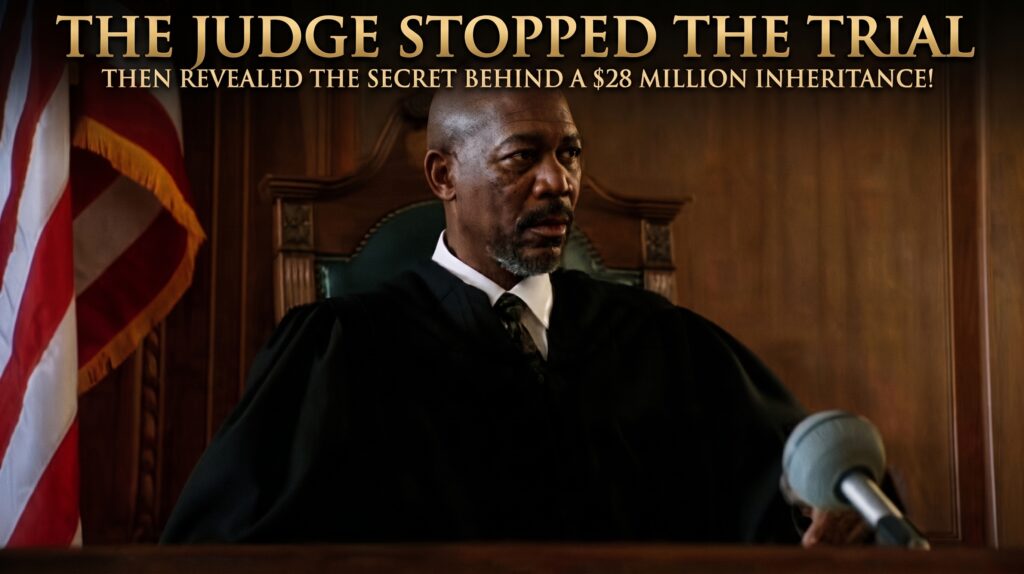
The case eventually reached Judge Marcus Bennett.
And that was when the Carter family’s secrets began to emerge.
Part 2 — The Judge’s First Question
The first hearing took place on a rainy Monday morning.
The courtroom was crowded.
Daniel sat beside his attorney, wearing an expensive navy suit.
Robert sat behind him.
Elizabeth sat alone with her lawyer, Sarah Mitchell.
Judge Bennett entered.
Everyone stood.
“Please be seated.”
The judge reviewed the documents.
Daniel’s attorney began speaking.
“Your Honor, our position is simple. William Carter was elderly and increasingly dependent on his youngest daughter. We believe she exploited his vulnerability.”
Elizabeth lowered her eyes.
Her lawyer stood.
“My client denies every allegation.”
Judge Bennett looked toward Daniel.
“Mr. Carter, did your father discuss his estate with you before his death?”
“Yes, Your Honor.”
“What did he tell you?”
“He told me that the business would remain with the family.”
“Which family member?”
Daniel hesitated.
“All of us.”
The judge examined the documents.
“Yet you are challenging a will that gives your sister the majority of the estate. Why?”
“Because she shouldn’t have received it.”
“That isn’t a legal argument.”
The courtroom became silent.
Daniel’s attorney interrupted.
“We intend to demonstrate that the will was created under suspicious circumstances.”
Judge Bennett nodded.
“Then demonstrate it with evidence.”
During the hearing, Elizabeth remained quiet.
But when the judge looked at her, something changed in his expression.
He seemed to recognize something about her.
After the hearing, he asked both legal teams to submit the original documents.
He wanted to examine the timeline.
And he specifically requested one item.
The original will signed by William Carter more than twenty years earlier.
Nobody understood why.
Except Judge Bennett.
He remembered a promise he had made to an old friend.
A promise he had kept for four decades.
Part 3 — The Letter in the Envelope
That evening, Elizabeth returned to her father’s house.
The property stood on a hill overlooking a small lake.
William had built it when his company was still young.
Every room contained memories.
Photographs of family holidays.
Birthday celebrations.
School certificates.
And an old wooden desk where William had spent countless nights planning his business.
Elizabeth entered his study.
She remembered his final weeks.
He had become weaker, but his mind remained clear.
One afternoon, he had called her to his bedside.
“Elizabeth, there’s something I need you to understand.”
“What is it, Dad?”
He handed her a sealed envelope.
“Don’t open this unless your brothers try to take everything away from you.”
She had laughed gently.
“Why would they do that?”
William looked toward the window.
“Because people sometimes forget that family is more important than money.”
Now, sitting alone in his study, Elizabeth opened the envelope.
Inside was a handwritten letter.
It was addressed to her.
My dearest Elizabeth,
If you are reading this, then the people I hoped would protect you have chosen to fight you instead.
I want you to know that the estate is not the most important thing I am leaving behind.
There is a truth about your birth that I should have explained many years ago.
I was afraid of losing you.
The judge who is handling your case knows the truth.
His name is Marcus Bennett.
Elizabeth stopped reading.
She read the name again.
Marcus Bennett.
The judge.
Her father’s letter continued.
Ask him about the night your mother died. Ask him why I promised to protect you.
Elizabeth’s hands began trembling.
Her mother had died when she was very young.
She had always been told that it was an unfortunate accident.
What did Judge Bennett know about it?
She turned the page.
There was a second envelope attached.
Inside was a photograph.
It showed William Carter standing beside a younger man.
The man was Judge Bennett.
And between them was a woman holding a newborn baby.
Elizabeth recognized the woman immediately.
It was her mother.
Part 4 — The Secret from Forty Years Ago
The following morning, Elizabeth brought the photograph to her lawyer.
Sarah examined it.
“Where did you get this?”
“My father left it in an envelope.”
Sarah turned it over.
There was handwriting on the back.
December 1988. The night everything changed.
Sarah looked at Elizabeth.
“Do you know what happened in December 1988?”
“My mother died that year.”
“How?”
“A car accident. That’s what Dad told me.”
Sarah studied the photograph.
“Your father specifically mentioned the judge.”
Elizabeth nodded.
“I need to know why.”
Sarah explained that a judge could not discuss private matters connected to a case without following proper legal procedures.
But the photograph could be relevant evidence if it connected to the authenticity of the will or the circumstances surrounding the inheritance.
Meanwhile, Daniel and Robert were becoming increasingly desperate.
They had expected the court to approve their challenge quickly.
Instead, Judge Bennett had requested additional documents.
Daniel called his attorney.
“How long is this going to take?”
“We need more evidence.”
“My father is dead. Elizabeth has no idea what she’s doing. Why can’t we finish this?”
The attorney looked at him.
“Because your father left something behind.”
Daniel frowned.
“What?”
“A trust document that we haven’t located yet.”
Robert, standing nearby, overheard the conversation.
“What trust document?”
Daniel ended the call.
“Nothing.”
But Robert knew his brother was hiding something.
Later that evening, he searched their father’s old office.
Behind a row of accounting books, he discovered a small metal safe.
He remembered seeing it as a child.
William had always forbidden his sons from opening it.
Robert entered the combination.
Inside was a collection of documents.
One was a photograph of Elizabeth’s mother.
Another was a bank statement.
But the document at the bottom made him stop breathing.
It was a letter written by their father.
And it began:
To the sons who will one day betray their sister…
Part 5 — The Truth About Elizabeth’s Birth
The next hearing was scheduled for Thursday.
Judge Bennett entered the courtroom carrying a thick file.
He looked older than he had the previous week.
Daniel’s lawyer stood.
“Your Honor, we have additional evidence regarding the estate.”
The judge nodded.
“Proceed.”
The lawyer presented a medical report suggesting that William had experienced periods of confusion during his final months.
Elizabeth’s attorney objected.
The report, she argued, did not establish that William lacked the mental capacity to make a will.
Judge Bennett reviewed the documents.
Then he looked toward Elizabeth.
“Miss Carter, do you have anything further to submit?”
Elizabeth stood.
“Yes, Your Honor.”
She handed the clerk the photograph and letter.
The judge examined them.
For several seconds, he did not speak.
Then he asked the lawyers to approach.
He ordered a recess.
Everyone left the courtroom except the judge and his clerk.
Judge Bennett looked at the photograph again.
He remembered the night William had arrived at his home forty years earlier.
It had been raining.
William had been carrying a newborn baby.
His wife, Margaret, had died following complications after childbirth.
The child had survived.
But William was devastated and overwhelmed.
Marcus Bennett had been a young attorney at the time.
He had helped William arrange the legal documents necessary to protect the baby.
There had been another complication.
Margaret had left behind a letter.
It explained that Elizabeth’s biological father was a man who had disappeared before she was born.
William had known the truth.
But he had chosen to raise Elizabeth as his own daughter.
He never wanted her to feel abandoned.
And Marcus had promised to protect the family secret.
Now, forty years later, that secret was threatening to destroy everything William had built.
The judge understood why William had mentioned him in the letter.
But he also understood that his own involvement could create a conflict requiring independent legal review.
He would have to disclose his prior connection and allow the appropriate judicial authority to determine whether he could continue presiding over the case.
He called his clerk.
“Prepare the disclosure.”
Then he added quietly:
“This family deserves the truth.”
Part 6 — The Brothers’ Hidden Agreement
While the court prepared to review the judge’s disclosure, Robert confronted Daniel.
He placed their father’s letter on the kitchen table.
“What is this?”
Daniel looked at it.
“Where did you find that?”
“In Dad’s safe.”
Daniel picked it up.
His expression changed.
Robert opened the letter.
It described a secret agreement between their father and a former business partner.
William had established a protected trust to preserve the original family estate.
The trust was designed to benefit all three children, but Elizabeth was appointed as its principal guardian.
Daniel had been excluded from controlling the trust because William had discovered irregular financial transactions.
Robert looked at his brother.
“Did you know about this?”
Daniel said nothing.
“Did you steal from the company?”
Daniel finally sat down.
“Father never understood how difficult it was to run that business.”
Robert shook his head.
“How much?”
Daniel looked toward the window.
“Almost four million.”
Robert stood.
“Four million dollars?”
Daniel explained that he had borrowed money against company assets to finance a private investment.
He expected the investment to succeed.
Instead, it failed.
He had been trying to recover the money before their father discovered the truth.
Robert felt sick.
“And you blamed Elizabeth?”
Daniel became angry.
“She doesn’t deserve the company!”
“She was never involved in your decisions.”
“She was Father’s favorite.”
Robert looked at him.
“Maybe he trusted her because she didn’t steal from him.”
Daniel stood.
“You don’t understand. If Elizabeth controls the estate, the financial records will be examined.”
Robert suddenly understood.
The lawsuit wasn’t really about the inheritance.
Daniel wanted to prevent the discovery of his financial misconduct.
And he had used Robert to do it.
Part 7 — The Judge’s Final Disclosure
The court reconvened after the judicial conflict review.
Judge Bennett explained that he had known William Carter personally decades earlier.
He also disclosed that he had once provided legal assistance to the family.
Because of that relationship, he would not continue hearing the inheritance dispute.
The case would be transferred to another judge.
Before stepping aside, however, he made one important statement.
“Before this court, I have seen three people fighting over a fortune. But I have also seen evidence that this dispute may involve more than inheritance.”
He looked toward the lawyers.
“There are questions concerning the authenticity of documents, the management of the estate, and the conduct of those involved.”
He paused.
“Those matters must be examined independently.”
Elizabeth sat motionless.
The judge looked at her one last time.
“Miss Carter, your father wanted you to have something more valuable than his money.”
“What was that, Your Honor?”
“His trust.”
He closed the file.
“And I believe you will understand that one day.”
Then he left the courtroom.
Elizabeth began crying.
Not because she had won.
But because she finally understood how much her father had carried alone.
Part 8 — The Final Will
Several weeks later, the case was transferred to Judge Helen Morris.
The legal investigation uncovered additional documents.
A handwriting expert confirmed that William had personally signed the final will.
Medical evidence showed that he had understood the decisions he was making.
The original trust documents were also located.
Most importantly, investigators discovered financial transfers made without proper authorization.
Daniel’s name appeared repeatedly.
Robert cooperated with the investigation and admitted that he had helped conceal some transactions.
He also provided evidence that Daniel had encouraged him to support the inheritance challenge.
The new judge reviewed everything.
The final ruling confirmed the validity of William’s will.
Elizabeth was entitled to the inheritance.
But the judge made it clear that the financial misconduct would be handled separately.
Daniel could no longer control the company’s finances.
The court appointed independent administrators to examine the estate.
Robert faced consequences for his involvement, although his cooperation was taken into account.
Elizabeth did not celebrate.
She returned to her father’s house and walked through every room.
The inheritance had been restored.
But her family was broken.
On the desk, she found another envelope.
This one contained a handwritten message from William.
Elizabeth,
Your brothers may believe that I chose you because I loved them less.
That is not true.
I chose you because I believed you would understand that wealth is a responsibility, not a reward.
If you ever have to choose between money and doing what is right, choose what is right.
She held the letter against her chest.
For the first time, she understood what her father had wanted.
Part 9 — The Last Conversation
Three months later, Daniel asked to meet Elizabeth.
She agreed.
They met at the family home.
Daniel looked exhausted.
His expensive clothes had been replaced by an ordinary jacket.
He sat across from his sister.
“I know you don’t want to see me.”
Elizabeth remained quiet.
“I made mistakes.”
“You lied about me.”
Daniel nodded.
“I know.”
“You accused me of manipulating Dad.”
“I was afraid.”
“Afraid of what?”
“Of losing everything.”
Elizabeth looked at him.
“You were willing to destroy your own sister to protect your money.”
Daniel began crying.
“I thought I could fix everything before anyone found out.”
“Did you ever think about what Dad would feel?”
He lowered his head.
“I know he would be ashamed.”
Elizabeth walked to the window.
Their father had loved both his sons.
He had wanted them to succeed.
But he had also wanted them to become decent men.
“Daniel, I cannot pretend nothing happened.”
“I understand.”
“But I don’t want to spend the rest of my life hating you.”
Daniel looked up.
She continued.
“Take responsibility. Tell the truth. And become someone Dad would have been proud of.”
He nodded.
They did not embrace.
There was too much pain between them.
But for the first time, Daniel did not argue.
Robert also began making amends.
He agreed to cooperate fully with the financial investigation and eventually apologized to Elizabeth.
The family would never return to what it had been.
But perhaps it could become something more honest.
Part 10 — The Inheritance That Money Could Not Buy
One year later, Elizabeth stood outside the original Carter family home.
The estate had been renovated.
But she had refused to replace the old wooden doors or remove the photographs from the hallway.
She also made an important decision.
She established a charitable foundation in her father’s name.
The foundation helped families facing financial hardship, supported nursing scholarships, and provided legal assistance to elderly people whose estates were being exploited.
The construction company continued operating under independent management.
Elizabeth remained the majority owner, but she refused to run it alone.
She hired experienced professionals and created transparent financial controls.
One afternoon, Judge Bennett visited the foundation’s opening ceremony.
He was no longer involved in the Carter legal proceedings.
He approached Elizabeth.
“Your father would have been proud.”
She smiled.
“I wish he could have seen this.”
The judge looked toward the photographs displayed on the wall.
“Do you still wonder why he kept my name in his will?”
Elizabeth nodded.
Judge Bennett took a breath.
“Your father wanted me to remember the promise I made when you were born. He wanted to make sure that if anyone ever tried to take your future away, the truth would not remain buried.”
Elizabeth looked at him.
“Thank you for keeping that promise.”
The judge shook his head.
“Your father kept the most important promise. He raised you with love.”
Elizabeth looked at a photograph of William standing outside his original construction office.
She remembered his words.
Family was more important than money.
And now she understood.
The $28 million estate had brought her brothers into court.
It had exposed lies, destroyed relationships, and revealed secrets that had remained hidden for forty years.
But it had also given Elizabeth the opportunity to protect something her father valued more than his fortune.
His legacy.
As the ceremony ended, Elizabeth stood alone for a moment beneath the old oak tree.
She placed her father’s letter inside her handbag.
Then she whispered:
“I kept it, Dad. I kept what mattered.”
And for the first time since the courtroom battle began, she smiled without sadness.
Because sometimes the greatest inheritance isn’t a house, a company, or millions of dollars. It is the truth that finally sets a family free.
THE END.