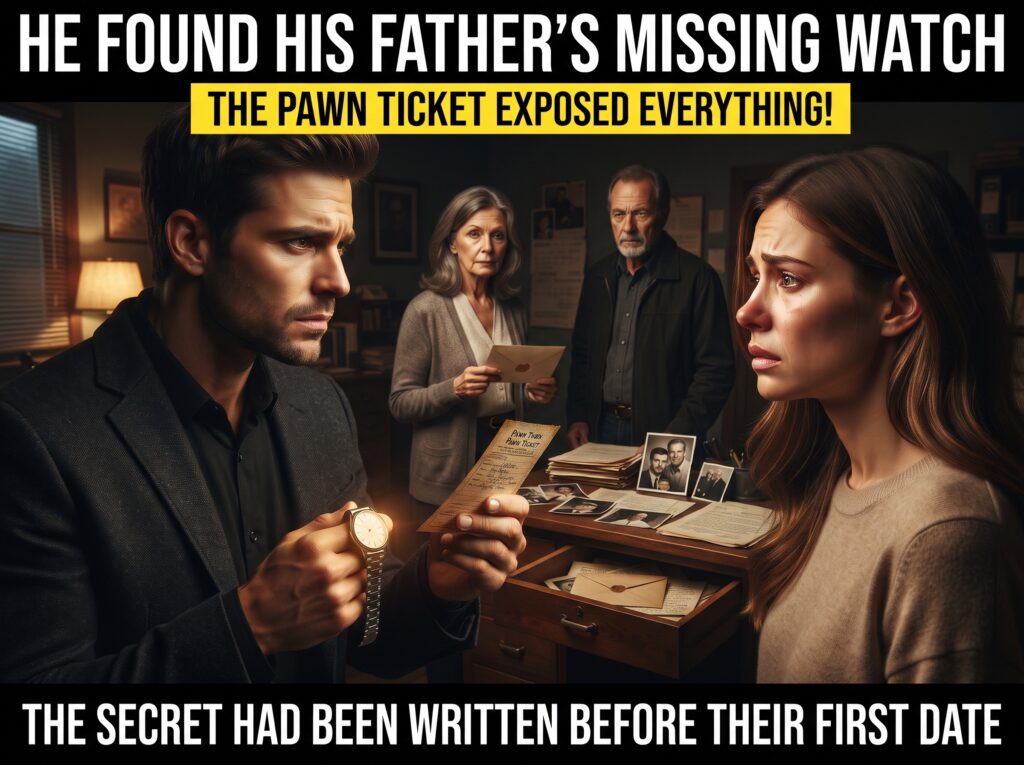
The morning my bank account was frozen, I discovered how quickly an ordinary life could become unfamiliar.
I stood in the middle of the bank lobby, holding a plastic folder containing three overdue bills, an identification card, and a handwritten list of expenses I had already reduced as much as possible.
The woman behind the counter had explained everything twice.
There had been unusual activity.
The account required additional verification.
Until the matter was resolved, I would not be able to access the remaining money.
I nodded as though I understood.
In reality, I was thinking about the rent.
The electricity bill.
The groceries I had promised myself I would buy that afternoon.
And the small amount of money I had been keeping aside in case something happened.
Something had happened.
“Is there another account I can use?” I asked.
The employee checked her computer.
“I’m afraid I can’t discuss the details until the investigation is complete.”
I thanked her and stepped away.
Outside, the morning was cold.
People hurried past the bank entrance carrying coffee, talking on their phones, and thinking about the ordinary problems that filled their days.
I envied them.
Six months earlier, I had believed my biggest problem was deciding whether to move into a larger apartment with the person I loved.
Now I was wondering how I would pay for the apartment I already had.
Her name was Leah.
We had been together for almost three years.
When we first met, she was the kind of person who remembered small things.
She remembered how I liked my coffee.
She knew I hated sleeping with the bedroom window open.
She could tell when I was worried even when I insisted everything was fine.
We had not started our relationship with money.
We had started with conversations.
Long walks.
Cheap dinners.
Plans that sounded impossible but somehow felt achievable when we discussed them together.
Our first apartment had two small bedrooms, an unreliable heating system, and a kitchen barely large enough for two people.
We loved it.
When the refrigerator broke, we ate sandwiches for three days.
When the electricity bill arrived unexpectedly, we turned off unnecessary lights and spent evenings talking by the window.
I thought those difficult moments had made us stronger.
Then the arguments began.
At first, they were small.
Leah became irritated whenever I asked about the bank balance.
She started receiving calls she would not answer in front of me.
Sometimes she returned home late and said she had been helping someone.
I never questioned her.
I trusted her.
When the rent increased, she promised we would manage.
When I asked whether she was worried, she kissed my forehead and told me not to think too much.
Then one evening, she packed two bags.
“I can’t keep doing this,” she said.
I remember standing near the kitchen table, looking at the unopened grocery bag between us.
“Doing what?”
“Living like this.”
“We’re going through a difficult period. We knew it wouldn’t always be easy.”
She shook her head.
“It’s not just the money, Noah.”
“What else is it?”
She looked at me for several seconds.
Then she said something I would remember long after she left.
“One day, you’ll understand why I couldn’t stay.”
I asked her to explain.
She refused.
She walked out carrying the two bags, leaving behind a photograph, several unpaid bills, and a watch I believed had disappeared months earlier.
Now, standing outside the bank, I remembered something.
The watch had been missing since the beginning of our financial troubles.
Leah had told me she had searched everywhere.
I had believed her.
But the pawn ticket I found inside an old envelope that morning suggested otherwise.
And the name printed on it was hers.
<h2>Part 2</h2>
I returned to the apartment carrying the pawn ticket in my jacket pocket.
It was a small piece of paper, slightly faded around the edges.
The shop’s name was printed across the top.
The date was six months earlier.
Below it was the description of a silver wristwatch with a dark leather strap.
I knew that watch.
My father had given it to me on my twenty-first birthday.
It was not expensive, but it was the only thing he had owned that I had kept with me every day.
After he died, I wore it whenever I needed to feel close to him.
When it disappeared, I had searched the apartment.
I checked the bedroom drawers, the bathroom cabinet, the pockets of my winter coats, and even the small storage cupboard beneath the stairs.
Leah helped me search.
She had insisted we would find it.
I remembered her sitting on the floor beside the bed, saying, “Maybe you left it somewhere outside.”
I had believed her.
Now I looked at the pawn ticket again.
The date was particularly disturbing.
It was the same week Leah had told me we needed to reduce our spending.
I sat at the kitchen table.
There were three unpaid bills in front of me.
Electricity.
Rent.
Credit card.
I placed the pawn ticket beside them and opened the drawer where I kept our old financial records.
The drawer had become a collection of things neither of us wanted to discuss.
Receipts from grocery stores.
Bank statements.
Utility notices.
Letters from the landlord.
A small notebook where we had written our monthly expenses.
I opened it.
The first page contained our original budget.
We had agreed to divide everything equally.
Rent, groceries, electricity, transportation.
Neither of us had earned much, but together we had managed.
Then, beginning around six months earlier, the numbers changed.
There were withdrawals I could not explain.
Several payments had been made to unfamiliar accounts.
Small amounts at first.
Then larger ones.
I checked the dates against our messages.
One message from Leah read:
Don’t worry about the rent. I have taken care of it.
Another said:
Please don’t ask about the money tonight. I’m tired.
A third was sent just after midnight.
I wish I could tell you everything.
I stared at that sentence.
Why hadn’t I asked what she meant?
Because I had been trying to protect the relationship.
Because every time she looked exhausted, I thought asking another question would make things worse.
Because I had believed love meant giving someone room to speak when they were ready.
But perhaps silence had given someone else room to lie.
I opened my laptop and searched the pawnshop’s name.
The shop was still operating.
It was only a few miles away.
I called.
A man answered.
“Good afternoon. How can I help?”
I explained that I had found a pawn ticket and wanted to confirm a transaction.
He asked for the ticket number.
I read it aloud.
There was a pause.
“Yes, I can see that transaction.”
“Was the watch sold?”
“It was pledged and later redeemed.”
I sat upright.
“Redeemed?”
“Yes. The item was collected.”
“By the same person who pawned it?”
Another pause.
“That information is on the record.”
“Could you tell me the date?”
He gave me the date.
It was three weeks after Leah had left.
I looked at the ticket again.
Someone had recovered my father’s watch after our relationship ended.
Someone had paid to get it back.
But the money had not gone into my account.
And Leah had never mentioned it.
I thanked the man and ended the call.
For several minutes, I did nothing.
Then I noticed something written in small handwriting on the back of the ticket.
An address.
And beneath it, two initials.
M.R.
I recognized them immediately.
Margaret Reed.
Leah’s mother.
<h2>Part 3</h2>
I had met Margaret only a handful of times.
She was polite, reserved, and always seemed to know more than she was willing to discuss.
During our first meeting, she had asked me several questions about my father.
Not about his job or where he had lived.
She wanted to know when he died.
Whether he had owned a watch.
Whether he had ever worked outside our hometown.
At the time, I had considered the questions unusual but harmless.
Leah later told me her mother had always been interested in family history.
Now those conversations seemed less innocent.
I found Margaret’s address in an old message Leah had sent me.
She lived in a quiet neighborhood about twenty minutes from my apartment.
I considered calling first.
Instead, I put the ticket in my pocket and drove there.
The house looked exactly as I remembered it.
White curtains.
A small garden.
A wooden bench near the entrance.
I rang the bell.
Margaret opened the door.
Her expression changed when she saw me.
“Noah.”
“Hello, Margaret.”
She glanced at the paper in my hand.
“Where did you get that?”
I did not answer immediately.
“Do you know what this is?”
She looked at the pawn ticket.
Then she stepped outside and closed the door behind her.
“Not here.”
“Why?”
“Please.”
I felt my patience disappearing.
“Your daughter’s name is on this ticket. My father’s watch was pawned, then redeemed. Your initials are written on the back. I think I deserve an explanation.”
Margaret looked toward the street.
“Leah told you nothing?”
“She left without explaining why.”
Margaret closed her eyes.
“I was afraid this day would come.”
“Then you know something.”
She nodded slowly.
But before she could speak, a car pulled into the driveway.
A man stepped out.
He was in his early sixties, wearing a dark coat and carrying a leather folder.
Margaret immediately moved toward him.
“You shouldn’t be here,” she whispered.
The man looked at me.
“Who is he?”
Margaret did not answer.
I introduced myself.
“Are you a relative?”
The man studied my face.
Then he looked at the pawn ticket.
For a moment, he seemed to recognize something.
“You’re Noah?”
I nodded.
He looked at Margaret.
“Did you tell him?”
“Not yet.”
The man sighed.
“Then I suppose there’s no point delaying it.”
Margaret opened the front door.
“Come inside.”
I followed them into the living room.
The house smelled faintly of coffee and old furniture polish.
The man placed his folder on the table.
“I’m Daniel,” he said. “I knew your father.”
I stared at him.
“My father?”
“Yes. Years ago.”
“How?”
Daniel glanced toward Margaret.
“That is part of the problem.”
Margaret sat down.
“Your father and I were connected long before you met Leah.”
I frowned.
“What does that have to do with the watch?”
Daniel opened his folder.
Inside were several photocopied documents.
One showed a photograph of my father standing outside a building.
Beside him was a younger Margaret.
I recognized my father’s face immediately.
But the photograph was dated almost thirty years earlier.
“Where did you get this?” I asked.
“Your father gave it to me.”
“Why?”
Daniel looked directly at me.
“Because he knew that one day you might become involved with Leah.”
The room seemed to grow quiet.
I looked at Margaret.
“Did you know I was going to meet her?”
She nodded.
“Not at first.”
“Then when?”
“Before your first date.”
<h2>Part 4</h2>
I thought I had misunderstood her.
“Before our first date?”
Margaret nodded.
Daniel took a folded document from his folder.
It was an old letter.
The paper had turned yellow, and the handwriting was unmistakably my father’s.
I recognized the way he wrote his capital letters.
He had always written slowly, with a slight upward slant.
The letter was addressed to Margaret.
Margaret,
If Noah ever becomes close to Leah, please do not tell him about the agreement immediately.
I know this sounds unfair, but I need time to make certain that everything has been handled correctly.
The watch is the only remaining item connecting him to what happened.
If the situation becomes difficult, I will explain it myself.
Please do not allow either of them to pay for mistakes made before they were born.
I read the letter twice.
“What agreement?”
Margaret looked at Daniel.
He opened the folder again.
There was a second document.
It contained the names of my father, Margaret, and another man named Richard.
The date was thirty years earlier.
Below the names was a reference to a financial arrangement involving a business and a family loan.
I looked at Margaret.
“My father never mentioned any of this.”
“He wanted to tell you,” she said. “But he died before he could.”
“Then why did Leah know?”
Margaret’s eyes filled.
“Because I told her.”
I stood.
“Why would you tell her and not me?”
“Because she was the one who discovered the money was missing.”
“What money?”
Daniel answered.
“A fund your father established for you.”
I stared at him.
He explained that my father had placed money into a private account years before his death.
It was intended to help me buy a home and establish a stable future.
The money had been accumulated through an old business partnership.
But there had been a disagreement.
Some of the original records had disappeared.
And the account had become difficult to access.
I shook my head.
“My father never told me about an account.”
“He didn’t want you growing up expecting an inheritance,” Margaret said.
I looked at the documents.
“How much money?”
Daniel gave me a figure.
It was enough to change my life.
I sat down.
For years, I had struggled to pay bills.
Leah and I had counted coins for groceries.
We had argued about rent and postponed plans because we believed we could not afford them.
And apparently, there had been money set aside for me.
“Where is it now?”
Daniel hesitated.
“That’s why we need to talk about the watch.”
Margaret reached into her handbag and removed a small photograph.
It showed my father sitting at a desk.
On the desk was the same silver watch I had inherited.
But there was something else.
A second photograph.
A woman standing beside him.
Margaret.
I looked at her.
“Why are you in these pictures?”
She lowered her eyes.
“Because your father trusted me with something.”
Daniel placed another paper on the table.
It was a receipt.
The same pawnshop.
The same watch.
But the transaction date was years before I had ever met Leah.
And the name on the receipt was not Leah’s.
It was mine.
<h2>Part 5</h2>
I could not understand how my name had appeared on a transaction that took place before I had met Leah.
Daniel explained that the pawn ticket I had found was connected to an older receipt.
The watch had been used as security in a private arrangement.
My father had pledged it temporarily to protect money that was owed to another family.
He had later recovered it.
Or at least, he believed he had.
“Why did you tell me the watch was lost?” I asked Margaret.
“Because we couldn’t find it after your father’s death.”
“Then why did Leah say she searched everywhere?”
Margaret looked uncomfortable.
“She had found it.”
“When?”
“Before you moved in together.”
I felt my chest tighten.
“She knew where it was?”
“Yes.”
“Why didn’t she tell me?”
Margaret looked down.
“Because the watch was connected to the account.”
Daniel explained that my father had left a collection of documents showing that the money belonged to me.
However, someone had disputed the arrangement.
The watch had become part of the evidence.
Leah discovered the connection after finding a letter among her mother’s belongings.
She had not known what to do.
Instead of telling me, she tried to resolve the matter privately.
That was when the financial difficulties began.
“Was she taking money from our account?” I asked.
Margaret nodded.
“But she wasn’t spending it on herself.”
“Where did it go?”
Daniel turned another page.
Several payments had been made to an account connected to the old agreement.
I recognized the dates.
They matched the months when Leah had told me we were struggling.
The months when I had worked overtime.
The months when I had skipped meals.
The months when I had believed we were both doing everything possible to survive.
I felt anger rise inside me.
“Why didn’t she tell me?”
“She thought she could fix it before you found out.”
“By allowing me to believe we were broke?”
Margaret had no answer.
I looked at the old documents.
There was a signature at the bottom.
Richard’s.
I recognized the name from the photograph.
“Who is Richard?”
Margaret looked at Daniel.
Daniel took a breath.
“Your father’s former business partner.”
“And?”
“He was also the person who managed the account.”
I leaned forward.
“Is he alive?”
Daniel nodded.
“Yes.”
“Where is he?”
Margaret looked toward the hallway.
“He knows you’re here.”
I turned.
A door opened at the end of the corridor.
An older man stepped into the living room.
His hair was almost completely white.
He carried a wooden box.
When he saw me, he stopped.
For several seconds, he simply looked at my face.
Then he said:
“You have your father’s eyes.”
I stood.
“Are you Richard?”
He nodded.
“Yes.”
“Did you take my father’s money?”
His expression tightened.
“No.”
“Then why have I spent years struggling while everyone around me knew something I didn’t?”
Richard placed the wooden box on the table.
“Because your father asked us to wait until you were ready.”
I laughed bitterly.
“Ready for what?”
Richard opened the box.
Inside was a letter.
It was addressed to me.
And the date was older than my first birthday.
<h2>Part 6</h2>
The letter was written by my father shortly before I was born.
I had never seen his handwriting on anything that old.
Richard handed it to me.
“Read it.”
I opened the envelope.
My son,
You will not remember the day I wrote this.
You will probably never know how many decisions were made before you arrived.
There are people who will tell you that money determines the value of a life. I hope you never believe them.
I have made mistakes. Some of them involve people I trusted. Others involve people who trusted me.
But there is one thing I want you to understand.
Your future should never be used to repay a debt you did not create.
I stopped reading.
The words seemed to reach across the years.
My father had known that something could happen.
He had anticipated the possibility that his decisions might affect me.
The letter continued.
There is an account connected to your name. It is not simply money. It represents a promise between two families.
If you ever meet a woman named Leah, do not assume that the past has nothing to do with your future.
I looked up.
“Leah?”
Richard nodded.
“Your father knew her family.”
I continued reading.
Do not punish her for what the adults have done. She may know more than you. She may know less than you think. But if you love her, give her the opportunity to tell you the truth.
At the bottom was another sentence.
The watch must return to you when the account is finally settled.
I placed the letter down.
“How did my father know I would meet Leah?”
Richard explained that our families had known each other for decades.
My father and Leah’s grandfather had once worked together.
They had made an agreement involving a business investment.
Part of the money had been set aside for the next generation.
The agreement had never been properly completed.
When my father died, Richard continued managing the documents.
But the family relationships became complicated.
Margaret had tried to protect the arrangement.
Leah eventually discovered the paperwork.
She began making payments to keep the account from being closed.
She used money from our shared finances.
And when she realized she could not continue, she left.
I looked at Richard.
“Did she know I would lose everything?”
“She knew the account was in danger.”
“That’s not an answer.”
Richard nodded.
“Yes. She knew.”
I felt betrayed again.
All the explanations sounded reasonable until I remembered the nights I had gone to bed hungry.
I remembered asking Leah whether we could afford groceries.
I remembered her saying yes when she knew the money was being used elsewhere.
I remembered the way she had looked at me before leaving.
I could understand her fear.
But I could not understand why she had allowed me to carry the consequences without knowing why.
“Where is she now?”
Margaret wiped her eyes.
“We don’t know.”
I stood.
“Then what exactly have you been waiting for?”
Richard looked at the letter.
“Her.”
I frowned.
“Why?”
He turned the paper over.
There was another paragraph written on the back.
It was not addressed to me.
It was addressed to Leah.
And the final sentence said:
When Noah discovers the watch, tell him who actually paid to get it back.
<h2>Part 7</h2>
I left Margaret’s house with more questions than answers.
The pawn ticket had led me to a hidden account.
The account had led me to my father’s old business partner.
And the letter had revealed that Leah’s involvement had begun before our relationship.
I needed to speak to her.
But I did not know where she was.
I called her old number.
It had been disconnected.
I sent a message to her social media account.
There was no response.
I contacted two friends who had known us as a couple.
Neither knew where she had gone.
One told me she had moved away.
The other said she had been asking about me.
That evening, I returned to my apartment.
The silence was unbearable.
I opened the drawer containing our old bills.
I found the electricity notices.
The rent receipts.
The grocery lists.
And the small notebook where we had written our monthly expenses.
On one page, Leah had written:
Noah’s birthday. Remember the watch battery.
I remembered that day.
She had surprised me with a small cake.
She had hugged me and said that she wanted us to grow old together.
I sat down and closed the notebook.
Then I noticed a folded piece of paper beneath the bottom lining of the drawer.
It had not been there before.
Or perhaps I had never looked carefully enough.
I unfolded it.
It was a receipt from a courier company.
The delivery date was three weeks after our breakup.
The recipient was Richard.
The sender was Leah.
There was a tracking reference.
I called the courier company the next morning.
They could not disclose the contents, but they confirmed the package had been delivered.
I contacted Richard.
He answered after several rings.
“Did you receive a package from Leah?”
He went quiet.
“Yes.”
“What was inside?”
“Documents.”
“What documents?”
“Copies of the original agreement.”
I leaned against the kitchen counter.
“Why didn’t you tell me?”
“Because I was waiting for the final verification.”
“What verification?”
Richard explained that the original account had been challenged.
A second signature was required to release the funds.
Leah had provided the documents, but the bank needed confirmation from another person.
“Who?”
He hesitated.
Then he said:
“Your mother.”
I closed my eyes.
Another person had known.
Another piece of my life had been discussed without me.
I called Margaret.
She answered immediately.
“I was going to tell you.”
“When?”
She started crying.
“After everything was settled.”
“Mom, I need you to understand something. Every time someone says they were waiting for the right moment, I discover another thing that has been hidden from me.”
She apologized.
Then she gave me an address.
It was the location of a small office where the final account documents were being held.
“Leah might be there,” she said.
“Why?”
“Because she has been trying to finish what your father started.”
I looked at the pawn ticket on the table.
“Why did she pawn the watch?”
Margaret whispered:
“Because she needed to save the account.”
I felt my throat tighten.
“Then why did she get it back?”
“Because she wanted you to have it.”
I asked who had paid.
Margaret did not answer.
Instead, she said:
“Go to the office. You’ll understand when you see the signature.”
<h2>Part 8</h2>
The office was located above an old accounting firm.
It was a small building with a narrow staircase and a reception desk that appeared to have been there for decades.
A woman greeted me.
I gave her my name.
She checked a folder.
“You’re expected.”
“By whom?”
She pointed toward a closed door.
“Mr. Richard is waiting.”
I entered.
Richard stood beside a filing cabinet.
There was another person sitting near the window.
Leah.
For several seconds, I could not speak.
She looked thinner than I remembered.
Her hair was shorter.
Her eyes were tired.
But when she saw me, her expression changed in the same way it had the night she packed her bags.
“Hello, Noah.”
I looked at her.
“Why didn’t you tell me?”
She lowered her eyes.
“I wanted to.”
“When?”
“Before I left.”
“But you didn’t.”
“No.”
I placed the pawn ticket on the desk.
“Why did you pawn my father’s watch?”
Leah looked at it.
Then she began crying.
“Because the account was about to be closed.”
“Why didn’t you tell me?”
“Because I knew you would refuse.”
“You didn’t even ask.”
“I know.”
She took a breath.
“My mother discovered the old agreement after your father died. Richard contacted us when the bank questioned the account. We were told that if the missing amount wasn’t replaced, the original documents could become invalid.”
I stared at her.
“How much money?”
She told me.
The figure was larger than I expected.
She had sold several personal belongings.
She had used savings from her previous job.
And finally, she had pawned my watch.
I remembered the date.
It was the same week she had told me we needed to cut back on spending.
“You used our money?”
She nodded.
“I thought I could replace it before you noticed.”
“How?”
“I believed the account would be released.”
“But it wasn’t.”
“No.”
“And then you left.”
She covered her face.
“I was ashamed.”
I felt anger, sadness, and something I could not name.
“You could have told me.”
“I know.”
“Instead, I thought you had stopped loving me.”
Leah looked up.
“I never stopped.”
The words did not make everything better.
They made it more painful.
Richard opened a folder.
“The account has now been verified.”
I looked at him.
“Then why am I here?”
He placed a document in front of me.
It was the final statement.
The original amount had been restored.
The account had been released.
But there was a section containing the names of everyone who had contributed.
I recognized Leah’s name.
Margaret’s.
Richard’s.
Then I saw another name.
My father’s.
And beside it was a note explaining that the account had been created as part of an agreement involving a promise made before my birth.
I looked at Leah.
“Why did you say our breakup wasn’t about money?”
She wiped her eyes.
“Because the money was only the beginning.”
She reached into her bag.
Then she removed a sealed envelope.
“Your father left this for you.”
<h2>Part 9</h2>
The envelope was older than the pawn ticket.
The paper was yellowed, and the edges were slightly damaged.
My name was written across the front.
I recognized the handwriting.
My father’s.
Leah placed it in my hands.
“He gave it to my mother before he died.”
I looked at Richard.
“Why did you have it?”
“Because your father asked me to keep it until the account was settled.”
I opened the envelope.
Inside was a letter and a small photograph.
The photograph showed my father standing with a young Margaret and a man I did not recognize.
On the back were three words.
Before Noah arrives.
I opened the letter.
My son,
If this letter has reached you, then the promise I made years ago has finally been completed.
I need you to understand something about the people around you.
Sometimes they will make decisions because they believe they are protecting you. Sometimes they will make those decisions because they are afraid of losing something themselves.
The difference is not always easy to see.
I made mistakes with money. I made mistakes with trust. And I made the mistake of believing that silence could prevent pain.
I do not want you to repeat that mistake.
I stopped reading.
Leah was watching me.
I continued.
The account was never intended to make you wealthy. It was created to give you a beginning that I could not guarantee with my own income.
The watch was part of the original agreement. I used it as security when the business was struggling, and I promised that it would return to you when the final account was settled.
If the person beside you has helped bring this promise to completion, remember that she has also carried a burden she did not create.
But do not confuse forgiveness with forgetting.
Ask questions. Listen carefully. And never let anyone convince you that love requires you to remain ignorant.
At the bottom was a final sentence.
I knew you would meet Leah one day, because I had already written to the person who would introduce you.
I looked up.
“What?”
Richard took another document from the folder.
It was an old letter dated several months before my first date with Leah.
The letter had been addressed to a mutual friend.
It mentioned both our names.
It contained a request.
My father had asked the friend to introduce us if the opportunity ever arose.
I felt as though the floor had moved beneath me.
“Did my father arrange our first date?”
Leah shook her head.
“No. He asked someone to introduce us. But neither of us knew about the letter.”
I read the message again.
It had been written before we met.
Before our first conversation.
Before the first coffee.
Before the relationship.
The last sentence was unmistakable.
If they find each other, let them decide for themselves what comes next.
I looked at Leah.
“Did you know?”
“Not until after we had been together for several months.”
“And you stayed silent.”
“Yes.”
I folded the letter.
There was one final question I needed to ask.
“Why did you really leave?”
Leah looked at Richard.
He nodded.
She reached into her bag and removed another document.
This one was addressed to her.
And the name of the person who had written it was not my father’s.
It was my mother’s.
<h2>Part 10</h2>
I opened the final document.
It was a letter from Margaret.
She had written it several months before Leah left.
The letter explained that the original agreement had become more complicated than anyone had expected.
My mother had been worried that the account would create another conflict between the families.
She had asked Leah to wait until the documents were verified before telling me.
Leah had agreed.
But as the months passed, the money problems became worse.
The account was frozen.
The bills accumulated.
And Leah became convinced that she had destroyed the life we were building together.
She had pawned the watch to protect the account.
Then she had used the money to repay part of the old obligation.
When the watch was eventually redeemed, she arranged for it to be returned to me.
But she never found the courage to explain what had happened.
I finished reading.
The room was silent.
I looked at Leah.
“Why didn’t you trust me enough to let me help?”
She answered quietly.
“Because I was afraid you would spend the rest of your life feeling responsible for something your father had done.”
I shook my head.
“You let me believe I wasn’t enough.”
Her eyes filled.
“I know.”
“You let me believe that we lost each other because we were poor.”
“I know.”
“And I spent months wondering what I had done wrong.”
Leah began crying.
“I never wanted you to feel that way.”
I sat down.
For a long time, I said nothing.
The money was no longer the most important part.
The watch had been returned.
The account had been settled.
The documents had finally been explained.
But the months of uncertainty could not be recovered.
I remembered the nights we had shared one meal.
The times I had told her not to worry.
The arguments about bills.
The promises we had made while believing that our problems were temporary.
I had thought the hardest part of losing her was the silence.
Now I understood that the hardest part was discovering how much of our life had been decided by people who believed they knew what was best for us.
I turned toward Leah.
“Do you still have the watch?”
She nodded.
She placed it on the desk.
The leather strap had been replaced.
The silver case was scratched, but the face still worked.
I picked it up.
For a moment, I could almost hear my father’s voice telling me to look after it.
Then I looked at Leah.
“I don’t know what happens next.”
She nodded.
“I don’t expect you to know.”
“I need time.”
“I understand.”
We left the office separately.
Over the following weeks, I began rebuilding my finances.
The frozen account was finally resolved.
The outstanding payments were reviewed, and the documents were corrected.
Margaret apologized.
Richard provided the remaining records.
Leah and I did not immediately return to the relationship we had once shared.
We began with conversations.
Honest ones.
Sometimes they were uncomfortable.
Sometimes they brought back painful memories.
But for the first time, neither of us pretended that everything was fine.
Months later, I visited my father’s grave.
I placed the silver watch beside the flowers.
“I found it,” I whispered.
Then I smiled sadly.
“I also found the truth.”
I thought about the letter written before my first date.
My father had believed that two people might find each other.
He had hoped they would have a future.
But he had also understood something important.
A promise made by one generation should never become a burden forced upon the next.
As I walked away, my phone vibrated.
A message from Leah appeared.
I don’t expect you to forget what happened. I only hope one day we can remember the good parts without being afraid of the truth.
I read it twice.
Then I looked at the watch on my wrist.
For years, I had believed it was only a reminder of the father I had lost.
Now it reminded me of something else.
A secret can survive for decades.
A promise can travel through generations.
And sometimes, the truth arrives so late that the people who need it most have already lost each other.
But knowing the truth is still better than spending the rest of your life believing a lie.