The first thing I learned about being left alone was that the world did not stop simply because my life had fallen apart.
The buses still arrived at the railway station. The shops still opened in the morning. People still hurried through the streets carrying bags, coffee, and the ordinary worries that seemed so small compared with mine.
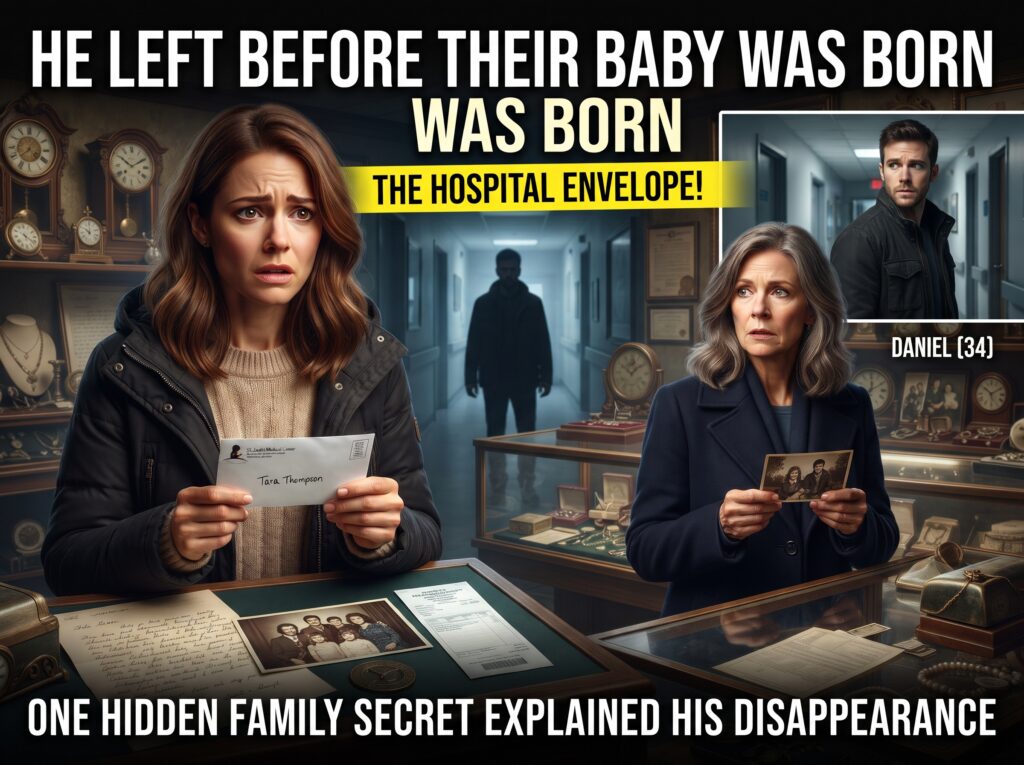
And somewhere inside a little pawnshop beside the old railway station, I was counting coins.
I had arranged them into small piles on the counter. Coins for food. Coins for transportation. Coins I hoped would be enough to cover part of the electricity bill.
The shop belonged to an elderly man named Mr. Harris, who had known my family for years. He had offered me temporary work after I told him I needed somewhere to earn a little money.
“You don’t have to stay late,” he reminded me that morning.
“I know.”
“You look exhausted.”
“I’m fine.”
He gave me the kind of look people give when they know someone is lying but understand why.
I was not fine.
My partner had disappeared when our baby was due. The person who had promised to stand beside me through every difficult moment had vanished when I needed them most.
For weeks, I had tried to believe there was a reasonable explanation.
Perhaps something terrible had happened.
Perhaps they had been frightened.
Perhaps they needed time.
But every unanswered call made those explanations harder to accept.
Their name was Daniel.
We had met three years earlier, during a period when neither of us had much money but both believed life would eventually become easier.
Daniel was funny, patient, and surprisingly thoughtful.
He remembered the smallest details about me. He knew I disliked crowded restaurants and that I always checked the weather before leaving home.
When I became pregnant, he was the first person to cry.
Not because he was unhappy.
Because he was afraid of becoming a father and happy that we were going to have a family.
“We’ll figure everything out,” he told me.
I believed him.
We began making plans.
We discussed names, furniture, baby clothes, and the possibility of moving into a slightly larger apartment.
We did not have much.
But we had each other.
Then the money problems began.
Daniel started working longer hours. He received telephone calls late at night and sometimes stepped outside to answer them.
Whenever I asked whether something was wrong, he insisted that everything was under control.
One evening, I found him sitting at the kitchen table with his head in his hands.
“Daniel?”
He quickly folded the papers in front of him.
“What?”
“What’s happening?”
“Nothing.”
“You don’t look like nothing is happening.”
He forced a smile.
“I’m just tired.”
I placed a hand on his shoulder.
“We’re supposed to be doing this together.”
He looked at me.
“I know.”
But he did not tell me what was wrong.
By the time I reached my final weeks of pregnancy, the arguments had become more frequent.
The rent was overdue.
The refrigerator was almost empty.
The baby needed things we could not afford.
I tried to stay positive, but every time I mentioned our financial situation, Daniel became defensive.
Then, one morning, I woke up and discovered that his clothes were missing.
His phone was switched off.
His keys were gone.
On the kitchen table was a short note.
I’m sorry. I need you to understand that this is bigger than us.
That was all.
No explanation.
No address.
No promise to return.
I spent the next several days calling everyone who might know where he had gone.
Nobody had answers.
And now, months later, I was working in a pawnshop beside the railway station, trying to earn enough money to provide for a child whose father had disappeared.
That afternoon, an unfamiliar woman entered the shop.
She was in her late fifties, wearing a dark blue coat and carrying a brown handbag.
She looked around the room before approaching the counter.
“Are you Tara?”
I stopped counting.
“Yes.”
She looked at me carefully.
Then her eyes moved toward the small envelope beside my handbag.
Her expression changed.
“Where did you get that?”
I glanced down.
The envelope had been sitting there all morning.
It carried the name of a hospital I recognized immediately.
The hospital where my baby had been born.
“I found it among some old belongings,” I answered.
The woman became very still.
“Does Daniel know you have it?”
My heart began beating faster.
“How do you know Daniel?”
She looked toward the entrance.
Then she whispered:
“Because I was there the night he disappeared.”
<h2>Part 2</h2>
I stared at the woman.
For months, I had asked people whether they knew where Daniel had gone.
Some offered sympathy.
Others suggested that he had simply been frightened by the responsibility of becoming a father.
A few told me to stop searching and concentrate on raising my baby.
But nobody had ever claimed to know what happened on the night he disappeared.
“Who are you?” I asked.
“My name is Helen.”
“How do you know Daniel?”
She looked at the envelope again.
“That is not something I can explain here.”
“Then explain it somewhere else.”
Helen glanced toward Mr. Harris.
He was standing near the back of the shop, pretending to organize a collection of old radios.
“Can we speak outside?” she asked.
I hesitated.
I had learned not to trust strangers simply because they appeared to know something about my life.
But Helen had mentioned Daniel.
And she had recognized the hospital envelope.
I followed her outside.
The afternoon was cold. Trains passed beyond the station, filling the street with a low metallic rumble.
Helen stopped beside a bench.
“How old is your baby now?”
“Three months.”
She nodded.
“Is the baby healthy?”
“Yes.”
“That’s good.”
I folded my arms.
“Please stop asking questions and tell me why you know my partner.”
Helen looked down at her handbag.
“Daniel came to see me shortly before he left.”
“When?”
“About two weeks before the baby was born.”
“Why?”
“He wanted to know whether an old promise had been fulfilled.”
I frowned.
“What promise?”
Helen seemed uncomfortable.
“Did he ever mention a woman named Margaret?”
I searched my memory.
The name sounded familiar, but I could not remember where I had heard it.
“No.”
Helen sighed.
“Then he kept his word.”
“What word?”
“Not to tell you.”
I felt my patience disappearing.
“Listen, I don’t know who you are, but I have spent months trying to understand why the father of my child disappeared. If you know something, you need to tell me.”
Helen looked at me with sadness.
“I understand.”
“Then talk.”
She reached into her handbag and removed a small photograph.
It showed a hospital corridor.
Several people were standing near a doorway.
I recognized Daniel immediately.
He was wearing the same dark jacket he had worn during the last week we were together.
Beside him stood an elderly woman in a hospital gown.
And next to her was a younger man I had never seen before.
“Who are they?”
Helen touched the photograph.
“The woman is Margaret. The man is her son, Edward.”
“What does this have to do with Daniel?”
Helen hesitated.
“Margaret was the person who paid for your hospital expenses.”
I shook my head.
“No. We paid those bills ourselves.”
“Some of them, yes.”
“Daniel told me he had borrowed money from a friend.”
“He didn’t borrow it.”
I looked at her.
“Then where did it come from?”
Helen glanced toward the railway station.
“From an account that had been waiting for you for many years.”
I felt a chill.
“What account?”
Helen did not answer.
Instead, she pointed toward the envelope.
“Look inside.”
I opened it.
There were two folded papers.
One was a hospital receipt showing that several expenses had been paid in full.
The second was a small handwritten note.
The writing was unfamiliar.
It said:
The child must never be made to carry what the adults failed to finish.
I read the sentence twice.
“Who wrote this?”
Helen looked away.
“Someone who died before your baby was born.”
“Who?”
She swallowed.
“Your grandmother.”
I felt the world shift beneath me.
My grandmother had died when I was young.
I barely remembered her voice.
My mother rarely discussed her, and whenever I asked about the past, she changed the subject.
“What did my grandmother have to do with Daniel?”
Helen looked at me.
“Everything began long before you were born.”
<h2>Part 3</h2>
I returned to the pawnshop with the envelope in my hand.
Mr. Harris immediately noticed that something had changed.
“Everything all right?”
“No.”
He waited.
I placed the photograph and the hospital receipt on the counter.
“Have you ever heard of Margaret?”
He examined the photograph.
“Not personally.”
“Do you know anything about Daniel?”
He took a moment before answering.
“I knew he was worried about something.”
“What did he tell you?”
“Not much. He came here once.”
“When?”
“About a week before he disappeared.”
I leaned forward.
“Why?”
Mr. Harris looked toward the window.
“He wanted to sell something.”
“What?”
“A small silver bracelet.”
My stomach tightened.
I knew that bracelet.
It had belonged to my grandmother.
After she died, my mother had given it to me as a keepsake.
I had kept it in a little wooden box for years.
When Daniel and I moved into our apartment, I placed it in the bedroom drawer.
But I had not seen it since the day he disappeared.
“Did he sell it?”
Mr. Harris nodded.
“He said he needed the money urgently.”
“Did he explain why?”
“He said someone was waiting for a payment.”
I closed my eyes.
Another secret.
Another piece of my family that had disappeared without explanation.
“Do you remember who bought it?”
Mr. Harris thought for a moment.
“Not exactly. But the woman who came to collect the money left something behind.”
“What?”
“A folded receipt.”
“Where is it?”
He pointed toward a cabinet behind the counter.
I watched him search through several old folders.
Eventually, he found a small envelope.
Inside was a receipt with a name written across the top.
Margaret Ellis.
The same name Helen had mentioned.
But there was something else.
A date.
It was the date my grandmother had died.
I looked at Mr. Harris.
“Why would someone buy my grandmother’s bracelet on the day she died?”
He shook his head.
“I don’t know.”
I took a photograph of the receipt.
Then I called my mother.
She answered after several rings.
“Tara?”
“Mom, I need to ask you something.”
“Is everything okay?”
“Who was Margaret Ellis?”
Silence.
I waited.
“Where did you hear that name?”
“Please answer me.”
My mother sighed.
“Why are you asking about her?”
“Because I found a hospital receipt and a pawnshop document connected to her. Daniel knew her. Someone told me she paid for part of the baby’s hospital expenses.”
My mother did not speak.
Then she said:
“Where are you?”
“At work.”
“Don’t discuss this with anyone else.”
The words frightened me.
“Why?”
“Because you don’t understand what you’re getting involved in.”
“Then explain it.”
“I can’t do this over the phone.”
“Mom, Daniel disappeared. I have a baby to raise. I have bills I cannot pay. And now I am discovering that people have been making decisions about my life without telling me.”
My mother began crying.
“I thought this would never happen.”
“What would never happen?”
She whispered:
“Your grandmother made me promise.”
I gripped the phone.
“Promise what?”
“That I would never tell you about the child.”
I stopped breathing for a moment.
“What child?”
My mother ended the call.
I stared at the phone.
There was only one thought in my mind.
My grandmother had left behind a secret involving another child.
And somehow, that secret had brought Daniel into a hospital shortly before he disappeared.
<h2>Part 4</h2>
I could not sleep that night.
My baby was finally resting in the small crib beside my bed, but every time I closed my eyes, I remembered my mother’s words.
The child must never be made to carry what the adults failed to finish.
I had spent months believing that Daniel’s disappearance was connected to our financial problems.
Now I was beginning to wonder whether the money had only been the visible part of something much older.
The following morning, I called Helen.
She agreed to meet me at a small café near the railway station.
When I arrived, she was already waiting.
She had brought a brown folder.
“I spoke to Margaret’s son,” she said.
“Edward?”
“Yes. He agreed that you should know some of the truth.”
I sat down.
“Start at the beginning.”
Helen opened the folder.
The first document was a photograph of my grandmother.
She was standing outside a hospital with a newborn baby in her arms.
I recognized the hospital building.
It was the same one printed on the envelope.
“Who is the baby?”
Helen looked at me.
“Your mother.”
I studied the photograph.
There was a date written on the back.
It was several decades old.
“Why is this important?”
“Because your grandmother was not alone when your mother was born.”
I frowned.
“Who was with her?”
“Another woman.”
“Who?”
“Margaret.”
I leaned back.
Helen explained that my grandmother and Margaret had been close friends.
They had grown up together and had once worked in the same factory.
When Margaret discovered she could not have children, my grandmother promised to help her.
They made an arrangement.
It was supposed to be temporary.
But something happened.
Margaret became involved in a financial dispute with her husband, and the arrangement was never completed.
Over time, both women began avoiding the subject.
“Are you saying my mother was supposed to be raised by Margaret?”
Helen nodded.
I could not speak.
“Why?”
“Because your grandmother believed Margaret could give her a more secure life.”
“But my mother was raised by my grandmother.”
“Yes. Eventually.”
I looked at the photograph again.
“What happened to Margaret’s family?”
Helen took another document from the folder.
It was a handwritten agreement.
There were three signatures.
My grandmother’s.
Margaret’s.
And a third name.
Daniel’s grandfather.
I looked up.
“Why is his family involved?”
Helen explained that Daniel’s family had been connected to the hospital arrangement for many years.
His grandfather had helped establish a small fund intended to support the children of the two families.
The money was supposed to remain untouched until the next generation needed it.
But the agreement was never properly completed.
Some documents disappeared.
The account became disputed.
And when Daniel discovered the connection, he tried to resolve it.
“Why didn’t he tell me?”
Helen looked down.
“Because he discovered that your grandmother had left another instruction.”
“What instruction?”
She removed a folded letter.
It was addressed to my mother.
But the handwriting was my grandmother’s.
Helen handed it to me.
I opened it.
The first sentence made my hands tremble.
If Tara ever becomes a mother, you must tell her why Margaret’s name appears on the hospital records.
<h2>Part 5</h2>
I read the letter slowly.
My grandmother explained that the arrangement between her and Margaret had never been about money alone.
It involved a promise made during a difficult period in their lives.
Margaret had been unable to have children.
My grandmother had wanted her friend to experience the happiness of raising a family.
But the circumstances surrounding my mother’s birth had changed everything.
My grandmother decided to raise her daughter herself.
Margaret accepted the decision, but the friendship never recovered completely.
The two women remained connected through letters and occasional visits.
They never discussed the arrangement publicly.
Years later, when my grandmother became seriously ill, she created a financial fund with help from Daniel’s grandfather.
The fund was intended to protect the next generation from the consequences of the old disagreement.
The hospital expenses were part of that promise.
I placed the letter on the table.
“So Daniel knew about this?”
Helen nodded.
“He found the documents while helping Margaret’s son organize some old family records.”
“Why would he get involved?”
“Because he believed the agreement was still unfinished.”
I looked at the hospital receipt.
The payment had been made under a reference number.
Helen explained that it was connected to the old family fund.
Daniel had discovered that several payments were missing.
He believed someone had been withdrawing money without authorization.
That was why he had become worried.
That was why the arguments about rent and groceries had grown worse.
But I still did not understand why he had disappeared.
“Did he steal the money?”
Helen shook her head.
“No.”
“Then why leave?”
“Because someone threatened to expose him as responsible for the missing funds.”
I felt my stomach tighten.
“Who?”
Helen looked at the folder.
“We believe it was someone who had access to the old documents.”
“Edward?”
She did not answer.
I remembered the photograph.
Edward standing beside Margaret in the hospital corridor.
I remembered the receipt.
And I remembered my mother warning me not to discuss the matter with anyone.
“Where is Edward now?”
“He’s still in town.”
“Does he know I have the envelope?”
“Yes.”
“How?”
Helen looked uncomfortable.
“He has been asking questions about you.”
I felt a chill.
“Why?”
“Because he believes you may have the original agreement.”
I shook my head.
“I don’t have anything.”
Helen leaned closer.
“Are you certain?”
I thought about my grandmother’s belongings.
After her death, my mother had kept several boxes in a storage cupboard.
Most had never been opened.
One contained photographs.
Another contained old clothing.
There was also a small wooden drawer that had always been locked.
My grandmother had kept the key on a chain.
After she died, the key disappeared.
I suddenly remembered something.
When Daniel and I moved into our apartment, he had asked me whether I still had the old wooden drawer.
I had told him it was at my mother’s house.
He had looked strangely relieved.
I had never asked why.
Now I understood that he had known about it.
“Where is the drawer?” Helen asked.
“At my mother’s house.”
Helen became very serious.
“Then you need to find it before Edward does.”
<h2>Part 6</h2>
I went to my mother’s house that afternoon.
She opened the door but did not invite me inside immediately.
“Why are you here?”
“I need the wooden drawer.”
Her expression changed.
“You shouldn’t be looking for that.”
“Then tell me why.”
She stepped aside.
The house smelled of cinnamon and furniture polish.
Everything looked familiar, but I felt like a stranger.
My mother led me to the spare room.
At the back of the wardrobe were several boxes.
She opened the bottom one.
Inside was a collection of old photographs, letters, and household documents.
The wooden drawer was beneath them.
It was smaller than I remembered.
Dark brown.
With a brass handle and a tiny keyhole.
“Where is the key?” I asked.
My mother shook her head.
“I don’t know.”
“You kept this all these years.”
“Your grandmother asked me not to open it.”
“Why?”
“Because she said the contents were not mine to read.”
I looked at her.
“Then whose were they?”
She hesitated.
“Yours.”
My hands became cold.
I turned the drawer over.
There was a small mark beneath the base.
A number.
I recognized it from the envelope.
The same number appeared beside the hospital’s name.
I showed it to my mother.
She began crying.
“Your grandmother told me this day might come.”
“What day?”
“The day you discovered that Daniel had not been the only person hiding something from you.”
I felt tears gathering in my eyes.
“Did you know he was going to leave?”
My mother nodded.
“Yes.”
I stared at her.
“You knew?”
“I knew he was planning to disappear temporarily.”
“Temporarily?”
“He believed leaving would protect you.”
“From whom?”
She looked toward the window.
“From the person who had been taking the money.”
I took a step backward.
“Who was taking it?”
My mother closed her eyes.
“Edward.”
I could barely speak.
“Why didn’t anyone report him?”
“Because he had documents showing that the money had been transferred legally.”
“Then why was Daniel blamed?”
“Because Daniel discovered that the signatures had been altered.”
I looked at the drawer.
“Does this contain the original documents?”
My mother nodded.
“Your grandmother said they would prove who had really been responsible.”
I tried to open the drawer.
It was locked.
“Where is the key?”
My mother went to her bedroom.
She returned carrying a small cloth bag.
Inside was an old silver key.
I placed it into the lock.
It turned.
The drawer opened with a quiet click.
Inside were three envelopes.
One was addressed to my mother.
One to Daniel.
And one had my name.
But the envelope addressed to Daniel had something unusual written across the front.
Do not deliver until Tara knows the truth.
I looked at my mother.
“Who wrote this?”
She whispered:
“Your grandmother.”
<h2>Part 7</h2>
I opened my grandmother’s envelope first.
Inside was a letter and a small photograph.
The letter was dated several years before Daniel and I met.
It explained that my grandmother had discovered financial irregularities involving the family fund.
She had confronted Edward.
He denied everything.
Then he accused Daniel’s grandfather of making unauthorized withdrawals.
The disagreement damaged the relationship between the families.
My grandmother had tried to correct the records, but she became ill before she could finish.
She left instructions for the documents to remain hidden until someone could verify the original signatures.
The photograph showed my grandmother sitting at a table with two men.
One was Daniel’s grandfather.
The other was Edward.
On the back was a handwritten sentence.
The person who promises to protect the family must be the first person questioned.
I turned to the second envelope.
It was addressed to Daniel.
I opened it carefully.
The letter was brief.
Daniel,
If you are reading this, you have found the documents I could not finish protecting.
Do not let Edward convince you that silence is the same as loyalty.
If Tara has become a mother, remember that her child must not inherit the arguments of the past.
The original hospital records are important, but the signatures are more important.
One of them was copied.
I read the sentence again.
One signature had been copied.
I looked at the documents inside the drawer.
There were several financial statements.
A copy of the original family agreement.
A hospital payment record.
And a handwritten ledger.
The ledger contained dates and amounts.
At the bottom of one page was a signature.
It looked like my grandmother’s.
But something was wrong.
The handwriting was different.
I placed the letter beside the ledger.
My mother looked at both.
“That’s not her signature,” she whispered.
“Are you sure?”
“I watched her sign documents for years.”
I checked the dates.
The altered signature had appeared on the same day the money was transferred.
I photographed every page.
Then I called Helen.
She answered immediately.
“I found the original documents.”
There was a long silence.
“Where are you?”
“At my mother’s house.”
“Don’t go anywhere.”
“Why?”
“Edward has been looking for them.”
My stomach tightened.
“How do you know?”
“He came to see Margaret this morning. He asked whether you had contacted anyone.”
I looked at the front door.
“Has he been here?”
Helen did not answer.
Then I heard something outside.
A car door closing.
My mother moved toward the window.
She looked through the curtains.
Her face became pale.
“He’s here.”
I held the phone tightly.
“Who?”
She whispered:
“Edward.”
A knock sounded against the front door.
Three slow knocks.
Then a man’s voice called from outside.
“Tara, I know you have the drawer.”
<h2>Part 8</h2>
My mother grabbed my arm.
“Don’t open the door.”
I looked at her.
“How does he know?”
She shook her head.
“I don’t know.”
The knocking came again.
“Tara, please. I only want to talk.”
I looked at the documents spread across the table.
The evidence my grandmother had hidden for years was finally in front of me.
And the person who might have been responsible for the missing money was standing outside.
I called the police.
While I waited, Edward continued knocking.
Eventually, he stopped.
I looked through the curtains.
His car was still outside.
He was standing beside it, speaking on his phone.
Then another car arrived.
Helen stepped out.
She walked directly toward Edward.
They began arguing.
I could not hear the words.
But I could see the anger in their faces.
A few minutes later, Helen entered the house.
“Did you call the police?”
“Yes.”
She nodded.
“Good.”
My mother looked frightened.
“Why is he doing this?”
Helen placed her handbag on the table.
“Because the original documents prove that the family account was manipulated.”
I showed her the ledger.
“These signatures are not my grandmother’s.”
Helen examined the pages.
Then she pointed to one transaction.
“This is the payment that disappeared.”
“Where did it go?”
She studied the account number.
“An account registered under a company Edward controlled.”
My mother sat down.
For years, she had believed the financial trouble was connected to mistakes made by the older generation.
Now the evidence suggested something much worse.
Edward had used the family’s trust to move money.
When Daniel discovered the altered signatures, he tried to stop the transactions.
But Edward had already prepared an explanation that made Daniel appear responsible.
I remembered the months when Daniel became distant.
The late-night calls.
The arguments.
The fear in his eyes.
Perhaps he had not been running away from fatherhood.
Perhaps he had been trying to keep the truth from destroying us.
But I still did not know why he had disappeared without telling me.
Helen looked at the final envelope.
“Have you opened yours?”
I shook my head.
It was still sealed.
My name was written across the front.
I carefully opened it.
Inside was a letter from my grandmother.
My dear Tara,
I hope you never have to read this.
I hope the people around you choose honesty before fear.
If you are reading these words, then the promise made between our families has been broken.
There is one person who knows exactly what happened.
Do not judge that person before hearing the entire story.
I turned the page.
There was another paragraph.
It mentioned the hospital.
It mentioned Daniel.
And it mentioned a meeting that had taken place on the night my baby was born.
I looked at Helen.
“What meeting?”
She took a slow breath.
“That’s what Daniel was trying to tell you.”
<h2>Part 9</h2>
Helen explained that Daniel had gone to the hospital the night our baby was born.
I remembered that night clearly.
I had been frightened.
The contractions had started earlier than expected.
Daniel had driven me to the hospital and stayed beside me until the nurses asked him to wait outside.
Then, after several hours, he received a telephone call.
He stepped into the corridor.
When he returned, his face looked different.
I asked what was wrong.
He kissed my forehead and told me everything would be fine.
I believed him.
Later, when our baby was born, Daniel held the child and cried.
He told me we had everything we needed.
I had thought those were the happiest words I had ever heard.
Now Helen was telling me that he had attended another meeting that same night.
“Who was there?” I asked.
“Edward. Margaret. And your mother.”
I stared at her.
“My mother was at the hospital?”
“Yes.”
“Why didn’t I see her?”
“She was waiting in another part of the building.”
I turned toward my mother.
She looked down.
“Why?”
My mother began crying.
“Because Daniel had discovered the missing money.”
I waited.
“He wanted to report Edward. But Edward threatened to reveal the old family agreement and accuse Daniel of taking the money.”
“Why would that matter?”
“Because Daniel had signed one of the original payment documents without knowing it had been altered.”
I closed my eyes.
“Was he responsible?”
“No,” Helen answered. “But the evidence had been arranged to make it appear that way.”
I looked at the letter again.
“What happened after the meeting?”
Helen explained that Daniel had agreed to leave temporarily while the documents were examined.
He believed that if he stayed, Edward would use the financial dispute to damage our lives.
He also feared that I would become involved.
“Why didn’t he tell me?”
Helen looked at my mother.
“Because he had been asked to protect you.”
I felt anger rise again.
“Everyone keeps saying that. Protect me from what? From the truth?”
My mother took my hand.
“Your grandmother believed Edward would never stop until the original documents disappeared.”
I looked at the locked drawer.
“Then why leave the documents here?”
“Because she trusted that one day you would find them.”
Helen reached into her handbag.
She removed a small mobile phone.
“This belonged to Daniel.”
My heart stopped.
“Where did you get it?”
“He left it with Margaret.”
I took the phone.
It had been switched off for months.
The screen lit up after I pressed the power button.
There were several old messages.
Most were ordinary.
Then I found the conversation that had been deleted from both our phones.
It was dated two days before Daniel disappeared.
The first message was from him.
If Tara finds the hospital envelope, tell her to look inside the drawer.
The reply came from an unfamiliar number.
She must not know who signed the original agreement.
Then Daniel wrote:
She deserves the truth. Especially now.
I read the messages again.
The last message was sent at 11:47 p.m.
It said:
I have found the person who signed it.
There was no name.
Only a photograph attachment.
I opened it.
And suddenly, I understood why Daniel had been so frightened.
The person who signed the original agreement was someone I had trusted all my life.
<h2>Part 10</h2>
The photograph showed my mother.
She was standing beside Edward at the hospital.
In her hand was a document.
I looked at her.
“Did you sign the agreement?”
She covered her mouth.
For several seconds, she could not speak.
Then she nodded.
“Yes.”
I felt as though the room had become smaller.
“Why?”
My mother sat down.
“Because your grandmother asked me to.”
“Why would she ask you to sign something that involved money?”
“She believed the original agreement had to be protected until the account was settled.”
“But the signature was altered.”
My mother shook her head.
“I signed the original document. Edward later changed the financial details.”
I looked at the photograph.
“Did you know?”
“Not until Daniel showed me the records.”
I stared at her.
“Then why did you stay silent?”
She began crying.
“Because I was afraid.”
“Of Edward?”
“Of losing you.”
I did not understand.
She explained that Edward had threatened to make the entire family believe my mother had been involved in the missing money.
He had copies of documents showing her signature.
He had taken advantage of the fact that she had signed the original agreement years earlier.
When Daniel discovered the changes, he confronted Edward.
The argument became serious.
Daniel believed he needed to leave temporarily to protect the evidence and prevent Edward from destroying the original records.
But he had made a terrible mistake.
He believed silence would keep me safe.
Instead, it left me alone.
I thought about the pregnancy.
The empty refrigerator.
The unpaid bills.
The nights I had wondered whether Daniel had ever truly loved me.
I looked at my mother.
“Why did you let me believe he abandoned us?”
She wiped her eyes.
“Because I didn’t know how to explain what had happened without admitting my part in it.”
I turned toward Helen.
“Where is Daniel now?”
She hesitated.
Then she gave me an address.
“He has been living in another town. He has been waiting for the documents to be verified.”
“Does he know I found them?”
“Not yet.”
I looked at the baby sleeping in the small carrier beside the sofa.
For months, I had imagined what I would say if Daniel ever returned.
I had prepared arguments.
Questions.
Accusations.
But now I realized that I needed something more important.
I needed the truth.
The original documents were handed to the authorities, and the financial records were reviewed. The altered transactions were traced, and Edward was required to answer for what he had done.
My mother eventually explained her part in the original agreement.
She apologized for allowing fear to become more important than honesty.
It took time before I could forgive her.
And it took even longer before I could decide what I wanted from Daniel.
When I finally met him again, he was standing outside a small house near the railway line.
He looked older.
Tired.
But when he saw the baby in my arms, his expression changed.
He approached slowly.
“Is that our child?”
I nodded.
Daniel began crying.
“I thought I had lost everything.”
I looked at him.
“You nearly did.”
He lowered his eyes.
“I know.”
For a moment, neither of us spoke.
Then he asked whether he could hold the baby.
I hesitated.
Not because I wanted to punish him.
Because I had learned that trust could not simply be returned because someone apologized.
Eventually, I placed our child in his arms.
He held the baby carefully, as though he was afraid the moment might disappear.
“I should have told you,” he whispered.
“Yes.”
“I thought leaving would protect you.”
“But you left me to face everything alone.”
He nodded.
“I know.”
We did not promise to return to the relationship immediately.
We did not pretend the missing months had never happened.
Instead, we agreed to begin with the truth.
The hospital envelope was no longer a frightening mystery.
The locked drawer had finally been opened.
The missing money had been traced.
And the promise made by my grandmother had been brought into the light.
I kept her final letter in a small wooden box beside the baby’s first photograph.
Sometimes I read it again.
Not because I wanted to remember the pain.
Because I wanted to remember what she had tried to teach us.
The past should not become a prison for the people who come after us.
And a child should never have to carry the weight of secrets that adults were too frightened to explain.
For a long time, I believed Daniel’s disappearance had been the end of our family.
Now I understood that the real danger had begun years before we met.
And the most painful discovery was not that someone had hidden the truth.
It was that so many people had believed silence was the same thing as love.
I would never make that mistake again.