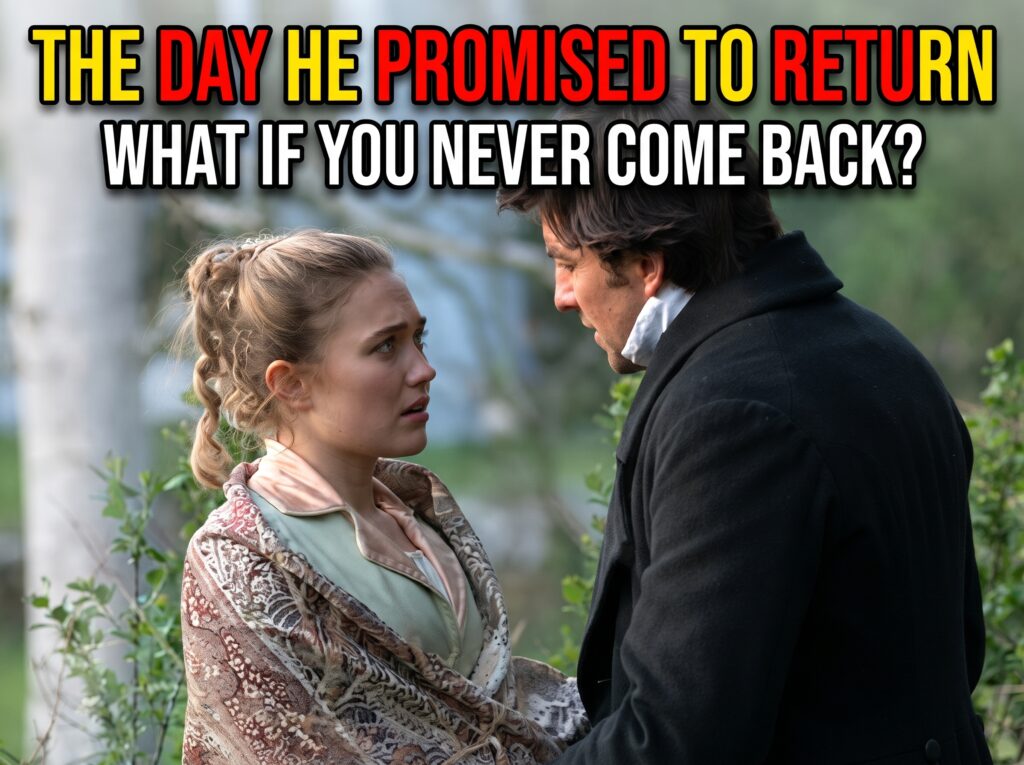
The Whitmore estate stood on a hill overlooking the small English village of Ashford.
It was a beautiful place, surrounded by old oak trees, carefully maintained gardens, and fields that stretched toward the distant hills.
For generations, the Whitmore family had controlled much of the land in the surrounding countryside.
Their name carried influence, wealth, and expectations.
James Whitmore was the only son of Lord Edward Whitmore.
From childhood, he had been taught that his future was already decided.
He would inherit the estate, marry a woman from a respectable family, and continue the traditions his ancestors had established.
But James had never been particularly interested in the life chosen for him.
He preferred riding through the countryside, reading poetry, and spending time with people who had nothing to offer him except their honesty.
That was how he met Elizabeth Bennett.
Elizabeth lived with her widowed mother in a small cottage near the village church.
Her father had died when she was twelve, leaving the family with little money and a considerable amount of debt.
Elizabeth helped her mother maintain the household by sewing dresses and repairing clothes for wealthy families.
She was intelligent, gentle, and stubborn enough to defend what she believed was right.
The first time James met her, she was arguing with a shopkeeper about the price of bread.
He had expected her to become embarrassed when she noticed his expensive coat.
Instead, she looked directly at him and asked whether he intended to help or simply watch.
James laughed.
It was the beginning of something neither of them expected.
Over the following months, they met whenever James could escape his father’s expectations.
Sometimes they walked along the river.
Sometimes they sat beneath an enormous oak tree and talked until the sun disappeared.
James told her about his childhood.
Elizabeth told him about her dreams.
She wanted to open a small school for village children.
James promised to help her.
He even began drawing plans for a building beside the church.
For the first time in his life, James imagined a future that belonged to him.
Then Lord Whitmore discovered their relationship.
One evening, James returned home to find his father waiting in the library.
A letter lay on the desk.
It was a letter from a village acquaintance describing James’s frequent visits to Elizabeth’s cottage.
Lord Whitmore looked furious.
“Have you forgotten who you are?”
James removed his gloves.
“No, Father.”
“Then perhaps you have forgotten what is expected of you.”
“I know exactly what is expected.”
“Apparently not. You have been spending your time with a girl who has neither fortune nor family connections.”
“Her name is Elizabeth.”
Lord Whitmore stood.
“Do not correct me.”
James remained silent.
His father walked toward the window.
“You will stop seeing her.”
James shook his head.
“I cannot.”
Lord Whitmore turned.
“Then you will lose everything.”
James looked at him.
“If everything requires me to abandon the woman I love, perhaps it was never mine to begin with.”
His father slapped his hand against the desk.
“Love does not maintain an estate, James. Love does not protect a family name.”
James left the room without another word.
But he knew the confrontation was only the beginning.
Three days later, his father announced that James would be travelling to London to resolve an important family matter.
He was expected to remain there until further notice.
James immediately understood.
His father was separating him from Elizabeth.
And he knew that Elizabeth would be waiting for an explanation.
That was why he arranged to meet her in the garden.
That was why he brought the silver locket.
And that was why he made a promise he desperately wanted to keep.
4. PART 2 — THE LETTER THAT NEVER ARRIVED
James left Ashford on a cold November morning.
Elizabeth stood beside the garden gate as his carriage disappeared down the road.
She held the silver locket tightly.
Inside it was a small photograph of James.
He had told her that it was the only portrait he had ever liked.
“Come back soon,” she whispered.
But the road remained empty.
During the first week, James wrote to her every evening.
He told her about the crowded streets of London, the enormous houses, and the people who seemed to speak only about money.
He wrote that he missed the countryside.
More importantly, he wrote that he missed her.
Elizabeth received the first two letters.
She read them repeatedly.
She kept them inside a small wooden box beneath her bed.
Then the letters stopped.
At first, she assumed the post was delayed.
But when another week passed, she began to worry.
She wrote to James.
She asked whether he was well.
She asked when he would return.
And she reminded him of the promise he had made in the garden.
Her letter never reached him.
Instead, it was delivered to Lord Whitmore.
The old lord read every word.
He then called his solicitor.
“Make certain this girl understands that my son will not be returning.”
The solicitor hesitated.
“Shall I send her a formal letter?”
“No. That would be too generous.”
Lord Whitmore placed Elizabeth’s letter inside a drawer.
“She must believe the matter is finished.”
Meanwhile, James was facing a different problem.
His father had arranged meetings with the wealthy Ashcombe family.
Their daughter, Margaret, was considered a suitable future wife.
James refused to entertain the proposal.
But Lord Whitmore threatened to remove him from the family inheritance.
James did not care about the money.
He cared about returning to Elizabeth.
One evening, he managed to send another letter.
This time, he included the date of his expected return.
He wrote:
My dearest Elizabeth,
I have not forgotten you. Not for a single moment. I am fighting to return, and I beg you not to believe anything you may hear about me.
Wait for me until the first snow falls.
Yours, always, James.
But the letter disappeared too.
Lord Whitmore had instructed the household staff to intercept all correspondence between his son and Elizabeth.
For several weeks, James believed Elizabeth was receiving his messages.
Elizabeth believed James had forgotten her.
And while two people suffered separately, the man who controlled their future considered the matter successfully settled.
Then one afternoon, a woman arrived at Elizabeth’s cottage.
She introduced herself as Mrs. Ashcombe.
She was elegant, wealthy, and unmistakably confident.
“I believe you know James Whitmore,” she said.
Elizabeth nodded.
Mrs. Ashcombe smiled.
“Then perhaps you should know that he is preparing to marry my daughter.”
Elizabeth felt the room become cold.
“That cannot be true.”
“I’m afraid it is.”
“James promised to return.”
Mrs. Ashcombe adjusted her gloves.
“Young men make promises when they are away from their responsibilities.”
Elizabeth looked down at the silver locket.
For the first time, she wondered whether she had misunderstood everything.
5. PART 3 — THE MAN WHO CAME BACK TOO LATE
Winter arrived.
Snow covered the rooftops of Ashford, and the river froze along its shallow edges.
Elizabeth stopped visiting the garden.
She continued sewing, helped her mother, and tried to return to ordinary life.
But every evening, she looked toward the road.
She hated herself for waiting.
She hated herself even more because she couldn’t stop.
One morning, a newspaper arrived at the cottage.
Elizabeth’s mother opened it.
A small announcement appeared on the society page.
MR. JAMES WHITMORE TO MARRY MISS MARGARET ASHCOMBE.
Elizabeth read the words twice.
Then she sat down.
Her mother approached.
“Darling?”
Elizabeth folded the newspaper.
“I’m all right.”
But she wasn’t.
She went upstairs and opened the wooden box.
Inside were James’s first letters.
She read them one last time.
Then she placed them back.
She did not destroy them.
She simply stopped expecting another one.
Several months later, James finally managed to escape his father’s control.
He had discovered that his correspondence had been intercepted.
A servant who had worked in the London household confessed that Lord Whitmore had ordered every letter from Elizabeth to be destroyed.
James was furious.
He confronted his father.
“You told me she had stopped writing!”
Lord Whitmore remained calm.
“She was a distraction.”
“You deliberately separated us.”
“I protected this family.”
James took his coat.
“Then you can protect it without me.”
He left London that same evening.
His journey to Ashford was difficult.
Heavy rain delayed the carriage.
A broken wheel forced him to continue part of the journey on horseback.
By the time he reached Elizabeth’s cottage, the sun was setting.
He knocked.
Elizabeth opened the door.
For several seconds, neither spoke.
She looked thinner.
Her eyes were tired.
But she was still the woman he loved.
“Elizabeth.”
She stared at him.
“James?”
He stepped forward.
“I came back.”
She didn’t move.
“Why?”
He looked confused.
“Because I promised.”
Elizabeth shook her head.
“You promised before.”
“I know.”
“You promised letters.”
“I wrote.”
“You promised to return before the first snow.”
James looked at her.
“I tried.”
She laughed bitterly.
“Then why did I hear about your wedding from a newspaper?”
James went pale.
“What wedding?”
Elizabeth looked at him.
“Your wedding to Margaret Ashcombe.”
He understood immediately.
His father had gone further than he imagined.
“There is no wedding.”
“Don’t.”
“Elizabeth, listen to me.”
She closed her eyes.
“I waited for you.”
James approached.
“I know.”
“No, you don’t. You don’t know what it feels like to spend every morning wondering whether the person you love is still thinking about you.”
He reached for her hand.
She pulled away.
“I believed you were coming home,” she whispered.
James looked devastated.
“Please give me one chance to explain.”
Elizabeth opened the door wider.
But she did not invite him inside.
“Tomorrow,” she said.
“Tomorrow?”
“I cannot do this tonight.”
James nodded.
He stepped backward.
“I’ll be here.”
Elizabeth closed the door.
And for the first time since he had left, James understood that returning home did not mean everything would be waiting exactly as he had left it.
6. PART 4 — THE WOMAN WHO WAS CHOSEN FOR HIM
Margaret Ashcombe was not the villain Elizabeth had imagined.
She was a young woman raised in a wealthy household, taught to behave correctly, speak carefully, and never question the decisions of her parents.
She had met James several times.
She knew he did not love her.
But she had been told that marriage was a responsibility, not a romantic adventure.
When James finally told her that he would never marry her, Margaret was hurt.
However, she surprised him.
“Do you love this girl?”
“Yes.”
“Then why are you still here?”
James looked at her.
“My father won’t allow it.”
Margaret smiled sadly.
“Perhaps you should stop asking his permission.”
She revealed that her own father had been pressuring her to accept the arrangement.
She had never wanted it either.
That evening, Margaret visited Lord Whitmore.
She informed him that she would not marry James.
The old lord became furious.
“You cannot withdraw from an agreement.”
“Neither can I force a man to love me.”
“Your family has a reputation to maintain.”
“Then perhaps you should concern yourself with your own behaviour.”
Margaret left.
But Lord Whitmore had another plan.
He contacted Elizabeth’s mother.
He offered to pay the family’s outstanding debts if Elizabeth agreed to leave Ashford permanently.
Elizabeth’s mother refused.
“We are poor, Lord Whitmore. But we are not for sale.”
He placed an envelope on the table.
“Consider what your daughter will lose if you refuse.”
Elizabeth’s mother pushed it back.
“My daughter has already lost enough.”
When Elizabeth discovered the offer, she was furious.
She confronted Lord Whitmore at the estate.
“I am not leaving.”
Lord Whitmore looked at her coldly.
“You have no idea what you’re getting yourself into.”
“Perhaps not. But I know what I feel.”
“James is my son.”
“And he is not your possession.”
The old lord stood.
“Do you think love will make you happy? Do you believe he can give you a life without difficulty?”
Elizabeth looked directly at him.
“I would rather face difficulty with an honest man than live comfortably with someone who does not love me.”
Lord Whitmore stared at her.
For the first time, he seemed unable to answer.
But as Elizabeth walked away, he made one final decision.
He ordered his solicitor to prepare documents transferring the estate to another relative.
If James refused to obey him, he would ensure that his son inherited nothing.
And he intended to make Elizabeth pay for that decision.
7. PART 5 — THE SECRET BENEATH THE OLD OAK TREE
James and Elizabeth slowly began rebuilding their relationship.
They met in the garden again.
They walked beside the river.
They talked about the future.
But something had changed.
Elizabeth no longer trusted promises easily.
James understood that he would have to earn back her confidence.
One afternoon, he showed her the drawings for the school he had once promised to build.
“I kept them,” he said.
Elizabeth examined the plans.
“You remembered?”
“Every detail.”
She smiled.
For a moment, they were happy again.
Then James received a letter from his father’s solicitor.
Lord Whitmore had become seriously ill.
James was summoned home immediately.
When he arrived, his father was lying in bed.
He looked much older than James remembered.
“You came.”
“Yes.”
Lord Whitmore struggled to sit up.
“I made mistakes.”
James said nothing.
His father continued.
“I believed I was protecting you.”
“You were protecting your reputation.”
The old lord closed his eyes.
“Perhaps.”
He asked James to open the drawer beside the bed.
Inside was a collection of letters.
James recognized Elizabeth’s handwriting.
Every letter she had sent.
Every letter Lord Whitmore had intercepted.
There were also copies of his own letters.
The ones he had believed were delivered.
James picked them up.
His hands began shaking.
“You kept these?”
Lord Whitmore nodded.
“I thought you would eventually forget her.”
James looked at him.
“How could you?”
His father struggled to speak.
“Because I believed that if I controlled your future, I could protect your happiness.”
James placed the letters on the bed.
“You destroyed it.”
Lord Whitmore began crying.
“I know.”
For a long moment, James simply stood beside him.
Then his father handed him a small envelope.
“There’s something else.”
Inside was a document revealing that Elizabeth’s late father had once worked for the Whitmore estate.
He had secretly protected the family’s land from an illegal sale.
When he died, Lord Whitmore had promised to ensure that his widow and daughter would never suffer.
But he had never fulfilled that promise.
James looked up.
His father whispered:
“Your love for Elizabeth is not the only reason you should make things right.”
James understood.
His father had not simply separated two lovers.
He had also broken a promise to a family that had once helped save his own.
8. PART 6 — THE DAY EVERYTHING CHANGED
Lord Whitmore died three days later.
His funeral was attended by nearly everyone in Ashford.
James stood alone beside the grave.
He had loved his father.
He had also spent much of his life fighting against him.
Both feelings existed together.
After the funeral, James discovered that his father had left him a final letter.
It read:
My son,
I cannot undo what I have done.
I spent my life believing that wealth, family name, and social position were the foundations of a successful life.
I was wrong.
I watched you become a man who understood something I never did.
If Elizabeth still loves you, do not waste the chance I tried to take away.
And if she does not, respect her decision.
Your loving but foolish father.
James read the letter twice.
He then travelled to Elizabeth’s cottage.
She was in the garden.
The same garden where they had said goodbye.
He approached slowly.
“Elizabeth.”
She turned.
“James.”
He held out a small bundle of letters.
She recognized her handwriting immediately.
“Where did you find those?”
“My father kept them.”
Elizabeth opened the first letter.
It was the one she had written shortly after James left.
She read it silently.
Then another.
And another.
Tears filled her eyes.
“He never received them?”
“No.”
She looked at James.
“All this time?”
“Yes.”
Elizabeth sat down on the garden bench.
For a while, neither spoke.
Then she asked:
“Why didn’t you come sooner?”
James lowered his eyes.
“I believed the wrong people. I should have fought harder.”
She nodded.
“Yes. You should have.”
He accepted her words.
“I don’t expect you to forgive me immediately.”
Elizabeth looked toward the oak tree.
“I don’t know what I expect anymore.”
James sat beside her.
“I only want the chance to show you that I mean what I say.”
She looked at him.
“And if you have to leave again?”
“I will tell you the truth.”
“And if your family disagrees?”
“I will make my own decision.”
Elizabeth took his hand.
This time, she did not pull away.
9. PART 7 — A PROMISE THAT COST HIM EVERYTHING
James decided to give up his inheritance.
He sold part of the estate and used the money to establish a school for the village children.
He also arranged for Elizabeth’s mother to receive the financial support Lord Whitmore had once promised.
The decision created a scandal.
Several relatives accused James of abandoning his responsibilities.
His uncle threatened legal action.
Friends who had once welcomed him into their homes stopped inviting him to dinner.
But James did not change his mind.
He and Elizabeth became engaged in the spring.
Their wedding was planned for the following autumn.
For the first time, Elizabeth believed their happiness might finally be possible.
Then James received an unexpected visitor.
Margaret Ashcombe.
She had travelled from London with important news.
“James, I need to speak with you.”
He invited her inside.
Margaret placed a letter on the table.
It came from his uncle.
The family intended to challenge the sale of the estate.
They claimed James had been mentally unfit to make the decision following his father’s death.
If they succeeded, they could take back the school and the land.
James read the letter.
“How long do we have?”
“Three weeks.”
He looked toward Elizabeth.
She stood in the doorway.
“Then we have three weeks to prove them wrong.”
Margaret smiled.
“I thought you might say that.”
She offered to help.
Her family had connections with the solicitor handling the estate.
She could provide evidence that Lord Whitmore had approved the transfer before his death.
James thanked her.
But Margaret made one final confession.
She had once believed that marrying James would make her happy.
Now she understood that she had been trying to obtain a future that belonged to someone else.
“Don’t make the same mistake,” she told him.
“Which mistake?”
“Don’t let other people’s expectations decide the life you build.”
After she left, Elizabeth approached James.
“She seems different.”
“She is.”
Elizabeth smiled.
“Perhaps we all are.”
But the legal battle was only beginning.
And James would soon discover that his uncle possessed a document that could destroy everything.
10. PART 8 — THE LAST LETTER FROM HIS FATHER
The document was discovered in the estate archives.
It was a second will.
Unlike the first, it stated that the estate must remain under the control of the Whitmore family.
It also claimed that James had no authority to sell any portion of the land.
His uncle presented it to the solicitor.
James was shocked.
He had never seen the document.
But the signature looked genuine.
Elizabeth studied the papers.
“Could your father have changed his mind?”
James shook his head.
“He told me the school was his way of making things right.”
“Then perhaps there’s something missing.”
They searched through the estate archives.
For days, they examined letters, financial records, and old legal documents.
Eventually, Elizabeth discovered a small note tucked inside the original will.
It contained a reference to a solicitor who had handled the estate’s legal matters twenty years earlier.
The solicitor was still alive.
He was living in a small coastal town.
James travelled there immediately.
The old man confirmed that the second will had been prepared after Lord Whitmore became ill.
However, he had never witnessed it.
The document was not legally valid.
More importantly, he revealed that Lord Whitmore had instructed him to prepare another letter explaining his final wishes.
That letter had never been delivered.
The solicitor had kept a copy.
It stated that James should inherit the estate freely, with permission to sell or transfer land to establish the village school.
The truth was finally clear.
James’s uncle had attempted to use a forged document to take control of the property.
The matter was reported to the authorities.
The legal challenge collapsed.
When James returned to Ashford, Elizabeth was waiting in the garden.
He smiled.
“It’s over.”
She ran toward him.
He embraced her.
For a moment, neither spoke.
Then Elizabeth whispered:
“You came back.”
James kissed her forehead.
“I told you I would.”
She looked up.
“Do you remember what I asked you?”
He smiled sadly.
“What happens if you never come back?”
Elizabeth nodded.
James held her hands.
“I used to think the answer was simple. I thought I could promise you that nothing would ever separate us.”
He paused.
“But I know better now. I cannot promise that life will never take me away. I can only promise that I will never disappear without telling you the truth.”
Elizabeth smiled through her tears.
“That is all I ever wanted.”
11. PART 9 — THE WEDDING IN THE COUNTRYSIDE
Autumn arrived.
The leaves turned gold, and the gardens at Whitmore Estate were filled with flowers.
The village school had opened its doors.
Children who had once been unable to afford lessons now gathered in its classrooms.
Elizabeth spent much of her time teaching them.
James helped repair the building and worked with local farmers to improve the surrounding land.
Their wedding was held in the village church.
There were no grand celebrations or expensive guests from London.
Instead, the church was filled with neighbours, friends, and people who had watched their relationship survive years of hardship.
Elizabeth wore a simple ivory dress.
Her mother walked beside her.
James waited near the altar.
When he saw Elizabeth, his expression changed.
He looked as though he had forgotten how to breathe.
The ceremony was short.
But when the minister asked whether James accepted Elizabeth as his wife, he answered without hesitation.
“I do.”
Elizabeth smiled.
“I do.”
After the ceremony, the villagers gathered in the garden.
There was music, food, and laughter.
Margaret attended.
She brought Elizabeth a small gift.
It was a beautiful silver frame containing the first photograph ever taken of James and Elizabeth together.
“I thought you should have this,” she said.
Elizabeth thanked her.
Margaret smiled.
“Take care of each other.”
Later that evening, James and Elizabeth walked toward the old oak tree.
The sun was setting.
The same tree beneath which they had once imagined a future together.
James stopped.
“Do you remember the first time we came here?”
Elizabeth laughed.
“You were trying to impress me.”
“I was succeeding.”
“You were talking far too much.”
He laughed.
Then he reached into his coat.
He had kept the silver locket.
The one he had given her before leaving for London.
He opened it.
The photograph was still inside.
“I want you to keep this,” he said.
Elizabeth smiled.
“You already gave it to me.”
“I know.”
He placed it around her neck.
“This time, I want it to remind you of something different.”
“What?”
“Not the day I left.”
He kissed her hand.
“The day I finally understood what it meant to come home.”
12. PART 10 — WHAT HAPPENS IF YOU NEVER COME BACK?
Years passed.
The village school grew.
Elizabeth became one of the most respected teachers in the county.
James continued managing the estate, but he changed the way it operated.
He opened parts of the land to the villagers and created opportunities for families who had once struggled to survive.
They had two children.
A daughter named Anna and a son named Edward.
Their home was filled with laughter, arguments, celebrations, and ordinary moments that became precious with time.
But James never forgot the morning he had left.
One evening, many years later, he and Elizabeth sat in the garden.
The children were playing near the oak tree.
The sun was slowly disappearing behind the hills.
James looked at his wife.
“Do you remember what you asked me that morning?”
Elizabeth smiled.
“Which morning?”
“The morning I left for London.”
She looked at him.
“What happens if you never come back?”
James nodded.
“I remember.”
Elizabeth reached for his hand.
“I was frightened.”
“So was I.”
She looked toward the road.
“I thought I would lose you forever.”
James gently touched the silver locket around her neck.
“And I thought I could control everything by making promises.”
Elizabeth smiled.
“Did you?”
“No.”
He laughed softly.
“I learned that promises are only meaningful when we live by them.”
She leaned her head against his shoulder.
For several minutes, they watched their children playing.
Then Elizabeth whispered:
“Do you know what I would tell that frightened girl in the garden if I could speak to her again?”
James turned toward her.
“What?”
“I would tell her that the man she loved would eventually come home.”
He smiled.
“And what would you tell him?”
Elizabeth looked into his eyes.
“That he should never make someone wait for a truth they deserve to know.”
James kissed her forehead.
The evening breeze moved gently through the trees.
The silver locket caught the last light of the setting sun.
And somewhere in the distance, the church bells began to ring.
The same bells that had once announced their wedding.
The same bells that had marked the beginning of a life neither of them had believed possible.
FINAL NARRATION:
Sometimes, love is not tested by the distance between two people.
It is tested by the silence between them.
Elizabeth once feared that James might never return.
But the years taught her that a person can return home and still need to earn the right to stay.
Their story was never about a perfect man or a perfect woman.
It was about two imperfect people who learned that love requires honesty, courage, patience, and the willingness to fight for a future together.
And when Elizabeth remembered that cold morning in the garden, she no longer remembered it as the day he left.
She remembered it as the day they discovered how much they were willing to fight for each other.
THE END.