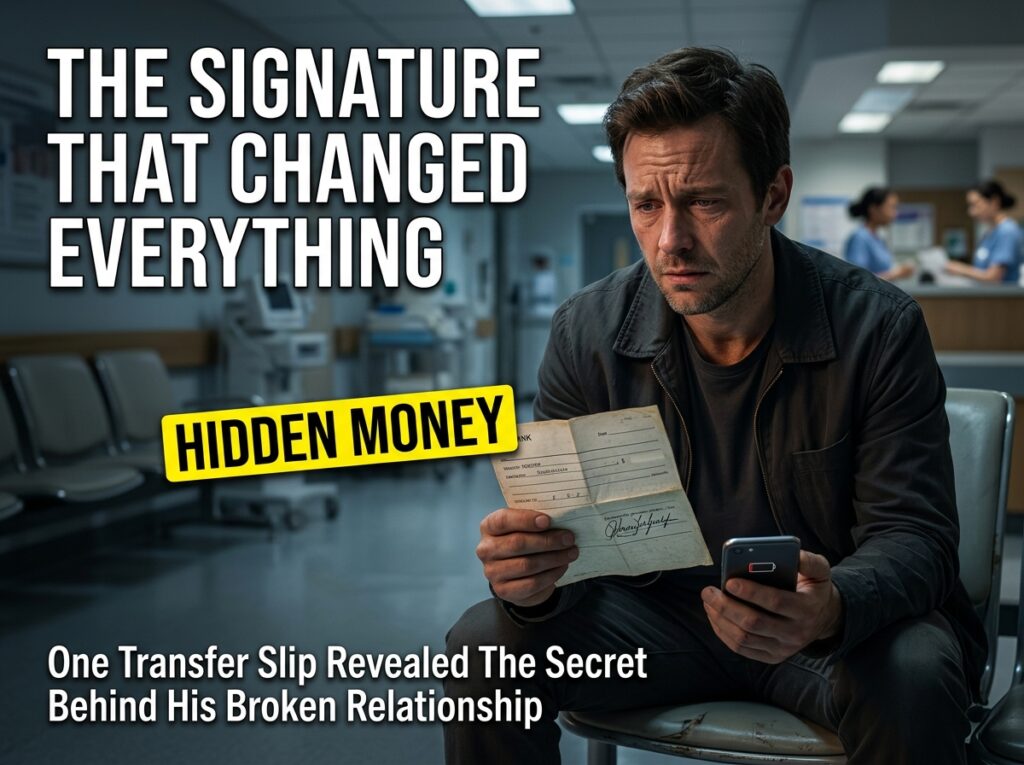
The hospital corridor smelled of disinfectant, cold coffee, and rain-soaked clothing.
Miles sat beneath a flickering fluorescent light, holding a phone that showed one percent battery. Across from him, a vending machine hummed beside a row of empty chairs. Somewhere behind the closed doors, a nurse called for a doctor. Every few minutes, footsteps hurried past him, carrying other people’s emergencies from one end of the corridor to the other.
He had been there for nearly three hours.
His mother was resting after a frightening medical episode, and the doctors had told him that she needed observation. They had not promised that everything would be fine, only that they were doing what they could. Miles had nodded as though he understood how to accept uncertainty. In reality, he had spent most of the evening calculating what he could afford.
The hospital bill was only one part of the problem.
Rent was due in four days. The electricity payment was overdue. His savings had almost disappeared, and the person who had once promised to face every difficulty beside him was no longer there.
For months, Miles had told people that things were manageable.
He told his mother not to worry about money. He told his friends that the breakup had been mutual. He told himself that the worst of the financial trouble had passed.
But when his bank card had been declined at a pharmacy earlier that afternoon, he had stood at the counter pretending that the machine had malfunctioned.
He could still remember the embarrassment of handing the card back to the cashier.
“Maybe the system is down,” he had said.
The cashier had tried again. The result had been the same.
Miles paid for the medicine with the last cash in his wallet and walked away before anyone could ask whether he needed help.
Now, sitting in the hospital corridor, he opened his banking application again. He had checked it so many times that he knew the remaining balance by heart.
There was enough for food if he was careful. Not enough for everything else.
He thought about calling his former partner, but he put the phone down before the number appeared on the screen.
Their last conversation had ended badly. Miles had asked about the money that seemed to disappear whenever they were close to getting ahead. His partner had accused him of turning every difficult moment into an interrogation.
“You think I don’t know we’re struggling?” they had asked. “You think I don’t lie awake worrying about it?”
Miles had apologized then. He had apologized because he loved them, because the argument was exhausting, and because he feared that one more disagreement might end the relationship.
He had not realized that the relationship was already carrying a secret he did not understand.
A nurse emerged from the treatment area and approached him.
“Mr. Miles?”
He stood immediately.
“Is my mother all right?”
“She’s resting. The doctor will speak with you shortly.”
Miles thanked her and sat down again.
His phone vibrated. A message from his landlord appeared, asking whether he could confirm the rent payment date.
He typed a reply, erased it, and tried again.
I’m arranging the money. I’ll update you tomorrow.
It was the same promise he had made the previous week.
He sent it anyway.
Then he remembered the coat he had brought to the hospital. It was old, with a torn inner lining and a pocket that had never been properly repaired. He reached inside, hoping to find a receipt he could use to check a payment.
His fingers touched folded paper.
At first, he assumed it was an old shopping receipt. He pulled it out and began to unfold it, expecting to see the familiar details of a purchase.
Instead, he found a bank transfer slip.
The paper was creased and slightly yellowed at the edges. The date was several months old, from a period when he and his partner had still been living together and insisting that their financial problems were temporary.
The amount was larger than he expected.
He checked the account reference, then the date.
He recognized the transaction number from an old bank statement, but he could not remember who had authorized the transfer.
At the bottom was a signature.
It was not his.
He read it again, moving closer to the corridor light.
The signature was unfamiliar, yet the transaction seemed connected to an account he knew. He remembered asking his partner about a payment around that time. They had said it was a routine expense and that there was nothing to worry about.
Miles had believed them.
He had believed them because love, he thought, required a certain amount of trust.
Now he wondered whether he had mistaken trust for the willingness to stop asking questions.
He photographed the slip before folding it carefully and putting it in his wallet.
His phone battery dropped to zero a few seconds later.
The screen went black.
Miles sat still, the dead phone in his hand, listening to the hospital around him. He had come there worried about his mother, his rent, and the possibility that he would soon have nowhere to live.
He had not expected to find a piece of paper that made him question the entire story of his relationship.
When the doctor finally approached him, Miles stood and listened carefully to the update about his mother. She would need rest and follow-up care, but for now, she was stable.
Relief loosened something in his chest.
He thanked the doctor, then looked at the transfer slip once more.
He could not afford to follow every suspicion. He had bills to pay and a family member who needed him. Yet he knew that ignoring the paper would not make the question disappear.
Before leaving the hospital, Miles made a decision.
He would find out who had signed the transfer slip, where the money had gone, and why the person he loved had never mentioned it.
He only hoped the answer would not cost him the last thing he still wanted to believe in.
Part 2
The next morning, Miles borrowed a charger from a hospital receptionist and turned on his phone.
There were several missed messages, including one from his landlord and two from his older sister, who wanted to know how their mother was doing. He answered both before opening the photograph he had taken of the transfer slip.
The signature was still difficult to read.
He enlarged the image until the writing broke into pixels. The first letter might have been an A, an R, or something else entirely. The final stroke curled sharply upward, as though the person had signed in a hurry.
Miles saved the photograph in a folder and made a note of the transaction date.
He could not remember the payment clearly, but he remembered the week.
It had been a difficult period. He and his partner had been behind on several bills, and he had taken extra shifts to cover their expenses. His partner had promised to contribute more once a delayed payment arrived.
Instead, the money had seemed to vanish.
When Miles asked where it had gone, his partner said they had paid an outstanding obligation.
“What obligation?” he had asked.
“Something I should have dealt with earlier.”
“How much?”
“Please don’t make this harder than it already is.”
He remembered feeling guilty for asking. Their relationship had been under strain, and he had worried that his questions sounded like accusations.
He had let the matter rest.
Now he opened his old messages and searched for the date on the slip. Several conversations appeared, most of them ordinary. There were reminders about groceries, discussions about rent, and a message from his partner saying they needed to talk that evening.
He remembered that conversation.
His partner had arrived home late, looking exhausted. They had barely touched dinner. When Miles asked about the money, they said the problem had been handled.
“Handled how?”
“It’s taken care of.”
“By whom?”
His partner had looked at him with an expression he could not interpret.
“Why can’t you trust me?”
He had no answer that would not make the argument worse.
They had gone to bed without resolving anything. In the morning, his partner had left early, and Miles had found a note saying they would discuss everything after the weekend.
The discussion never happened.
Within weeks, they were arguing about other things. Within months, they had separated.
Miles had assumed the money was one more casualty of their strained relationship. He had not considered that the financial trouble might have begun with a decision made before their arguments started.
He called his sister.
“Do you remember when I told you we were having trouble with the bills last year?” he asked.
“Of course. You sounded exhausted.”
“Did I ever tell you about a transfer I couldn’t explain?”
“No. Why?”
He hesitated.
“I found a bank slip. There’s a signature I don’t recognize.”
His sister was quiet for a moment.
“Could it be from one of your partner’s payments?”
“That’s what I’m trying to find out.”
“Have you asked them?”
“Not yet.”
“Maybe you should.”
“I don’t want another argument. I just want the facts.”
His sister’s voice softened.
“Then ask for the facts. You don’t have to accuse anyone to ask a reasonable question.”
Miles knew she was right. But the idea of contacting his former partner made his stomach tighten.
He had spent the last few months trying to accept that their relationship was over. He had packed away photographs, returned a few belongings, and stopped checking whether they were online. He had done all of it because he wanted to move forward.
Now the transfer slip had pulled him backward.
After speaking with his sister, Miles visited the bank. He brought his identification and explained that he needed help understanding a transaction connected to an account he had access to.
The employee listened, checked the information Miles provided, and explained which records could be disclosed to him.
She could not identify the signer simply from the photograph. Nor could she reveal private details about an account that did not belong to him.
But she could help him request the transaction records associated with his own account.
“Do you remember authorizing this transfer?” she asked.
“No.”
“That doesn’t necessarily mean it was unauthorized. There may be an explanation in the full record.”
“I understand. I want to know what I can verify.”
The employee gave him the relevant forms and explained the next steps.
Miles left the bank feeling both frustrated and relieved. He had not found the answer, but he had learned that the slip could be investigated without relying entirely on someone’s memory.
Outside, he checked his messages again.
A new message had arrived from his former partner.
I heard your mother was in the hospital. I hope she’s doing better.
Miles stared at the screen.
He wanted to reply that she was stable. He wanted to ask why the money had disappeared. He wanted to know whether the concern in the message was genuine or simply a way to reopen a conversation neither of them had finished.
He typed a short response about his mother, then stopped before sending it.
Instead, he wrote:
I found a transfer slip dated several months before we separated. It appears to be connected to our financial difficulties. I need to understand what it was for.
He read the message twice before pressing send.
The reply came several minutes later.
Where did you find it?
Miles frowned.
His former partner had not asked what the slip showed. They had not asked how much money was involved.
They had asked where he found it.
He typed back that it had been inside his old coat.
The next message took longer.
Don’t make any decisions until we talk.
Miles felt a cold uneasiness settle over him.
He had not said he was going to make a decision. He had asked a question about a financial transaction.
Yet his former partner seemed to understand that the paper mattered.
And for the first time, Miles wondered whether they had been waiting for him to find it.
Part 3
Miles spent the afternoon sorting through the documents he had kept from the relationship.
He had not intended to preserve so much. Some papers had survived because he had been too tired to throw them away. Others had been placed in a box during the move and forgotten. He found utility bills, grocery receipts, an old lease, and a notebook in which he had recorded their monthly expenses.
At the time, he had believed that keeping track of every payment would help them get ahead.
Now the notebook looked like a record of everything they had failed to discuss honestly.
He placed the transfer slip beside it and began comparing dates.
The first discrepancy appeared in the month before the transfer. Their savings had been lower than expected, but his partner had explained that a delayed payment was responsible. The second appeared shortly afterward, when a bill they believed had been paid arrived with an overdue notice.
Miles remembered the argument that followed.
His partner had insisted the payment had been made. Miles had checked the account and found no matching transaction. They had accused him of checking the wrong dates, and he had eventually apologized for making them feel mistrusted.
He had been so afraid of losing the relationship that he had treated his own doubts as a problem to solve.
The notebook contained another entry, written in his handwriting:
Ask about the missing payment when things are calmer.
Below it was a date, followed by a line he had added later.
Not tonight. Too tired.
Miles sat back.
He had postponed that conversation several times. Each time, he had convinced himself that a peaceful evening was more important than an uncomfortable question.
He could not know whether asking sooner would have changed anything. But he understood now how easily silence had become part of their routine.
He turned to the pages covering the month of the transfer.
There was a payment recorded in pencil, without a recipient’s name. The amount was close to the figure on the slip.
Beside it, his partner had written two words.
Temporary arrangement.
Miles remembered seeing those words before. He had assumed they referred to a bill they were trying to manage together.
Now he was no longer sure.
He photographed the page and added it to his records.
Later that afternoon, his former partner called.
Miles let the phone ring twice before answering.
“How is your mother?” they asked.
“She’s resting. The doctors are monitoring her.”
“I’m glad.”
There was a pause.
“About the transfer slip,” Miles said.
“Yes.”
“You knew what I was talking about before I explained it.”
“I recognized the date.”
“Why?”
“Because that was a difficult time.”
“Most of the months before we separated were difficult. That doesn’t explain why you asked where I found the paper.”
His former partner exhaled.
“I was worried you might misunderstand it.”
“Then explain it.”
“I can’t do this while you’re angry.”
“I’m not asking you to defend yourself. I’m asking you to tell me what happened.”
“I need time.”
Miles closed his eyes.
He had heard those words before. Time had been requested whenever a conversation approached something important. Sometimes the conversation had resumed. Often it had simply disappeared beneath the next problem.
“How much time?” he asked.
“I don’t know.”
“Then at least tell me whether the transfer was connected to our savings.”
His former partner said nothing.
“Miles,” they finally replied, “I never wanted you to be hurt.”
“That isn’t an answer.”
“I know.”
The call ended without an explanation.
Miles remained seated, staring at the notebook.
He wanted to believe that the hesitation came from shame rather than deception. He wanted to think that someone who had once shared his bed, his meals, and his plans for the future had not deliberately used his trust.
But he could no longer make the facts fit the explanation he preferred.
That evening, he returned to the hospital to check on his mother. She was awake and feeling better, though the doctors wanted her to remain under observation a little longer.
She noticed the paperwork in his hand.
“Are those bills?” she asked.
“Something like that.”
“You look as though you’ve been carrying them for years.”
Miles tried to smile.
“It’s nothing you need to worry about.”
His mother studied him.
“You don’t have to protect everyone from every problem, you know.”
The remark caught him off guard.
“I’m not protecting anyone.”
“Then why do you always say you’re fine when you’re clearly not?”
He looked down at the papers.
For a moment, he considered telling her everything. Instead, he explained that he was trying to understand a financial transaction from before his breakup.
She listened without interrupting.
When he finished, she asked, “What will you do if the answer is something you don’t want to hear?”
“I don’t know.”
“Then find out before you decide what it means.”
Miles held her hand.
He had spent months trying to preserve the memory of his relationship as something that had failed because life had become too difficult. The transfer slip threatened that explanation, and he was frightened of what might replace it.
But his mother was right about one thing.
He could not decide what the truth meant before he knew what it was.
The next morning, the bank sent him confirmation that his request for the relevant transaction records had been received.
Attached was a reference number for the transfer.
Miles compared it with the number on the paper.
They matched.
At the bottom of the message was a note advising him that the transaction had been processed through a linked payment arrangement.
He read the phrase again.
A linked payment arrangement.
He had never heard his former partner use those words.
And when he searched the notebook, he found the same phrase written beside a date that came several weeks before the transfer.
Part 4
Miles took the notebook back to the bank.
The employee who had helped him earlier reviewed the new information and explained that the phrase could refer to different arrangements. The reference number would help establish how the transaction had been processed, but the bank could not identify another person’s private account or disclose information he was not entitled to receive.
Miles accepted the explanation.
He had learned that being suspicious was not the same as having proof. He wanted the truth, but he did not want to build a new story out of assumptions.
He completed the additional paperwork and asked for a copy of the transaction record associated with his own account.
As he left, he called his former partner.
“I need to ask you something about a linked payment arrangement,” he said.
The silence on the other end lasted long enough for him to hear traffic moving outside the bank.
“Where did you see that phrase?”
“In the bank’s response. It was also written in our expense notebook.”
His former partner sighed.
“I thought we’d agreed not to reopen everything.”
“We never agreed that I would stop asking questions.”
“That’s not fair.”
“Neither was letting me believe the missing money was a mistake I could fix by working harder.”
His former partner did not answer immediately.
Then they said, “The arrangement wasn’t supposed to involve you.”
“But it did.”
“Not at first.”
Miles gripped the phone.
“What does that mean?”
“It started before we were living together. I thought I could help someone, and I believed the arrangement would end before it affected our finances.”
“Who?”
“I can’t tell you over the phone.”
“Why does everyone keep saying that?”
“Because it isn’t just my story.”
Miles felt his anger rise.
“It became my story when our savings disappeared. It became my story when I had to choose which bills to pay. It became my story when I stood in a pharmacy and my card was declined.”
His former partner’s voice softened.
“I know.”
“No. You know the words. I don’t think you understand what it was like to live through it without knowing why.”
The line went quiet.
Finally, his former partner agreed to meet him.
They chose a small café near the bus station, a place where they had once stopped for breakfast before work. Miles arrived early and chose a table by the window.
When his former partner entered, they looked tired. Their clothes were neat, but their expression carried the strain of someone who had spent too long rehearsing a difficult conversation.
They sat down without ordering anything.
“You found the slip in your old coat?” they asked.
“Yes.”
“Do you still have the original?”
Miles placed it on the table.
His former partner looked at the signature, and their face changed.
For several seconds, they did not move.
“You recognize it,” Miles said.
“I recognize the way it was signed.”
“Whose signature is it?”
“I can’t be certain.”
“You just reacted as though you knew.”
“I know who might have signed it. That doesn’t mean I know whether they authorized the transaction.”
Miles leaned back.
“Then tell me who.”
His former partner looked toward the window.
“There was someone I promised I would help before we met. They were in trouble, and I believed I could make things right without involving anyone else.”
“Was it Claire?”
They looked at him sharply.
Miles had chosen the name because it had appeared in an old message he had discovered while searching his phone. Claire was someone his former partner had known years earlier, although Miles had never understood the nature of their relationship.
His former partner did not confirm the name.
Instead, they asked, “Did you find anything else in the notebook?”
“The phrase about a linked payment arrangement.”
They closed their eyes briefly.
“Then you’ve found the beginning of it.”
“The beginning of what?”
“A decision I should have explained to you a long time ago.”
Miles waited.
His former partner began to describe a financial difficulty that had existed before their relationship. Someone had needed help, and an arrangement had been made with the intention of settling an outstanding obligation. They had believed that the problem would remain separate from their shared life.
But the arrangement had changed. Payments had been delayed, the amount owed had become disputed, and additional money had been needed.
“Why didn’t you tell me?” Miles asked.
“Because I thought I could fix it.”
“That isn’t a reason to hide it.”
“I know that now.”
“Did you use our savings?”
His former partner looked down at the transfer slip.
“Yes.”
The answer was quiet, but it left no room for misunderstanding.
Miles felt the café around him recede. He had imagined several possible explanations during the previous days, but hearing the admission still hurt.
“How much?”
They gave him an amount.
Miles checked it against the records he had collected. It explained part of the missing money, though not everything.
“Where did the rest go?”
“I don’t know exactly.”
“You don’t know?”
“I was trying to repay what had been taken from the arrangement. I borrowed money to cover the difference, and then I lost track of what had been paid and what remained outstanding.”
Miles stared at them.
“You were trying to fix one secret by making another.”
His former partner nodded.
“I thought I could stop it before you were hurt.”
“But I was hurt. I just didn’t know why.”
They began to cry quietly.
Miles felt the familiar instinct to comfort them. He wanted to reach across the table, tell them that everything would be all right, and make the conversation less painful.
Instead, he kept his hands in his lap.
He could feel compassion without pretending the damage had not happened.
“Who signed the slip?” he asked.
His former partner wiped their eyes.
“I think it was someone who wanted to help settle the arrangement. But there’s something else you need to know.”
Miles waited.
“The person who signed it wasn’t the person who received the money.”
Part 5
Miles left the café with more information than he had ever received during the relationship, but the explanation still contained a gap.
Someone had signed the transfer slip. Someone else had received the money. His former partner had used their shared savings to settle part of a financial obligation, then tried to cover the missing amount through further borrowing.
Yet the identity of the person who had authorized the transfer remained uncertain.
On the bus home, Miles reviewed the photographs on his phone. He wrote down every name, date, and amount he could verify. He marked the details that came directly from bank records and separated them from the explanations his former partner had given him.
The distinction mattered.
He no longer wanted a story that merely sounded convincing. He wanted an account that could withstand questions.
When he arrived home, he found a message from his sister.
How did the meeting go?
He replied that he had learned something important but still needed to confirm the details.
His sister called immediately.
“Did they admit what happened?”
“Part of it.”
“How much of the money did they explain?”
“Enough to know the transfer wasn’t an ordinary bill. Not enough to know who was responsible for everything.”
“Are you going to keep investigating?”
“Yes.”
She was quiet for a moment.
“Just promise me you won’t let the search destroy you.”
Miles looked at the transfer slip on the table.
“I’m trying not to.”
After the call, he searched his email for old messages containing the transaction reference. Most were routine notifications. One, however, had been sent several weeks before the transfer.
It was a message from his former partner with the subject line Temporary arrangement.
The body contained only a few sentences.
I’ve spoken to the person handling the payment. They believe everything can be settled before the next deadline. Please don’t worry about the details yet.
Miles remembered reading it. He had taken the message as reassurance that their bills would soon be under control.
Now the wording seemed carefully chosen.
The person handling the payment.
Not a bank employee. Not a landlord. Not someone who had provided a service.
Someone who knew about the arrangement.
Miles opened the original email headers and checked the date. It had been sent from his former partner’s account, and the address was familiar.
But beneath the message was a forwarded section he had never noticed. It contained a short line from an earlier conversation.
Please make sure the record is kept separate from the household expenses.
Miles read it several times.
The sentence did not prove wrongdoing by itself. It could have referred to ordinary bookkeeping. But when he compared it with the transfer slip and the notebook, it suggested that someone had deliberately kept the arrangement apart from their shared finances.
He saved a copy.
That evening, he returned to the hospital to bring his mother some clean clothes. She was feeling stronger and expected to be discharged soon. He helped her arrange her belongings, then sat beside her while she finished a cup of tea.
“You look different today,” she said.
“Different how?”
“Like you’ve stopped trying to convince yourself that nothing is wrong.”
Miles smiled faintly.
“Something is wrong.”
“Then deal with what you can deal with.”
He told her that the transfer slip had led to an explanation for some of the missing money. He did not share every detail, but he admitted that his former partner had hidden a financial decision from him.
His mother listened carefully.
“Do you still love them?” she asked.
Miles considered the question.
“Yes,” he said. “But I don’t know what that means anymore.”
His mother nodded.
“Love doesn’t make every decision right. And a mistake doesn’t tell you everything about a person. You have to look at what they do after they know they’ve hurt you.”
He thought about the meeting and the admission.
His former partner had finally acknowledged the transfer, but the explanation was incomplete. Miles could not decide what came next until he understood the rest.
The following morning, the bank provided another document relating to his own account. It confirmed the date, amount, and processing reference of the transfer. It did not reveal the recipient’s private details, but it gave Miles a reliable record against which he could compare the other papers.
The amount matched the slip.
The reference matched the email.
And the date matched the entry in the notebook.
For the first time, three separate pieces of evidence pointed to the same transaction.
Miles placed them side by side.
Then he noticed a small notation near the bottom of the transfer slip, partly obscured by a fold in the paper.
He smoothed the crease and read it under the light.
It was a second reference number.
He entered it into his notes and searched the old correspondence.
A match appeared in a message sent several days after the transfer.
The message had been written by his former partner, but it was addressed to someone else.
The opening line read:
Thank you for agreeing to keep my name out of this.
Miles sat motionless.
The transfer had not simply been hidden from him. Someone had apparently agreed to conceal a person’s involvement.
He read the message again, searching for the recipient’s name.
It was missing from the copy he had saved.
But the message ended with a sentence that made him understand why his former partner had been so frightened when he mentioned the slip.
If Miles ever finds out who signed it, tell him to ask what happened the night we separated.
Part 6
Miles read the final sentence until the words lost their meaning.
Ask what happened the night we separated.
He remembered that night in painful detail.
It had been raining. Their apartment had felt smaller than usual, with boxes stacked against one wall and unpaid bills spread across the kitchen table. His former partner had been standing near the door, holding a bag of clothes.
They had argued about money for nearly an hour.
Miles had asked why the savings were gone. His partner had said that the situation was complicated and that he would understand someday.
“Why not now?” he had asked.
“Because I can’t explain everything.”
“Then explain one thing.”
His partner had looked at him with exhausted eyes.
“I made a promise.”
“To whom?”
They had not answered.
Miles had asked whether the promise mattered more than their relationship. His partner had begun to cry, but the tears had not changed the conversation.
Eventually, they had left.
Miles remembered standing in the doorway, watching the rain blur the streetlights. He had wanted to call them back. He had wanted to believe that the next morning would bring an explanation.
Instead, he had spent the night alone, looking at the bills and wondering what he could sell to make the next rent payment.
He had believed that the separation happened because neither of them could endure the financial pressure any longer.
Now he wondered whether the decision had been connected to the transfer from the beginning.
He called his former partner.
They answered quickly.
“Did you find something else?” they asked.
“Yes. A message about the transfer.”
A pause followed.
“What did it say?”
“It mentioned the night we separated.”
His former partner became silent.
Miles could hear traffic on their end of the call.
“Why?” he asked.
“I was hoping you wouldn’t find that message.”
“Why would you hope that?”
“Because I don’t know how to explain it without making everything worse.”
“You keep saying that. But everything has already become worse because I don’t know the truth.”
His former partner breathed shakily.
“That night, I received a message from the person who had signed the transfer.”
“Who was it?”
“I can’t tell you yet.”
Miles closed his eyes.
“Then tell me what the message said.”
“It said the arrangement had failed. The money had been moved, but the person who was supposed to receive it had not agreed to the final terms.”
“So the payment didn’t settle the debt?”
“Not completely.”
“Then why did you tell me everything was handled?”
“Because I thought I could resolve the difference before you needed to know.”
“You were already leaving.”
“I know.”
“Did you leave because of the money?”
His former partner hesitated.
“Partly.”
Miles waited for the rest.
“I was ashamed,” they continued. “I had made promises to someone else. Then I made promises to you that I couldn’t keep. Every time I tried to fix one problem, another appeared. I thought leaving would stop me from dragging you further into it.”
“You could have told me the truth.”
“I should have.”
The admission was painful because it was so simple.
Miles had spent months trying to determine whether his former partner had stopped loving him. Now he was beginning to understand that love had not necessarily disappeared before the relationship ended. Something else had happened: fear had become more important than honesty, and promises had been used to postpone the moment when the truth could no longer be avoided.
“Who signed the transfer?” he asked again.
“I think you know the name.”
“I don’t.”
“You’ve met them.”
Miles thought about the people who had visited their apartment, the friends who had offered advice, and the relatives who had helped them during difficult months.
None of the names immediately made sense.
“Give me a clue.”
His former partner was quiet for several seconds.
“Think about the person who offered to help when we couldn’t pay the rent.”
Miles felt a chill move through him.
There had been only one person who had offered them money during that period without asking for repayment immediately.
Someone he had known for years.
Someone whose kindness he had never questioned.
“Are you saying they signed it?” he asked.
“I’m saying they were involved.”
“Why didn’t you tell me?”
“Because they asked me not to.”
Miles stared at the phone.
“So you protected their secret at the cost of our relationship.”
“I thought I was protecting everyone.”
“But you weren’t.”
His former partner began to cry.
Miles felt the old instinct to soften his words, to rescue the conversation from the truth. This time, he let the silence remain.
When his former partner finally spoke again, they said, “There’s one thing I never told you about the night we separated.”
“What?”
“I didn’t leave because I stopped believing we could have a future. I left because someone told me that if I stayed, you would become responsible for a debt that wasn’t yours.”
Miles felt as though the room had tilted.
“Who told you that?”
His former partner whispered a name.
Miles recognized it immediately.
It was the name of the person he had been planning to visit that evening—the only person he believed could explain the missing money.
And suddenly, the transfer slip was no longer just a record of a payment.
It was evidence of a decision that had helped end his relationship.
Part 7
Miles did not sleep that night.
The name his former partner had given him belonged to someone he had trusted for years, someone who had helped him through difficult periods without making him feel indebted.
That person had offered practical advice when money was tight. They had listened when Miles complained about the arguments at home. They had even offered to lend him money when his rent was overdue.
He had never suspected that their help might be connected to the financial arrangement.
By morning, he had decided to visit them.
Before leaving, he placed the transfer slip, the bank records, and the old messages into a folder. He wrote the questions he wanted answered on a separate sheet.
Who had authorized the transfer?
Who had received the money?
Why had someone agreed to keep a name out of the record?
And what had happened on the night his relationship ended?
He did not want another conversation in which emotion replaced facts.
The person he was looking for lived across town. Miles had visited the house many times, often for meals or quiet conversations when life felt overwhelming. He knew the sound of the gate and the small crack in the front step.
That morning, the familiar surroundings made him feel strangely uneasy.
When the door opened, the person greeted him with surprise.
“Miles? I didn’t expect you.”
“We need to talk.”
Their expression changed.
“Is something wrong with your mother?”
“She’s doing better.”
“Thank goodness. Come in.”
Miles followed them into the living room. The curtains were partly drawn, and a cup of tea sat untouched on the table.
He took the folder from his bag.
“I found a transfer slip,” he said.
The person did not sit down.
“What kind of transfer?”
“One connected to the financial trouble my former partner and I were having.”
“I see.”
“You offered to help us during that time. You said you knew someone who could explain the payment arrangement.”
The person looked away.
Miles felt his stomach tighten.
“You remember it.”
“I remember that you were struggling.”
“That’s not what I asked.”
The person sat down slowly.
“What exactly did you find?”
Miles placed the slip on the table.
They examined the date, the amount, and the signature.
Their face lost its color.
The reaction was immediate enough that Miles no longer needed to wonder whether the document mattered to them.
“You recognize it,” he said.
The person folded their hands.
“I know the signature.”
“Whose is it?”
They did not answer.
“Please,” Miles said. “I’ve spent months trying to understand why our savings disappeared. I thought the relationship ended because we couldn’t afford to keep going. Then I found this, and every explanation changed.”
The person looked at him with an expression that seemed to contain both guilt and fear.
“I never wanted this to happen to you.”
“That sounds familiar.”
They flinched.
Miles regretted the sharpness of his words, but he did not withdraw them.
“You have to understand,” the person said, “I was trying to prevent a much bigger problem.”
“By keeping me ignorant?”
“By keeping you out of something you couldn’t control.”
“But I was already involved. My money was involved. My relationship was involved. My future was involved.”
The person stared at the paper.
For a long time, neither spoke.
Finally, they admitted that they had known about the payment arrangement before the transfer was made. They had believed the money would settle the outstanding obligation and that everyone involved would be able to move on.
But the arrangement had not gone as planned.
“There was a disagreement about what had been promised,” they explained. “One person believed the payment covered everything. Another believed it was only part of the amount owed.”
“Who received the money?”
“I can’t be certain.”
“Who signed the transfer?”
They rubbed their forehead.
“I believe it was someone acting on behalf of the person who arranged the payment.”
“Then why was the signature kept secret?”
“Because the person who authorized the transfer didn’t want their involvement to become public.”
Miles thought of the message he had found.
Thank you for agreeing to keep my name out of this.
“Was that person afraid of being blamed?”
“Yes.”
“Did they know the money came from our savings?”
The answer took too long.
“Yes,” the person finally said.
Miles felt a heavy silence settle over the room.
“Who was it?”
The person looked at him.
“I think you need to hear the rest before I give you a name.”
Miles almost stood up. He had heard that sentence too many times, from too many people who seemed to believe that they could decide how much truth he was allowed to know.
But he stayed seated.
“Then tell me the rest.”
The person explained that the original arrangement had been made to help someone facing a financial crisis. The person who needed help had been afraid of losing something important, and several people had agreed to keep the matter private while they tried to resolve it.
Miles’s former partner had become involved before their relationship began. Later, when their shared finances became strained, they had used money from the household to cover part of the unresolved obligation.
The person sitting across from him had known that the payment was connected to the arrangement. They had not known every detail, but they had believed that keeping the matter quiet would prevent further damage.
“And the night we separated?” Miles asked.
The person lowered their eyes.
“I spoke to your former partner that evening.”
“What did you say?”
“I told them the arrangement had become more complicated than we expected. I said they needed to make sure you weren’t held responsible for something you hadn’t agreed to.”
“Did you tell them to leave me?”
“No.”
“Did you tell them our relationship couldn’t continue?”
“No. I told them they had to decide whether they could keep hiding the truth from you.”
Miles looked at the transfer slip.
It was not the complete answer he had expected, but it was the first explanation that accounted for the person’s reaction without pretending the financial problem had been simple.
“Who signed it?” he asked again.
The person reached into a drawer and took out a sealed envelope.
“I kept a copy of the original record,” they said. “I was supposed to return it when the arrangement was settled.”
They placed the envelope beside the slip.
“But I never did.”
Miles stared at it.
“Why?”
“Because I was afraid of what it would reveal.”
He opened the envelope carefully.
Inside was a copy of the transfer record and a short note.
The handwriting was unmistakable.
It belonged to someone Miles had known all his life.
Someone whose involvement he had never imagined.
And beneath the signature was a sentence that changed the meaning of everything he had been told.
Part 8
Miles read the note twice.
The signature belonged to his older brother, Adrian.
For several seconds, he could not connect the name on the paper with the brother who had attended family dinners, helped their mother with repairs, and offered Miles advice whenever life became difficult.
Adrian had always seemed practical. He was the person who compared prices before buying anything, who kept receipts in labeled envelopes, and who reminded everyone to pay bills on time.
When Miles and his partner began struggling, Adrian had told him not to panic.
“Every couple has a difficult period,” he had said. “You need to work together and keep your heads clear.”
Miles had believed him.
Now he wondered whether Adrian had known more than he had admitted.
He looked at the person across the table.
“Why did my brother sign this?”
“I can’t answer that for him.”
“Did he know the money came from our savings?”
“He knew where the transfer was coming from.”
“Did he authorize it?”
“The record suggests he did.”
Miles felt anger rising, but beneath it was a deeper hurt. His former partner had hidden the transaction. Someone else had agreed to conceal a name. And his brother, the person he had trusted to tell him when he was making a mistake, appeared to have been involved from the beginning.
“Why did you keep this?” Miles asked.
“I thought I might need it if there was a dispute. I should have given it to you sooner.”
“Yes, you should have.”
The person accepted the criticism without argument.
Miles placed the note in the folder and left.
He called Adrian from the street.
His brother answered cheerfully.
“How’s Mum?”
“She’s getting better.”
“Good. I’ll visit her when she’s home.”
Miles took a breath.
“I need to ask you about a bank transfer.”
Adrian’s tone changed.
“What transfer?”
Miles told him the date and the amount.
There was a brief silence.
“Where did you get that information?”
“I found the transfer slip.”
“That doesn’t tell me what it was for.”
“Your signature is on the record.”
Another silence followed.
Then Adrian said, “We need to talk in person.”
Miles almost laughed.
“Of course we do.”
“Miles, don’t jump to conclusions.”
“I’m not jumping anywhere. I’m asking why you signed a transfer connected to money from our household.”
“It’s complicated.”
“Everyone keeps saying that.”
“Because it is.”
“Then explain it.”
Adrian lowered his voice.
“I never intended to hurt you.”
Miles closed his eyes.
The sentence sounded like a family inheritance, passed from one person to another whenever the truth became inconvenient.
“Did you know the money was going to be used to settle a debt?”
“Yes.”
“Whose debt?”
“I can’t tell you everything over the phone.”
“Is it Claire’s?”
Adrian said nothing.
Miles understood that his brother had recognized the name.
“Was the money supposed to settle the whole arrangement?”
“That was the intention.”
“Then why did it fail?”
“Because the person receiving the payment disputed the amount.”
“Who received it?”
Adrian hesitated.
“I didn’t handle the final transfer myself. I signed the authorization because I believed the arrangement had been agreed to.”
“Did you check?”
“I thought I had.”
Miles stared at the pavement.
He wanted to believe that his brother had made an honest mistake. But the records showed that the transaction had been deliberately separated from the household expenses, and someone had agreed to keep a name out of the correspondence.
“Why did you let me believe our financial problems were just bad luck?” Miles asked.
“Because I thought I could help fix them before you found out.”
“How many people were involved in this?”
“I don’t know.”
“Did you tell my former partner to leave me?”
“No.”
“Did you tell them I would become responsible for the debt?”
Adrian was quiet.
“I told them we needed to keep the original obligation separate from your shared finances. I was afraid that if the arrangement collapsed, you would be dragged into it.”
“But it had already reached me. The money was gone.”
“I know.”
“No, Adrian. You know the transaction happened. You don’t know what it did to my life.”
His brother began to explain, but Miles stopped him.
“I want the full records. Everything you have. No more partial explanations.”
Adrian agreed to meet him the next day.
That evening, Miles returned to the hospital. His mother had been discharged and was resting at home, but he still had a few belongings to collect from the ward.
He sat beside her for a while and told her that he had discovered a family member’s involvement in the financial trouble.
His mother listened, visibly troubled.
“Your brother?”
Miles nodded.
She looked away.
“Did he explain why?”
“Not completely.”
His mother held his hand.
“Whatever he did, make sure you find out what happened before you decide what kind of person he is.”
Miles thought about the transfer slip, the hidden correspondence, and the way everyone had tried to protect him by withholding information.
“I want to believe he was trying to help,” he said. “But I don’t know how to trust that anymore.”
“Trust doesn’t have to be given all at once,” she replied. “Let people show you what they are willing to do when the truth is finally in front of them.”
The next morning, Adrian arrived with a folder.
He placed it on the table without speaking.
Inside were the original authorization, copies of messages about the repayment arrangement, and a handwritten note from the person who had requested the transfer.
Miles read the first page, then the second.
The documents confirmed that Adrian had authorized the payment, believing it would settle the debt. They also showed that his former partner had known the arrangement was incomplete before the money was transferred.
But one page was missing from the sequence.
Miles turned to Adrian.
“Where is the final message?”
His brother’s face tightened.
“I don’t have it.”
“Who does?”
Adrian looked down.
“Your former partner.”
Miles felt the familiar uncertainty return.
He had finally found the signature, but the final document was still missing. And according to his brother, the person who had left him was the only one who could explain what happened after the transfer failed.
Part 9
Miles contacted his former partner that afternoon.
He told them he had seen the authorization bearing Adrian’s signature and had reviewed the records his brother provided.
“I know the transfer wasn’t completed as everyone expected,” he said. “I know you knew the arrangement was incomplete when you left. And I know there’s a final message you haven’t shown me.”
His former partner was quiet.
“Adrian told you?”
“He gave me the records.”
“I see.”
“I want the message.”
“I still have it.”
“Then send it to me.”
“I need to explain something first.”
Miles almost ended the call. He had heard too many promises that another explanation would eventually make everything clear.
But he reminded himself that he had chosen to seek the truth, even when it hurt.
“All right,” he said. “Explain.”
His former partner told him that the transfer had been intended to settle an obligation connected to Claire. Adrian had authorized the payment because he believed the amount and terms had been agreed upon. The person handling the receiving side later disputed whether the payment covered the full debt.
That disagreement left the arrangement unresolved.
His former partner had become frightened. They believed that if the debt remained open, Miles might be drawn into the dispute because the money had come from their shared finances.
Instead of telling him, they tried to repair the damage quietly.
They borrowed money, made payments they could not sustain, and continued telling Miles that the problem would soon be over.
“I thought if I could settle it, you would never have to know,” they said.
“But I already knew something was wrong.”
“I know.”
“You watched me blame myself for the money disappearing.”
“I know.”
“You let me believe I wasn’t working hard enough, that I wasn’t doing enough for us.”
Their voice broke.
“I was ashamed. Every time I tried to tell you, I remembered how I had promised you that we would be honest with each other. I couldn’t bear to admit that I had broken that promise.”
Miles listened, feeling the last of his anger shift into something more complicated.
He could understand shame. He could understand the desire to protect someone from a frightening truth.
What he could not accept was the decision to make him live with the consequences without allowing him to understand them.
“Why did you leave that night?” he asked.
“Because Adrian told me the arrangement had failed, and I was afraid that staying would make you responsible for the remaining debt. I thought leaving would separate you from the problem.”
“Did you believe I would be safer without knowing?”
“Yes.”
“Did you ask me what I wanted?”
“No.”
Miles looked out the window.
The relationship had ended through a series of decisions made by people who believed they knew what was best for him. His former partner had hidden the debt. Adrian had authorized the transfer. Another person had concealed the records. Each had acted from a mixture of fear, guilt, and a desire to control the outcome.
And Miles had been left to interpret the silence as evidence that he had failed.
“Send me the message,” he said.
A few minutes later, a photograph appeared on his phone.
It showed the final message from the person who had handled the receiving side of the arrangement.
The message confirmed that the transfer had been received, but it did not confirm that the entire debt had been settled. It stated that the remaining amount would need to be reviewed before anyone could declare the arrangement complete.
At the bottom was a sentence addressed to Adrian and Miles’s former partner.
Do not tell Miles that the matter is finished until the final balance has been verified.
Miles read the words again.
The message did not prove that anyone had intended to deceive him from the beginning. But it showed that the people involved had been warned not to present the transaction as settled.
His former partner had known that the final balance remained unresolved.
Adrian had believed the arrangement was complete.
And Miles had been told that the financial problems were temporary, without being given the information he needed to understand them.
He called Adrian and asked him to read the message.
His brother was silent for a long time.
“I never saw that,” Adrian finally said.
“Would you have done anything differently if you had?”
“Yes.”
“What?”
“I would have stopped the payment and demanded a full statement before authorizing anything else.”
Miles believed that his brother meant it. But he also knew that regret could not reverse the consequences.
They discussed the remaining records and agreed to obtain a formal accounting of the payments. Miles would not assume responsibility for any debt he had not agreed to take on, and Adrian would provide the documents he possessed.
When the call ended, Miles sat alone with the phone in his hand.
He had wanted the transfer slip to identify one person who had betrayed him. Instead, it had revealed a chain of decisions, each made without his knowledge.
He could not change those decisions. He could not recover the months he had spent believing he was the reason the relationship had failed.
But he could decide what happened next.
He would no longer accept vague explanations in place of records. He would no longer apologize for asking questions about money that affected his life. And he would not promise to forgive anyone before he had time to understand what forgiveness meant to him.
That evening, another message arrived from his former partner.
There is one more thing I need to tell you. It concerns the night we separated, and it is something I should have said then.
Miles read it carefully.
He did not reply immediately.
For the first time, he understood that he could hear the truth without promising to return to the relationship. He could listen without agreeing. He could care about someone without accepting their version of events as the only one that mattered.
After several minutes, he wrote back.
Tell me the truth. I will decide what it means when I have heard it.
The reply arrived almost at once.
I left because I believed you would blame yourself for what I had done. I was wrong to decide that for you. I should have trusted you enough to let you choose.
Miles put the phone down.
It was not an apology that repaired everything. It did not restore the money or erase the secrecy.
But it was the first time his former partner had acknowledged that the decision to hide the truth had taken something from him beyond money.
It had taken away his choice.
And that was the part he would have to learn to forgive—or learn to live without forgiving.
Part 10
The weeks that followed were not easy.
Miles still had bills to pay. His mother’s recovery required patience, and his own financial situation remained uncertain. The records helped him understand what had happened, but they did not instantly restore the money or remove the consequences of the failed arrangement.
He continued working with the bank to obtain the records he was entitled to receive. He organized the documents, kept copies of every communication, and sought appropriate advice about the outstanding financial questions.
For the first time in months, he stopped treating every problem as something he had to solve alone.
His sister helped him review his budget. His mother reminded him to eat when he became too absorbed in paperwork. Adrian provided the documents he had promised and acknowledged that he should have insisted on clearer terms before authorizing the transfer.
Their relationship remained strained, but at least they were no longer pretending that nothing had happened.
Miles’s former partner continued to contact him. Sometimes the messages concerned the unresolved financial matters. Sometimes they asked how his mother was doing or whether he had been sleeping better.
Miles answered when he felt ready.
He did not return to the relationship simply because the truth had finally been spoken. Nor did he decide that everything they had shared was false.
He began to understand that two things could be true at once: someone could have loved him and still have made choices that hurt him deeply.
The realization was painful, but it freed him from the need to rewrite every memory.
He could remember the evenings they had cooked together, the jokes they had shared when money was tight, and the plans they had made for a better future. Those memories belonged to his life, even if the relationship could not continue in the way he had once imagined.
One afternoon, he found the transfer slip in the folder where he had stored the records.
He examined it again.
The unfamiliar signature no longer seemed like a symbol of everything he had lost. It was a piece of evidence that had led him toward the truth, even when the truth was more complicated than he expected.
He folded the paper and placed it back in the folder.
Then he closed the drawer.
For months, he had believed that knowing the truth would hurt more than being broke. In some ways, it had. The truth had forced him to face the mistakes of people he loved and the ways their decisions had affected his future.
But not knowing had been its own kind of suffering.
It had made him question his judgment, his worth, and his ability to recognize when something was wrong. It had encouraged him to accept responsibility for things he had not done and to keep working harder in the hope that effort alone could repair a situation he did not understand.
Now he knew that some problems could not be solved by sacrificing more.
They required honesty. They required clear boundaries. And sometimes they required accepting that a relationship could not return to what it had been.
One evening, Miles met his former partner at the same café where they had first discussed the transfer.
They spoke about the outstanding payments and agreed to keep their financial responsibilities separate while the records were reviewed. There were no promises that everything would be resolved quickly. Neither pretended that the conversation had erased the hurt between them.
Before leaving, his former partner looked at him.
“I wish I had told you sooner.”
“So do I,” Miles replied.
“Do you think you could ever forgive me?”
Miles considered the question.
“I don’t know yet.”
They nodded, accepting the answer without arguing.
For a moment, Miles felt the old sadness return. He remembered how easily they had once talked about the future, how natural it had seemed to believe that love would carry them through every difficulty.
He no longer believed that love could survive anything simply because two people wanted it to.
Love needed honesty. It needed respect for the other person’s right to make decisions. And it needed the courage to admit when a mistake had become too serious to hide.
As they stood outside the café, his former partner said goodbye and walked toward the bus stop.
Miles watched for a moment, then turned in the opposite direction.
He did not feel victorious. He did not feel completely healed. He was still worried about money, still uncertain about the future, and still grieving the relationship he had hoped to save.
But he no longer felt trapped inside a story written by other people’s silence.
He had the records. He had the facts he could verify. And he had the freedom to decide what he would do with them.
That night, he went home and wrote a new list in his notebook.
Rent.
Food.
Medical expenses.
Bank follow-up.
A conversation with his landlord.
They were ordinary tasks, but they belonged to a life he could begin rebuilding one decision at a time.
At the bottom of the page, he wrote one more sentence:
I can care about people without carrying every secret they ask me to keep.
He read it once, closed the notebook, and placed it beside the folder containing the transfer slip.
Then he turned off the light.
The money had mattered. The signature had mattered. The unanswered questions had mattered.
But the most important thing Miles had recovered was the understanding that he deserved to know the truth about a life he was expected to share.
He could not change the night his relationship ended. He could not undo the decisions that had been made without him.
What he could do was refuse to let those decisions determine every choice he made afterward.
Tomorrow, he would continue sorting out the bills. He would keep asking the questions that needed answers. He would take care of his mother and allow himself time to grieve.
He would not rush forgiveness, and he would not mistake uncertainty for failure.
For the first time in a long while, the future did not feel like a promise someone else had made on his behalf.
It felt like something he was finally allowed to choose.
And that was enough to begin again.