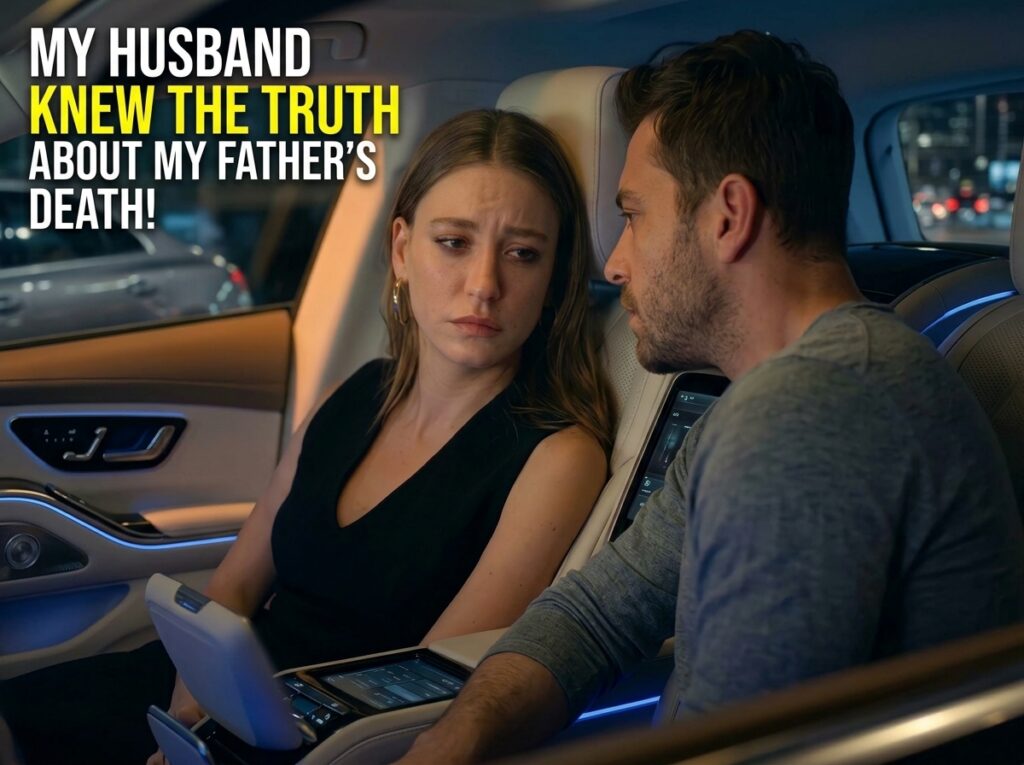
PART 1 — THE LETTER THAT DESTROYED HER TRUST
Sophie Bennett had always believed that the worst day of her life was the day she buried her father.
She remembered the rain falling against the church windows, the smell of wet flowers, and her mother’s trembling hands as they held hers beside the grave. She remembered the condolences from people who barely knew her family and the uncomfortable silence that followed every attempt to discuss how her father had died.
Thomas Bennett had been a quiet man who repaired watches in a small shop near the town center. He was not wealthy, famous, or particularly influential, but he had been Sophie’s hero.
He taught her how to ride a bicycle, helped her through school, and stayed awake beside her whenever she was ill. When she was twelve, he gave her a silver watch that had belonged to his own father.
“Time is precious,” he had told her. “Never waste it pretending to be someone you’re not.”
Sophie had remembered those words long after he was gone.
The official explanation for his death had been simple. Thomas had been involved in a car accident on a rainy road outside town. The investigation found no evidence of criminal activity, and the family had been told that the accident was tragic but straightforward.
Sophie was twenty-two at the time.
She had accepted the explanation because she could not imagine a world in which anyone would deliberately hurt her father.
Years passed.
She met Michael Carter at a friend’s wedding. He was thoughtful, patient, and gentle in ways she had rarely experienced. He listened when she spoke about her father and never told her to stop grieving.
When Sophie admitted that she still kept Thomas’s old watch beside her bed, Michael smiled.
“Then keep it,” he said. “Some things matter because of the people they remind us of.”
She fell in love with him.
They married two years later, and for a while, Sophie believed she had finally built the peaceful life her father would have wanted for her.
Then Michael’s father, Richard Carter, died.
Richard had been a successful businessman who kept meticulous records of his investments and properties. After the funeral, Michael began sorting through his father’s belongings, preparing the documents his solicitor needed to settle the estate.
Sophie offered to help.
One evening, while organizing papers in Richard’s old study, she found a narrow wooden drawer that would not open. A small brass key lay inside a box of watch parts.
The key fitted the lock.
Inside the drawer was an envelope marked with a date: the day before Thomas Bennett’s fatal accident.
Sophie opened it.
The first page was a bank statement showing a large transfer from a company connected to Richard Carter. The recipient’s name had been partly obscured by a handwritten note.
The second page was a copy of an insurance document.
The third was a letter.
It contained her father’s name.
Sophie read the letter once, then again.
Richard,
Thomas has discovered the discrepancy in the accounts. He intends to speak to the authorities tomorrow. You promised me this would never reach him, but I cannot continue pretending that the money was transferred legitimately.
If anything happens to Thomas, we will both have to live with what follows.
The letter was signed by a woman Sophie recognized immediately.
Her mother, Margaret.
Sophie felt her hands begin to shake.
Her mother had died four years earlier. She had never mentioned any financial dispute involving Thomas or Richard.
Sophie turned the page over.
At the bottom, someone had written another sentence.
Michael knows what happened that night. He promised he would never tell her.
She heard the front door open.
Michael called her name from the hallway.
Sophie gathered the documents and stood in the study, unable to move.
When he entered, he was loosening his tie. He smiled at first, then noticed the papers in her hands.
The smile disappeared.
“Where did you find those?”
Sophie stared at him.
“Tell me they’re not real.”
Michael closed the door behind him.
“Sophie, please sit down.”
“No. Tell me why my father’s name is in your dead father’s private files.”
He looked at the letter.
For several seconds, he seemed to be searching for a version of the truth that would not hurt her.
Then Sophie asked the question that mattered most.
“How long have you known?”
Michael lowered his eyes.
“Since before we got married.”
The room became silent.
Sophie felt as if the floor had disappeared beneath her feet.
“You knew about my father?”
“Yes.”
“You knew there were questions about his death?”
Michael swallowed.
“Yes.”
“And you married me without telling me?”
“I loved you.”
Sophie laughed once, a broken sound that frightened them both.
“You loved me enough to let me spend seven years believing a lie?”
Michael stepped toward her.
“Your father didn’t die the way the investigation suggested. But I don’t know everything that happened that night.”
Sophie stared at him.
“Then tell me what you do know.”
Michael’s eyes filled with tears.
“My father was supposed to meet yours on the night of the accident. I found out years later that they had argued about missing money. My father told me he had nothing to do with the crash, but he admitted that he had hidden information from the police.”
Sophie clutched the papers.
“What information?”
“I don’t know if he was telling me the truth about everything.”
“You had seven years to find out.”
“I was afraid.”
“Of what?”
Michael looked at her with an expression she had never seen before.
“Of losing you.”
Sophie felt something inside her break.
“You didn’t lose me because of what your father might have done,” she whispered. “You’re losing me because you decided I didn’t deserve to know.”
She placed her wedding ring on the desk.
Then she walked out of the study.
Michael did not follow her.
He stood beside the open drawer, surrounded by the evidence of a secret that had survived two deaths, two marriages, and seven years of love.
And for the first time, he understood that the truth he had hidden to protect his marriage might be the very thing that destroyed it.
PART 2 — THE HUSBAND WHO KNEW TOO MUCH
Sophie spent the night at her friend Rachel’s apartment.
She did not sleep.
Every time she closed her eyes, she remembered Michael’s expression when she had asked how long he had known. She remembered his hesitation, his lowered gaze, and the way he had said he was afraid of losing her.
She wanted to believe that his fear came from love.
But love was supposed to give people the courage to tell the truth, not an excuse to conceal it.
At seven the next morning, Michael called.
Sophie let the phone ring.
He called again.
Then a message appeared.
I won’t ask you to come home. I only ask that you let me explain everything I know.
Rachel read the message over Sophie’s shoulder.
“Do you want to hear him out?”
“I don’t know.”
“You don’t have to forgive him just because he explains himself.”
Sophie nodded.
That afternoon, she agreed to meet Michael in a quiet café near the river.
He was already there when she arrived. His face looked tired, and his shirt was wrinkled. He had never looked less like the confident man she had married.
Sophie sat opposite him.
“Start at the beginning.”
Michael explained that he had discovered the first documents in his father’s study eight years earlier, shortly after Richard had suffered a minor stroke.
At the time, he had been helping organize Richard’s business records. He found a folder containing references to Thomas Bennett and a disputed financial transaction.
He confronted his father.
Richard admitted that he and Thomas had been involved in a disagreement over company funds. He claimed that Thomas had misunderstood a legitimate business arrangement and threatened to expose something he did not understand.
Michael asked whether Richard had anything to do with the accident.
His father denied causing it.
But he also admitted that he had not told the police about a meeting scheduled with Thomas on the night of the crash.
“Why didn’t you report that?” Sophie asked.
“Because my father said the meeting never happened. He claimed Thomas had canceled it.”
“Did you believe him?”
Michael looked down.
“I wanted to.”
Sophie felt anger rise in her chest.
“You didn’t investigate. You didn’t contact me. You didn’t tell anyone.”
“I was twenty-six. My father had built everything I knew. I thought if I challenged him, I would destroy my family.”
“And what about mine?”
Michael had no answer.
He explained that when he met Sophie, he had initially intended to tell her about the documents. But every time he tried, he imagined her walking away.
After their relationship became serious, he convinced himself that the old dispute had been resolved.
Then they married.
Then another year passed.
Each delay made the confession harder.
“I kept telling myself I would find the truth before I told you,” he said. “I thought I could protect you from unnecessary pain.”
Sophie looked at him.
“You didn’t protect me. You protected yourself from watching me suffer.”
Michael’s eyes filled with tears.
“Yes.”
The admission surprised her.
For the first time, he was not trying to defend himself.
But an admission was not the same as accountability.
Sophie opened her bag and removed a notebook.
“My father kept records of every repair he did. Every payment. Every promise. He was the most careful man I knew.”
She placed it on the table.
“If he discovered missing money, he would have documented it.”
Michael looked at the notebook.
“Where did you find that?”
“In my mother’s house. I haven’t read all of it yet.”
He reached toward the cover, then stopped.
Sophie pulled it closer.
“This is my father’s life. You don’t get to decide what happens to it.”
Michael nodded.
“You’re right.”
She stood.
“I will find out what happened. Whether you’re part of the truth or another obstacle is up to you.”
For the first time, Michael did not ask her to stay.
He simply watched her leave, knowing that if he wanted any chance of making things right, he would have to help uncover the truth even if it cost him the marriage he had spent seven years trying to protect.
PART 3 — THE NOTEBOOK IN HER MOTHER’S HOUSE
Sophie’s childhood home stood at the end of a quiet street lined with old trees.
Since her mother’s death, she had visited only occasionally. The house contained too many memories: the smell of her father’s workshop, the faded curtains her mother had chosen, and the small kitchen where they had celebrated birthdays with homemade cakes.
Rachel accompanied her on Saturday morning.
They began in the attic, where Margaret had stored boxes of photographs, bills, and personal letters.
Sophie found the notebook inside a metal case beneath a stack of old newspapers.
It was bound in dark green leather. The pages were filled with Thomas’s careful handwriting, including dates, names, and amounts.
At first, the entries seemed ordinary.
A customer had brought in a broken watch. A supplier had delivered replacement parts. A local business had asked Thomas to repair several clocks.
Then Sophie found a series of entries dated six months before his death.
Richard Carter — verification of transfer.
Company account differs from approved statement.
Meeting requested. Awaiting response.
Several weeks later, Thomas had written:
Margaret says I should leave it alone. She is frightened. I understand why, but the money belongs to the workers who trusted this company.
Sophie read the sentence twice.
Her father had not been involved in the company as an employee. He had repaired watches for several business owners, including Richard, and had occasionally helped reconcile invoices because he was unusually good with numbers.
He had apparently discovered a discrepancy while reviewing documents connected to a contract.
The notebook continued.
Richard claims the missing amount is a temporary advance. No supporting documents provided.
Michael was present when I asked for clarification. He seemed uncomfortable.
Sophie looked at Rachel.
“Michael was there?”
“Apparently.”
Sophie turned the page.
The final entries were more troubling.
Meeting arranged for Friday evening.
Bring original ledger.
Then, beneath that:
If anything goes wrong, Margaret must give the documents to someone outside the company.
There was no further entry.
Sophie sat on the attic floor.
Her father had known that the dispute could become dangerous, or at least serious enough to require independent help.
Yet the family had spent years accepting that his death was simply an accident.
Rachel picked up a loose page tucked inside the back cover.
It contained a phone number and a name: Helen Brooks — independent accountant.
Sophie recognized neither.
“Who is Helen Brooks?”
“I don’t know,” Rachel said. “But she may know what your father was investigating.”
Sophie photographed the page and searched her phone contacts for a local business directory.
After several attempts, she found a retired accountant with that name living in a neighboring town.
Sophie called.
A woman answered.
“Hello?”
“I’m looking for Helen Brooks. My name is Sophie Bennett. My father was Thomas Bennett.”
The silence on the other end lasted so long that Sophie checked whether the call had disconnected.
Then the woman spoke.
“Thomas’s daughter?”
“Yes.”
“I wondered whether you would ever contact me.”
Sophie gripped the phone.
“You knew my father?”
“I did. And I know why he was worried before he died.”
Sophie closed her eyes.
“Can I meet you?”
“Yes,” Helen replied. “But bring the notebook. And don’t bring anyone connected to the Carter family.”
The call ended.
Rachel looked at Sophie.
“What did she say?”
Sophie held up the notebook.
“She said my father was right to be afraid.”
PART 4 — THE WOMAN WHO KNEW THE ACCOUNTS
Helen Brooks lived in a modest house overlooking a public garden.
She was in her late seventies, with silver hair and the careful movements of someone who had spent a lifetime working with documents.
When Sophie arrived, Helen had already prepared a folder.
“I’ve kept these records for more than twenty years,” she said. “I wasn’t sure whether anyone would ever need them.”
Sophie placed her father’s notebook on the table.
“Please tell me what happened.”
Helen explained that she had been an independent accountant hired to review several transactions involving Richard Carter’s business.
She had discovered that money had been transferred from an operating account into a separate company. The transfers were recorded as short-term loans, but the paperwork supporting them was incomplete.
Thomas had helped identify the discrepancy because he had been asked to repair a collection of valuable watches owned by one of the company’s clients. During that work, he had been shown invoices and records that did not match the payment history.
He contacted Helen because he wanted an independent opinion.
“I told him not to confront Richard alone,” Helen said. “I advised him to preserve copies of everything and take the matter to a lawyer.”
“Did he?”
“He tried.”
Helen opened her folder.
Inside were copies of invoices, transaction summaries, and letters between Thomas and Richard.
One letter from Richard acknowledged that money had been moved without the usual approvals. He described it as a temporary measure to prevent a business collapse.
Another letter showed that Thomas had requested repayment and supporting documentation.
Richard had promised to resolve the matter.
He never did.
Sophie studied the records.
“Was my father planning to report him?”
“Yes. He was concerned that employees and investors might lose money. He also believed the transfers could be unlawful.”
“Did my father steal anything?”
Helen shook her head.
“Not according to the records I reviewed. Thomas was trying to establish what had happened.”
Sophie felt relief, followed immediately by anger.
“Why didn’t you tell the police?”
“I gave a statement during the original investigation into the financial dispute. I was not told that Thomas’s death might be connected to it. At the time, I believed the accident investigation had been handled separately.”
“Did you suspect it wasn’t an accident?”
Helen looked at her carefully.
“I suspected that the circumstances surrounding the meeting deserved further examination. But suspicion is not proof.”
She handed Sophie another document.
It was a copy of a calendar entry from Richard’s office.
A meeting with Thomas had been scheduled for the evening of the accident.
The entry had later been crossed out.
Beside it was a handwritten note:
Canceled — Richard to speak privately.
Sophie felt a chill.
“Who wrote this?”
“I don’t know. The original secretary had left the company by then.”
Helen explained that she had attempted to obtain more records after Thomas died, but her contract was terminated. She had kept copies because she feared the dispute might never be properly examined.
Sophie placed the documents back into the folder.
“I need to know whether Richard was at the meeting.”
Helen nodded.
“Then you need the original diary or testimony from someone who was there.”
Sophie thought of Michael.
He had told her that his father denied meeting Thomas that evening.
Now she had evidence that a meeting had been scheduled and apparently canceled on paper.
The contradiction could not be ignored.
Before Sophie left, Helen gave her a final warning.
“Whatever you discover, don’t decide what happened before the evidence is complete. Your father deserves the truth, not another story built from fear.”
Sophie nodded.
For the first time, she felt she was moving closer to an answer.
But the closer she came, the more she understood how many people had helped keep the truth hidden.
PART 5 — THE LAST NIGHT OF THOMAS BENNETT
Michael agreed to help Sophie locate the original records.
He contacted the solicitor who had managed his father’s estate and requested access to archived business documents. The solicitor explained that some files had been transferred to a storage facility after Richard’s death.
Sophie insisted on attending when the boxes were opened.
Inside were tax records, company correspondence, and old calendars.
They found the diary from the year Thomas died.
The page for the evening of the accident contained two entries.
The first was a meeting with Thomas Bennett at seven o’clock.
The second, written in a different hand, read:
Meeting canceled. Richard unavailable.
Michael stared at the page.
“My father told me Thomas canceled.”
Sophie said nothing.
They continued searching.
At the bottom of the box was a small envelope containing a receipt from a roadside café. It was dated the night of the accident and showed that Richard had purchased two coffees shortly after eight.
The café was located on the road where Thomas’s car had crashed.
Michael looked at the receipt.
“I’ve never seen this before.”
Sophie watched his face.
“Do you remember where your father was that evening?”
Michael shook his head slowly.
“He told me he was at home. I remember because he called me around nine and asked whether I’d seen the news.”
“What did you tell him?”
“That I had heard about the accident.”
Michael sat down.
For years, he had remembered that phone call as an ordinary conversation. His father had sounded shocked and had asked whether Thomas’s family had been contacted.
Now the receipt suggested that Richard might have been near the scene before the accident was reported.
It was not proof of involvement.
But it was a contradiction that demanded an explanation.
Sophie took the documents to a lawyer named Eleanor Price, who specialized in reviewing old civil and financial disputes.
Eleanor warned them that the passage of time might limit what could be established. Some witnesses had died, records were incomplete, and the original accident investigation would need to be reviewed by qualified authorities.
Nevertheless, she agreed to help organize the evidence and determine whether a formal request for further investigation was appropriate.
As they left her office, Michael walked beside Sophie.
“I know you don’t trust me.”
Sophie looked ahead.
“I don’t know what I feel.”
“I want to help.”
“Then help without expecting me to reward you for it.”
Michael nodded.
“I will.”
For the first time, Sophie believed that he understood the difference between helping her uncover the truth and asking her to forgive him.
That evening, she returned to the graveyard alone.
She placed fresh flowers beside her father’s headstone and sat quietly beneath the trees.
“I don’t know what happened,” she whispered. “But I’m going to find out.”
The wind moved through the branches above her.
For years, she had visited the grave to mourn the father she lost.
Now she was there to defend the truth about the man he had been.
PART 6 — THE SECRET HER MOTHER CARRIED
The next discovery came from a letter Margaret had written to her sister shortly after Thomas’s death.
Sophie found it inside a box of family photographs.
The letter was dated two weeks after the accident.
I don’t know whether I can trust anyone anymore. Thomas believed that telling the truth would protect the people who depended on him. I believed that staying quiet would protect Sophie.
Neither of us understood what the truth would cost.
Sophie read the letter several times.
She contacted her aunt, who lived in another city and had not been close to the family during those years.
When Sophie showed her the letter, her aunt began to cry.
“Your mother was frightened,” she said. “After Thomas died, she received several calls from people connected to Richard’s company. They wanted to know whether Thomas had left any documents at home.”
“Did she tell the police?”
“She told them about the calls. But she was never certain whether they were connected to the accident or the financial dispute.”
“Why didn’t she tell me?”
Her aunt took Sophie’s hand.
“Because you were young, and she thought the matter would disappear if she stopped talking about it. She also feared that anyone who believed Thomas had been murdered might come after you.”
Sophie felt a wave of sadness.
Her mother had spent years carrying a fear that Sophie had never understood.
But fear could not explain everything.
“Did she believe Richard had caused the accident?”
“I don’t know. She suspected he knew more than he admitted. But she never told me she had proof.”
Her aunt opened a drawer and removed another envelope.
“Your mother asked me to keep this. She said I should give it to you if you ever began asking questions about your father.”
Inside was a photograph of Thomas standing outside his watch shop with a younger Michael.
Sophie recognized Michael immediately.
He looked about twenty years old.
On the back, Thomas had written:
Michael knows more than he realizes. His father has put him in an impossible position.
Sophie stared at the photograph.
Michael had been present in her father’s life before their own relationship began. He might have witnessed something that night, or heard something that had later been forgotten.
She called him.
“Can we meet?”
“Of course.”
“I found another photograph of you with my father.”
Michael was silent.
Then he said, “I remember that day.”
Sophie closed her eyes.
“What happened?”
“I was working at my father’s office. Thomas came in to discuss the accounts. I was asked to wait outside the meeting room.”
“Did you hear anything?”
Michael took a long breath.
“I heard my father shouting. Thomas said something about taking the records to the police. Then my father told him to leave.”
Sophie felt her heart beating faster.
“When was this?”
“Several days before the accident.”
“Why didn’t you tell me?”
“Because I didn’t understand how serious it was until years later. By then, my father had convinced me that the dispute was about a misunderstanding.”
Sophie gripped the phone.
“Michael, I need you to tell the investigators everything you remember.”
“I will.”
“And no more private decisions about what I should know.”
“I understand.”
She ended the call.
For the first time, the pieces of the past were beginning to form a clearer picture.
But she still did not know what had happened on the road that night.
PART 7 — THE CONFESSION IN THE OLD RECORDING
Helen Brooks had kept one final piece of evidence.
It was a cassette recording made during a meeting with Richard Carter several weeks before Thomas’s death. Helen had recorded it with the knowledge of the participants as part of her professional recordkeeping.
The cassette had never been transcribed.
Sophie and her lawyer arranged for it to be digitized and reviewed.
The recording began with ordinary discussion about invoices and payments. Then Thomas’s voice became clear.
“These transfers cannot continue without proper authorization.”
Richard replied that the money would be returned once a property sale was completed.
Thomas insisted that the company could not use funds belonging to other parties without their agreement.
Then Richard said something that made Sophie freeze.
“If you take this outside the company, you will destroy everything we’ve built.”
Thomas answered calmly.
“If everything we’ve built depends on hiding the truth, then it deserves to be examined.”
There was a pause.
Richard’s voice lowered.
“You have a family to think about, Thomas.”
“And so do you.”
The recording ended shortly afterward.
It did not establish what happened on the night of the accident. It did, however, confirm that the dispute had been serious and that Richard had known Thomas intended to pursue it.
Sophie listened to the recording twice.
She had expected to feel anger.
Instead, she felt a deep sadness.
Her father had been trying to do what he believed was right. He had not been looking for revenge or personal gain. He had been trying to protect people whose money might have been misused.
And the people around him had responded with fear, pressure, and silence.
Eleanor Price submitted the evidence to the appropriate authorities and requested that the original accident investigation be reviewed in light of the new information.
The review would take time.
Sophie understood that she might never receive a complete answer.
Some records had been lost. Some witnesses were gone. A financial dispute did not, by itself, prove that a death had been deliberate.
But she no longer had to rely on family stories.
She had documents, testimony, and a recording that could be examined independently.
Michael called her that evening.
“I heard the recording,” he said.
Sophie closed her eyes.
“Then you understand why I couldn’t simply forgive you.”
“Yes.”
“I don’t know whether our marriage can survive this.”
“I know.”
He did not ask her to come home.
He did not tell her that he had suffered too.
Instead, he said, “Whatever happens between us, I will tell the investigators everything I know.”
Sophie sat quietly for a moment.
“Thank you.”
It was not forgiveness.
But it was the first time in months that she had spoken to him without feeling the need to defend herself.
PART 8 — THE TRUTH ABOUT THE ACCIDENT
The authorities reviewed the recovered records, the original accident report, and the additional testimony.
Their examination did not establish that Richard Carter had deliberately caused Thomas’s death.
However, it confirmed that Richard had withheld information about his business dealings and his contact with Thomas in the days surrounding the accident. The financial dispute had been more serious than the family had been led to believe.
The investigators also identified inconsistencies in the original timeline, although the available evidence was insufficient to determine conclusively whether those inconsistencies were connected to the crash.
Sophie found the uncertainty painful.
She had wanted a clear answer: an innocent father, a guilty man, and a single explanation that would make the past understandable.
Instead, she discovered that the truth was made up of several different things.
Her father had acted with integrity.
Richard had concealed important information.
Michael had known enough to ask questions but had chosen silence.
Margaret had been frightened and had withheld information from her daughter.
And the accident itself remained unresolved.
When Sophie received the report, she sat alone in her mother’s kitchen and cried.
Not because she had failed to prove a crime.
Because she finally understood that justice did not always provide the certainty people needed to grieve.
Michael came to the house that evening.
He stood at the doorway and waited until Sophie invited him inside.
“I read the report,” he said.
“So did I.”
“I’m sorry.”
Sophie looked at him.
“I know.”
He sat opposite her.
“I can’t change what my father did. I can’t change what I hid from you. And I can’t ask you to pretend those things don’t matter.”
She studied his face.
“Do you understand why I left?”
“Yes.”
“It’s not only because you knew about the financial dispute. It’s because you let me believe I could trust you completely while you kept the most important truth about my life from me.”
Michael nodded.
“I understand.”
Sophie looked toward the window.
“I don’t know whether I can be your wife again.”
He swallowed.
“I won’t force you to decide.”
For a long time, they sat without speaking.
The investigation had not delivered the ending Sophie wanted, but it had given her something she had lacked for years: a clearer understanding of the people and choices surrounding her father’s death.
She could finally mourn Thomas without feeling that she was protecting a lie.
PART 9 — THE CHOICE THAT COST MICHAEL EVERYTHING
Michael made a decision that changed his relationship with his father’s legacy.
He resigned from the remaining business responsibilities connected to Richard’s estate and cooperated with the financial review. He provided his correspondence, signed statements about what he remembered, and acknowledged that he had delayed disclosing information that could have helped clarify the dispute.
His decision damaged several long-standing relationships.
Some relatives accused him of betraying his father.
Others argued that he was destroying the family reputation over events that could no longer be fully explained.
Michael did not argue with them.
For years, he had allowed the fear of disappointing his father to determine what he said and what he concealed.
He was no longer willing to do that.
He also accepted that his marriage might end.
Sophie met him one final time at the small restaurant where they had celebrated their seventh anniversary.
They sat by the window, watching people walk past.
“I’ve been thinking about what happens next,” Sophie said.
Michael nodded.
“So have I.”
“I still love parts of the man I married. I remember the way you cared for me when my mother died. I remember the ordinary days when you made me laugh. Those memories were real.”
He listened quietly.
“But the lies were real too. I can’t pretend that love cancels them out.”
“I know.”
Sophie took a breath.
“I need time to understand who I am without this secret controlling my life. I don’t know whether we can rebuild our marriage, and I won’t promise that we will.”
Michael’s eyes filled with tears.
“I understand.”
She looked at him carefully.
“Do you regret telling me the truth?”
“No,” he said. “I regret waiting until you found it yourself.”
For the first time, Sophie believed that he understood the difference.
They did not leave the restaurant holding hands.
They did not make promises about starting over.
They simply said goodbye.
Michael returned his wedding ring to the box in which he had kept it since the day Sophie left.
Sophie went home to her mother’s house.
The future remained uncertain, but she no longer felt responsible for protecting Michael from the consequences of his choices.
She had spent too many years believing that love meant enduring what other people were afraid to face.
Now she understood that love without honesty could become another kind of prison.
PART 10 — THE WOMAN WHO FINALLY KNEW THE TRUTH
One year later, Sophie returned to her father’s grave.
She carried a small bunch of white flowers and the silver watch he had given her when she was twelve.
The investigation had closed without establishing that the accident was deliberate. The financial records had been preserved, the disputed transactions had been reviewed, and the people involved had been required to account for what they knew.
Some questions remained unanswered.
Sophie had learned to live with that.
She no longer believed that every painful event came with a complete explanation. Sometimes the evidence revealed what people had done without revealing every reason behind their decisions.
She placed the flowers beside the headstone.
“I’m sorry it took me so long,” she whispered.
She thought about the father who had taught her to tell the truth even when it was difficult.
She thought about her mother, who had loved her but allowed fear to shape the story of her childhood.
She thought about Michael, whose kindness had been genuine even though his silence had caused deep harm.
For a long time, Sophie had wanted to divide everyone into people who loved her and people who had betrayed her.
Now she understood that a person could love someone and still hurt them terribly. That understanding did not excuse the harm, but it allowed her to see the past without reducing it to a single villain.
Michael continued to write occasionally.
His letters were brief. He did not ask for forgiveness or demand another chance. He simply acknowledged the things he should have done differently and told her what he was learning.
Sophie had not decided whether she would ever return to their marriage.
She had learned that forgiveness was not a deadline and reconciliation was not an obligation.
A few months earlier, she had opened a small photography studio in the town where she grew up. She specialized in family portraits, especially for people who wanted to preserve memories of loved ones.
On the wall beside her desk hung a photograph of Thomas in his watch shop.
He was smiling at the camera, his hands resting on the workbench.
Beneath the photograph, Sophie had placed a small card with his favorite words.
Never waste time pretending to be someone you’re not.
One evening, as she was closing the studio, a young woman arrived carrying an old family photograph.
“My grandmother died last month,” she said. “I found this in her belongings. I wondered whether you could help me restore it.”
Sophie took the photograph carefully.
“Of course.”
The woman explained that the photograph was the only picture she had of her grandmother as a young woman. She wanted to preserve it before the paper deteriorated.
Sophie smiled.
“I’ll take good care of it.”
After the woman left, Sophie stood alone in the quiet studio.
For years, she had believed that discovering the truth about her father’s death would restore the life she had lost.
It had not.
Her father was still gone. Her mother was still gone. Her marriage had changed in ways she could never completely reverse.
But she had gained something she had not expected.
She no longer needed to accept someone else’s version of her own history.
She could remember her parents with love while acknowledging their mistakes. She could care about Michael without pretending his betrayal had not mattered. She could seek answers without allowing uncertainty to consume the rest of her life.
Sophie switched off the studio lights and stepped outside.
The evening air was cool, and the street was quiet.
She looked up at the sky and thought about the watch her father had given her.
Time was precious.
He had been right about that.
But time was not only something people lost. It was something they could choose how to use.
Sophie could spend the rest of her life waiting for a perfect explanation.
Or she could build a future in which honesty mattered more than appearances and love did not require silence.
She chose the future.
And for the first time since the day her father died, she felt that the story of her life belonged to her again.
THE END