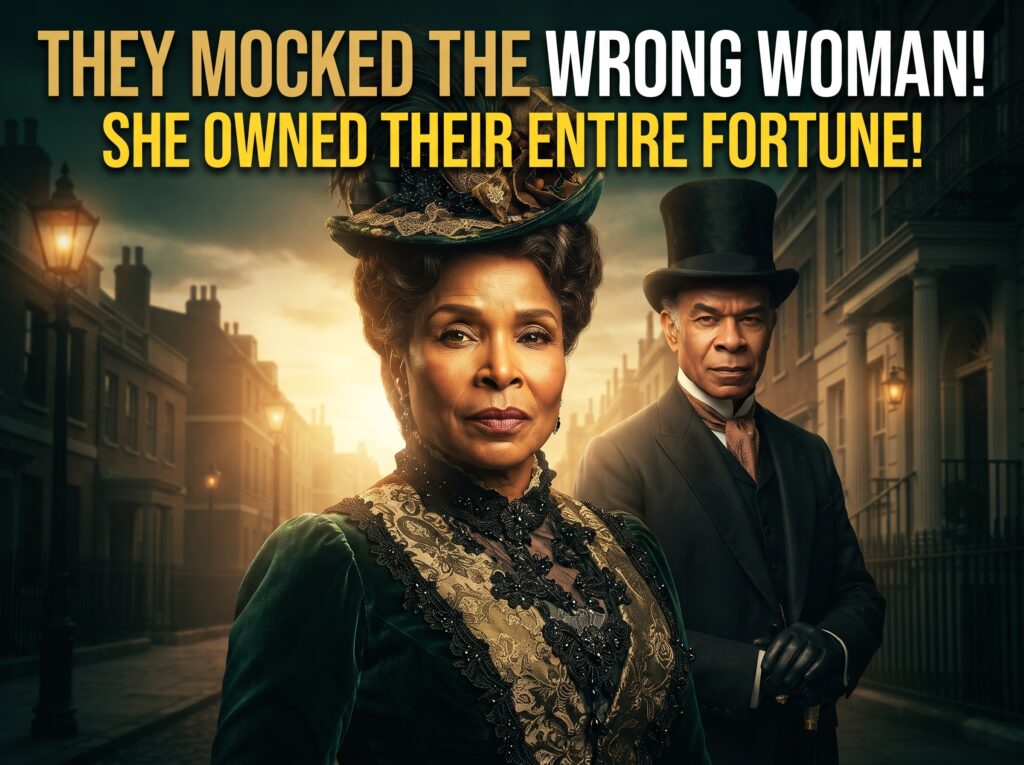
New York City, 1892.
The streets were filled with horse-drawn carriages, elegant shops, expensive hotels, and magnificent buildings.
Among the city’s wealthiest residents, the Whitmore family had once been considered one of the most powerful names in America.
Their fortune came from land, shipping, hotels, and commercial property.
But almost nobody remembered the woman who had originally built that empire.
Her name was Eleanor Whitmore.
At seventy-two, Eleanor lived quietly in a modest townhouse on a peaceful street.
She wore simple dresses, carried an old leather handbag, and preferred walking instead of traveling in an expensive carriage.
People often assumed she was a retired teacher or the widow of a struggling merchant.
They had no idea that she owned property worth millions.
Eleanor had deliberately chosen a quiet life.
Thirty years earlier, her father, Charles Whitmore, had died under mysterious circumstances.
He had left behind a large estate, including several hotels, warehouses, and valuable properties in Manhattan.
Eleanor was his only surviving legitimate child.
But shortly after his funeral, her father’s business partner, Edward Harrington, presented a document claiming that Charles had transferred ownership of the entire estate to him.
Eleanor knew the document was false.
Her father had never signed it.
She challenged the transfer, but the family’s lawyers warned her that the dispute could destroy her reputation and financial security.
Then something even worse happened.
Her younger brother, William, disappeared.
He had been investigating the suspicious transfer before his disappearance.
Without his testimony, Eleanor could not prove what had happened.
She withdrew from public life and waited.
For thirty years, Edward Harrington’s descendants enjoyed the wealth they had taken.
But Eleanor never forgot.
She had kept one original document that could expose the fraud.
And now, at seventy-two, she had finally decided to use it.
Her closest companion was a gentleman named Arthur Pembroke.
Arthur was sixty-eight and had spent most of his life working as a respected solicitor.
He had known Eleanor since childhood.
He also knew the truth about the Whitmore inheritance.
One sunny afternoon, the two walked through the city.
“You’re unusually quiet today,” Arthur observed.
Eleanor smiled.
“I’m thinking about my father.”
Arthur looked at her.
“After all these years?”
“Especially after all these years.”
He understood immediately.
“Have you decided?”
Eleanor stopped walking.
Across the street stood the magnificent Harrington Hotel.
It had once belonged to her father.
A golden sign above the entrance displayed the Harrington family name.
Eleanor looked at it for a long moment.
“Yes,” she said.
“Tomorrow, we begin.”
Arthur nodded.
“Then I shall prepare the documents.”
Neither noticed the gentleman standing near the hotel entrance.
His name was Henry Harrington.
He was the current owner of the hotel and the grandson of Edward Harrington.
He had inherited an enormous fortune and believed that nobody could challenge his family’s position.
When he saw Eleanor, he recognized her immediately.
“Well, well,” he said.
“Look who has decided to visit our neighborhood.”
Eleanor turned.
“Good afternoon, Mr. Harrington.”
Henry laughed.
“Still walking around with that old lawyer?”
Arthur’s expression hardened.
“Good afternoon, sir.”
Henry looked at Eleanor’s modest clothing.
“Surely you haven’t come here to ask for another charitable donation?”
Eleanor remained calm.
“No. I came to see something that once belonged to my family.”
Henry laughed louder.
“Your family? Madam, whatever your father owned disappeared decades ago.”
Eleanor adjusted her gloves.
“Not everything.”
Then she continued walking.
Henry watched her leave.
He had no idea that the woman he had just mocked was about to take everything from him.
PART 2 — THE DOCUMENT HIDDEN FOR THIRTY YEARS
The following morning, Eleanor arrived at Arthur’s office.
The building was old, with dark wooden furniture and shelves filled with legal books.
Arthur was waiting beside his desk.
On the desk lay a small wooden box.
“I found it,” he said.
Eleanor looked at the box.
“Are you certain?”
Arthur nodded.
“Your father gave it to me three days before he died. He told me never to open it unless you decided to challenge the inheritance.”
Eleanor sat down.
Arthur unlocked the box.
Inside were three documents, an old photograph, and a handwritten letter.
Eleanor immediately recognized her father’s handwriting.
She unfolded the letter.
My dearest Eleanor,
If you are reading this, something has happened that I feared for many years.
Edward Harrington has been working against our family. He believes that wealth gives him the right to take whatever he desires.
But I have prepared something that will protect you.
The properties listed in the enclosed document are yours. I transferred their legal ownership into a private family trust before my death.
Never surrender them.
Your loving father,
Charles.
Eleanor’s eyes filled with tears.
Arthur examined the documents.
“These are extraordinary.”
“Can they prove the ownership?”
“They can. But we need the original registration records.”
Eleanor frowned.
“Where are they?”
Arthur turned over the old photograph.
On its back was an address.
It was the address of an abandoned warehouse near the East River.
Eleanor remembered the place.
Her father had used it to store important business records.
“Do you think the documents are still there?” she asked.
Arthur nodded.
“It’s possible.”
Eleanor stood.
“Then we must go.”
That afternoon, they visited the warehouse.
The building was dusty and partially damaged.
Arthur found an old key hidden beneath a loose stone near the entrance.
Inside were broken shelves, wooden crates, and forgotten furniture.
Eleanor walked slowly through the building.
She remembered visiting the warehouse as a little girl.
Her father used to bring her there and tell her that every family had two treasures.
“Money and land?” she had once asked.
He had laughed.
“No, Eleanor. The first is truth. The second is the courage to protect it.”
She stopped beside an old wooden cabinet.
A small brass plate carried her father’s initials.
Arthur helped her open it.
Inside were several files.
The first contained shipping records.
The second contained property contracts.
The third contained an original deed.
Arthur examined it carefully.
Then he looked at Eleanor.
“This is it.”
She felt her knees weaken.
For thirty years, she had waited for this moment.
But as Arthur continued reading, his expression changed.
“What’s wrong?”
He pointed to a signature at the bottom of the deed.
“Someone has added a second ownership agreement.”
Eleanor leaned closer.
The document showed that Edward Harrington had received control of the properties through a supposed transfer signed by Charles Whitmore.
But the date was impossible.
Charles had already been dead for six days.
Eleanor stared at the paper.
“Forgery.”
Arthur nodded.
“And someone knew exactly what they were doing.”
Then they heard footsteps outside.
Arthur closed the cabinet.
A man’s voice called from the entrance.
“Mrs. Whitmore?”
Eleanor turned.
A stranger stood in the doorway.
He wore an expensive coat and carried a leather briefcase.
“My name is Samuel Price. I represent Mr. Henry Harrington.”
Arthur stepped forward.
“What do you want?”
Samuel smiled.
“Mr. Harrington would like to purchase whatever documents you may have discovered.”
Eleanor looked at him.
“And if I refuse?”
Samuel’s smile disappeared.
“Then I suggest you consider how difficult the next few weeks might become.”
Eleanor calmly picked up the original deed.
“Tell Mr. Harrington that I am no longer interested in selling anything.”
She walked past him.
For the first time in thirty years, the Harrington family knew that Eleanor Whitmore was fighting back.
PART 3 — THE MILLIONAIRE’S GREATEST FEAR
Henry Harrington was having breakfast when Samuel Price arrived.
He immediately noticed the expression on his lawyer’s face.
“Well?”
“She has the original deed.”
Henry placed his newspaper down.
“What?”
“Mrs. Whitmore found the documents.”
Henry stood.
“How is that possible?”
Samuel opened his briefcase.
“She also has a letter from Charles Whitmore.”
Henry walked toward the window.
For several moments, he remained silent.
Then he turned.
“Did you offer her money?”
“Yes.”
“How much?”
“Two hundred thousand dollars.”
Henry laughed nervously.
“And she refused?”
“Immediately.”
Henry poured himself a drink.
“Then she is more dangerous than I thought.”
Samuel hesitated.
“There is something else.”
“What?”
“Arthur Pembroke is helping her.”
Henry’s expression changed.
Arthur Pembroke had once represented the Whitmore family.
He knew every detail of the inheritance dispute.
Henry sat down.
“Find out everything he knows.”
Samuel nodded.
“And if he refuses to cooperate?”
Henry looked toward the door.
“Then make sure nobody believes a word he says.”
That evening, Eleanor received an unexpected visitor.
A young woman stood outside her townhouse.
She appeared frightened.
“Mrs. Whitmore?”
“Yes?”
“My name is Margaret Harrington.”
Eleanor looked at her carefully.
Margaret was Henry’s younger sister.
“Please come inside.”
Margaret entered and removed her gloves.
“I know who you are,” she said.
Eleanor smiled faintly.
“I imagine everyone in your family does.”
Margaret looked down.
“My grandfather left something behind.”
“What?”
“A letter.”
Eleanor’s expression changed.
“From Edward Harrington?”
Margaret nodded.
“My father keeps it locked in his study. I found it when I was looking for my mother’s jewelry.”
“Have you read it?”
“Yes.”
Margaret reached into her handbag and removed a folded piece of paper.
“I think you should see this.”
Eleanor opened it.
The letter was dated three decades earlier.
It contained a confession.
Edward Harrington admitted that he had forged Charles Whitmore’s signature and transferred the properties into his own name.
But the final paragraph was even more disturbing.
William Whitmore has discovered what I have done. I cannot allow him to speak.
Eleanor’s hands began trembling.
“William,” she whispered.
Margaret looked confused.
“Who was William?”
“My brother.”
Eleanor read the letter again.
Her brother had not simply disappeared.
He had discovered the truth.
And Edward Harrington had known.
“Do you know what happened to him?” Eleanor asked.
Margaret shook her head.
“No. But my grandfather kept another box in the basement.”
Eleanor looked at Arthur, who had arrived shortly before Margaret.
Arthur’s face had turned pale.
“Then we must find it.”
Margaret nodded.
“But there’s something you need to know.”
“What?”
“My brother Henry has been searching for that letter for months.”
Eleanor folded the paper.
“Then we must move quickly.”
PART 4 — THE BROTHER WHO NEVER CAME HOME
The next morning, Eleanor, Arthur, and Margaret visited the Harrington estate.
The mansion stood behind iron gates and carefully maintained gardens.
It was one of the properties that had originally belonged to Charles Whitmore.
Margaret led them through a side entrance.
“My father rarely comes down here,” she whispered.
They entered the basement.
It smelled of dust and old wood.
Margaret pointed toward a storage room.
“Grandfather kept his personal belongings here.”
Arthur opened several drawers.
Eleanor examined an old writing desk.
Behind a loose panel, she discovered a small metal box.
Inside were letters, bank statements, and a photograph.
The photograph showed a young man standing beside a train.
Eleanor immediately recognized him.
“William.”
Her brother looked healthy and happy.
On the back was a handwritten message.
To Eleanor. One day, I will come home.
Eleanor held the photograph against her chest.
For thirty years, she had believed her brother was dead.
But the letters suggested something different.
Arthur opened the first envelope.
It was dated six months after William disappeared.
Dear Eleanor,
I am alive. I cannot return yet. Edward has threatened my life because I discovered what he did to Father.
I have sent copies of the original records to a trusted friend.
Do not trust anyone who claims I am dead.
Your loving brother, William.
Eleanor sat down.
“He’s alive.”
Arthur nodded slowly.
“At least he was when he wrote this.”
They searched the remaining letters.
The latest was dated only five years earlier.
William had been living in Boston under a different name.
Margaret looked shocked.
“My grandfather knew?”
Arthur nodded.
“He must have.”
Eleanor stared at the letters.
“Why didn’t he tell me?”
Arthur answered quietly.
“Because he wanted to keep the stolen fortune.”
Margaret began crying.
“My family has been living in your house for generations.”
Eleanor looked at her.
“You didn’t steal anything.”
“But my grandfather did.”
Eleanor placed a hand on her shoulder.
“Children are not responsible for every sin committed by their parents.”
Margaret looked relieved.
Then Arthur discovered a small card inside the box.
It contained a Boston address and a telephone number.
Eleanor took it.
“We’re going to find my brother.”
But before they could leave, a carriage stopped outside.
Henry Harrington stepped out.
He entered the basement with two men.
“What an interesting family reunion,” he said.
Margaret moved closer to Eleanor.
Henry looked at the documents.
“Give them to me.”
Eleanor stood.
“No.”
Henry smiled.
“You don’t understand. My grandfather built this empire.”
“With my father’s money.”
Henry’s face hardened.
“Your father is dead.”
“So is yours. That doesn’t make stolen property yours.”
Henry stepped closer.
“You will never take this family down.”
Eleanor looked directly into his eyes.
“Then you should have chosen a better family secret to protect.”
Henry ordered his men to search the room.
But Margaret had already hidden the most important letter inside her coat.
And she was about to make a decision that would change everything.
PART 5 — THE DAUGHTER WHO BETRAYED HER FAMILY
Margaret waited until midnight.
She knew her brother would be searching for the missing letters.
She also knew that if she stayed at the estate, he would never allow her to leave.
She packed a small suitcase and took the train to Eleanor’s townhouse.
When Eleanor opened the door, Margaret looked exhausted.
“I’ve brought something.”
She placed a leather folder on the table.
Inside were bank records showing that Henry had recently transferred large sums of money into private accounts.
Arthur examined them.
“These are current transactions.”
Margaret nodded.
“My brother has been moving the family’s money because he knows the inheritance dispute is coming.”
Eleanor looked at the records.
“Why would he do that?”
“Because he believes the courts will freeze the properties.”
Arthur turned another page.
Then he stopped.
“Good heavens.”
Eleanor looked at him.
“What is it?”
Arthur pointed to a payment made ten years earlier.
The recipient was a private investigator.
The description read:
Locate William Whitmore.
Eleanor’s heart began pounding.
“Henry was looking for my brother?”
Margaret nodded.
“I found these records in his study.”
Arthur continued reading.
A second payment had been made three years later.
A third payment appeared only six months ago.
Someone had been searching for William for years.
Eleanor stood.
“Why?”
Margaret looked frightened.
“Because William has the evidence that can destroy the entire Harrington fortune.”
Arthur closed the folder.
“We must find him before Henry does.”
The following morning, Eleanor and Arthur traveled to Boston.
They visited the address William had left in his letter.
It was a small house near the waterfront.
An elderly man opened the door.
He had silver hair and a walking stick.
For several seconds, Eleanor couldn’t speak.
Then she whispered:
“William?”
The man stared at her.
His eyes widened.
“Eleanor?”
She stepped forward.
Her brother dropped his walking stick.
They embraced.
Thirty years of separation disappeared in a moment.
William was seventy-four now.
His hair had turned white, and his face carried the marks of a difficult life.
But he was alive.
“I thought I’d never see you again,” Eleanor whispered.
William held her tightly.
“I wanted to come home. I tried.”
“Why didn’t you?”
“Edward had people watching me. He threatened to hurt you if I returned.”
Eleanor began crying.
William continued.
“I waited until he died. But then his son began searching for me.”
“Henry.”
William nodded.
“He knows I have the original evidence.”
Arthur asked:
“What evidence?”
William walked toward a cupboard.
He removed a small metal case.
Inside were original bank statements, signed agreements, and a handwritten confession from Edward Harrington.
But there was one more document.
William placed it on the table.
“This is the real inheritance agreement.”
Arthur examined it.
His expression changed.
“This is extraordinary.”
Eleanor looked at him.
“What?”
Arthur slowly smiled.
“Your father didn’t leave you only the original properties.”
He pointed to a final paragraph.
“He left you the controlling ownership of every company established through the Whitmore family trust.”
Eleanor looked at her brother.
William nodded.
“Everything they took was always yours.”
PART 6 — THE FAMILY DINNER THAT CHANGED EVERYTHING
Eleanor decided that the truth should be revealed publicly.
Arthur recommended taking the case to court immediately.
But Eleanor had another idea.
She wanted Henry to face the truth in front of the people who had spent years celebrating his family’s wealth.
The Harrington family was hosting an annual charity dinner at the Harrington Hotel.
It was attended by politicians, businessmen, lawyers, and members of high society.
Eleanor sent Henry a formal invitation.
It contained only one sentence.
I believe it is time we discussed the original ownership of your hotel.
Henry accepted.
He believed he could humiliate her one final time.
The evening arrived.
The ballroom was filled with guests.
Crystal chandeliers illuminated the magnificent room.
Henry stood near the entrance, greeting important visitors.
When Eleanor arrived, he laughed.
“Well, look who’s here.”
She wore an elegant dark green Victorian gown and a beautiful feathered hat.
Arthur walked beside her.
William followed, leaning on his walking stick.
Henry’s smile disappeared when he recognized William.
“Impossible.”
William looked at him.
“Good evening, Henry.”
Guests began whispering.
Henry stepped forward.
“What is he doing here?”
Eleanor smiled.
“Meeting his family.”
Henry looked toward the guests.
“Security!”
But Margaret stepped between them.
“Stop it, Henry.”
He stared at his sister.
“You?”
Margaret lifted her chin.
“Yes. Me.”
Eleanor turned toward the room.
“Ladies and gentlemen, thank you for allowing me to interrupt this evening.”
Henry tried to stop her.
But Arthur had already approached the hotel manager.
He placed an official document on the table.
“Under the original Whitmore trust agreement, this property belongs to Eleanor Whitmore.”
The room fell silent.
Henry laughed nervously.
“That is ridiculous.”
Arthur opened the document.
“Then perhaps you would like to explain why your grandfather forged the transfer agreement six days after Mr. Charles Whitmore’s death.”
The guests began whispering.
William stepped forward.
“I can explain.”
Henry looked at him.
William held up the original confession.
“Your grandfather admitted everything.”
Henry’s face turned pale.
For the first time, the man who had spent his entire life believing himself untouchable had nothing to say.
But Eleanor was not finished.
She turned toward the guests.
“There is another reason I asked everyone here tonight.”
She looked at Henry.
“Your family has enjoyed wealth built on stolen property. But there is one more secret you should know.”
She paused.
“Your grandfather didn’t steal everything from my father for himself.”
Henry stared.
“What are you talking about?”
Eleanor turned toward Margaret.
And Margaret stepped forward with a final document.
It was the document that would change the entire Harrington family forever.
PART 7 — THE SECRET HEIR
Arthur examined Margaret’s document.
It was an old birth record accompanied by a letter.
Henry looked confused.
“What is that?”
Margaret’s voice trembled.
“It’s my father’s original family record.”
Henry laughed.
“Everyone knows who our father was.”
Margaret shook her head.
“No. We know who raised us.”
The room became silent.
She continued.
“Grandfather Edward had another son. His name was Thomas. He was born before Father.”
Henry frowned.
“What?”
“Thomas was the legitimate firstborn heir of Edward Harrington.”
Arthur examined the record.
It was genuine.
Thomas had been removed from the family after Edward discovered that his mother had married someone else before their relationship.
But Edward had never legally challenged the marriage.
Instead, he had hidden the truth.
William looked at Eleanor.
“This changes everything.”
Arthur nodded.
“If the records are correct, the original Harrington estate may also have been distributed illegally.”
Henry shook his head.
“That is impossible.”
Margaret looked directly at him.
“Grandfather knew. He kept the records hidden because he feared Thomas would challenge the inheritance.”
Eleanor slowly understood.
The Harrington family had not only stolen the Whitmore fortune.
They had also concealed their own legitimate heir.
Henry sat down.
“Where is Thomas?”
Margaret lowered her eyes.
“He died twelve years ago.”
The room became quiet again.
“His daughter is alive,” she continued.
A woman standing near the back of the ballroom stepped forward.
She was in her early forties and wore a simple black dress.
“My name is Clara Harrington.”
Henry stared.
“Who are you?”
Clara answered calmly.
“I’m Thomas’s daughter.”
Arthur examined her documents.
The family connection was confirmed.
The person who should have inherited part of the Harrington estate had been excluded for decades.
Eleanor looked at Clara.
“Your father deserved the truth.”
Clara nodded.
“So did yours.”
Henry stood.
“This is a conspiracy!”
But nobody listened.
The documents were too clear.
His family’s fortune had been built on deception, and the truth had finally reached the people who could no longer ignore it.
PART 8 — THE COURTROOM OF TWO FAMILIES
Three weeks later, the case reached the New York Supreme Court.
The courtroom was filled with reporters and members of both families.
Eleanor sat beside Arthur.
William sat behind them.
Margaret and Clara were also present.
Henry entered with his lawyers.
He looked tired.
His confidence had disappeared.
The judge examined the original documents.
Arthur presented the evidence.
First came Charles Whitmore’s original trust agreement.
Then the forged transfer.
Then Edward Harrington’s confession.
Finally, William testified about the threats that had forced him to disappear.
Henry’s lawyer attempted to challenge the authenticity of the documents.
But handwriting experts confirmed the forgery.
Bank records supported the financial evidence.
The judge then turned to Eleanor.
“Mrs. Whitmore, do you understand the consequences of pursuing this claim?”
Eleanor stood.
“Yes, Your Honor.”
“You are seeking ownership of properties that have been controlled by the Harrington family for thirty years.”
“Correct.”
“Are you prepared to accept the responsibility that comes with that ownership?”
Eleanor looked toward the courtroom.
“I am not here because I want to become wealthy. I am here because my father worked his entire life to build something honest. His name was stolen, his daughter was threatened, and his son was forced to disappear.”
She paused.
“I want the truth restored.”
The judge nodded.
Then came the decision.
The original Whitmore trust was declared valid.
The fraudulent transfers were overturned.
The court ordered the return of the properties and began proceedings to recover improperly transferred funds.
The Harrington family lost control of the disputed estate.
But the judge also recognized Clara’s legitimate claim to her father’s family inheritance.
Henry looked down.
For the first time, he understood that the wealth he had inherited was never entirely his.
Outside the courtroom, reporters surrounded Eleanor.
“Mrs. Whitmore! What will you do with the fortune?”
“Will you sell the Harrington Hotel?”
“Will you seek compensation for what happened to your family?”
Eleanor stopped.
She looked at the reporters.
“I spent thirty years waiting for justice. I don’t intend to spend the rest of my life seeking revenge.”
Then she walked away with her brother.
PART 9 — THE MILLIONS SHE DIDN’T WANT
The Whitmore properties were gradually returned.
The Harrington Hotel was placed under Eleanor’s control.
The warehouses, offices, and commercial buildings were restored to the family trust.
Financial experts estimated the value of the recovered estate at more than twenty million dollars.
But Eleanor surprised everyone.
She announced that she would not return to the lifestyle her father had once enjoyed.
Instead, she created the Whitmore Foundation.
Its purpose was to provide housing, education, and financial assistance to families who had lost their property through fraud.
William became a director.
Arthur served as legal adviser.
Margaret joined the foundation’s board.
Clara was also offered a position.
Some people questioned why Eleanor would help members of the Harrington family.
She answered simply:
“Justice should not punish innocent people.”
Henry, meanwhile, faced legal consequences for his own financial dealings.
He lost several properties and was forced to repay money that had been improperly transferred.
But Eleanor never celebrated his downfall.
One afternoon, Henry visited her townhouse.
He looked older.
His expensive clothes were gone.
“May I speak with you?”
Eleanor invited him inside.
Henry stood awkwardly in the sitting room.
“I came to apologize.”
Eleanor waited.
“My grandfather did terrible things. My father protected them. And I continued pretending that everything belonged to us.”
He looked down.
“I treated you cruelly.”
Eleanor nodded.
“Yes, you did.”
“I don’t expect forgiveness.”
“That is wise.”
Henry looked surprised.
Eleanor continued.
“But I hope you learn something from what happened.”
“What?”
“Being wealthy does not make a person important. What you do with your life does.”
Henry lowered his eyes.
He left without another word.
Eleanor watched him walk away.
Then she returned to her desk.
A letter had arrived from the foundation.
A young woman was asking for help because her family had lost their home through a fraudulent property transfer.
Eleanor picked up her pen.
For the first time in thirty years, she felt that her father’s fortune was being used exactly as he had intended.
PART 10 — THE WOMAN WHO FINALLY CAME HOME
One year later, the Harrington Hotel reopened under its original name.
The Whitmore Grand Hotel.
Its entrance had been restored.
The old family crest was placed above the doors.
And in the main ballroom hung a large portrait of Charles Whitmore.
Eleanor stood beneath it during the opening ceremony.
She wore an elegant dark dress, a beautiful hat, and the same quiet smile she had carried through thirty years of humiliation.
Arthur approached her.
“Your father would be proud.”
Eleanor looked at the portrait.
“I hope so.”
William joined them.
He had recovered much of his strength.
For the first time in decades, brother and sister stood together in the building where their childhood memories had begun.
Margaret and Clara were also present.
The two women had become close friends.
Henry did not attend the ceremony.
He had moved away from New York to begin a quieter life.
Eleanor had sent him a letter wishing him well.
She believed everyone deserved an opportunity to change.
When the ceremony began, Eleanor stepped onto the stage.
“Thirty years ago, I walked away from this family because I believed the truth had no place in a world controlled by money.”
She looked at the audience.
“I was wrong.”
She paused.
“The truth does not always arrive quickly. Sometimes it takes years. Sometimes it takes generations. But it must never be forgotten.”
The guests applauded.
After the ceremony, Eleanor returned to her father’s old office.
Everything had been restored.
His desk.
His books.
His favorite chair.
On the desk lay a small envelope.
It was the letter she had found thirty years earlier.
She opened it again.
My dearest Eleanor,
Never allow anyone to convince you that your worth depends on what you own.
The greatest inheritance I can leave you is the courage to stand for what is right.
Eleanor smiled.
She finally understood.
Her father had not simply left her a fortune.
He had left her a responsibility.
She placed the letter inside a wooden frame and put it beside his portrait.
Then she looked through the window at the busy city below.
For years, people had called her poor.
They had mocked her clothes, questioned her place in society, and dismissed her because she did not display her wealth.
But none of that mattered anymore.
She had reclaimed her family’s name.
She had found her brother.
She had restored the truth.
And most importantly, she had learned that dignity could never be measured by the size of someone’s fortune.
The woman they once mocked had become the woman who changed two powerful families forever.
THE END.