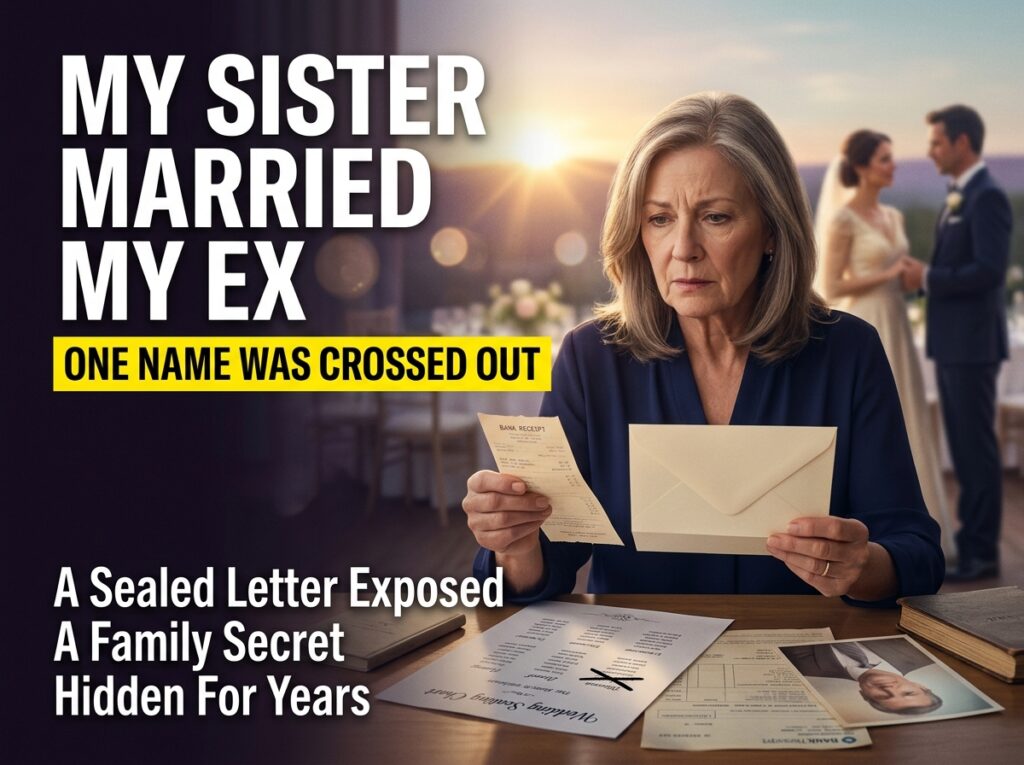
At sixty-eight, I believed I had earned the right to be surprised by very little.
I had survived the ordinary disappointments that slowly teach a person to lower expectations. I had watched friendships fade, attended funerals for people I had once thought would always be there, and learned that promises made around a family dinner table did not always survive the journey into Monday morning.
I knew how to recognize a strained smile. I knew the difference between someone who wanted to help and someone who wanted to appear helpful. After decades of birthdays, holidays, and promises, I thought I could recognize a lie the moment I heard one.
Then my younger sister, Laura, called me on a Thursday evening and announced that she was getting married.
At first, I was genuinely happy for her.
Laura had been alone for several years following a difficult divorce. She had spent most of that time insisting that marriage was no longer something she wanted. She enjoyed her independence, her garden, and her quiet Sunday mornings. Whenever our relatives asked whether she had met anyone, she would smile and say that she had already experienced enough romance for one lifetime.
So when she told me she had met someone, I expected a name I did not recognize.
Instead, she said, “It’s Daniel.”
I was standing beside my kitchen sink, rinsing a cup.
I turned off the tap.
“Which Daniel?”
She laughed nervously.
“You know which Daniel.”
Of course I did.
Daniel Reed had been my partner for nearly six years. We had met in our forties, when both of us had already learned that love required more than attraction and a collection of beautiful promises. We had built a life around shared routines, small holidays, Sunday dinners, and plans that seemed perfectly reasonable until we tried to make them real.
Our relationship had ended eleven years earlier.
There had been no single argument that destroyed it. Instead, there had been disagreements about money, an increasingly distant silence, and a sense that Daniel had begun keeping parts of his life separate from mine.
When I asked him about it, he told me I was worrying too much.
When I asked again, he said I was making ordinary problems into accusations.
Eventually, I grew tired of feeling as though I had to apologize for wanting honest answers.
We separated.
I had not seen him socially in years, although I occasionally heard about him through mutual friends.
And now my sister was going to marry him.
“How long?” I asked.
Laura was quiet for a moment.
“About fourteen months.”
Fourteen months.
She had attended my birthday dinner during that time. She had sat at my table during Christmas, accepted a gift from me, and listened while I spoke about my plans for the coming year.
She had done all of this while seeing the man I once expected to spend the rest of my life with.
“You could have told me,” I said.
“I wanted to make sure it was serious.”
“Fourteen months wasn’t enough time?”
“Please don’t start.”
I closed my eyes.
There it was: the familiar suggestion that my questions were the problem.
“I’m not starting anything, Laura. I’m asking why you kept this from me.”
“Because I knew you’d react badly.”
“Would you have preferred that I find out at the wedding?”
She sighed.
“Daniel and I didn’t plan this. We weren’t trying to hurt you. We fell in love, and we wanted to be sure before telling everyone.”
I looked through the kitchen window at the garden my late husband and I had planted years earlier. The rosebushes were bare, and the old wooden bench needed repainting.
There was something painfully familiar about the way Laura described the situation. Every difficult decision was presented as though it had happened naturally, without anyone making a choice.
“We’re getting married in three weeks,” she continued. “It’s a small ceremony. I really want you there.”
I did not answer immediately.
I wanted to tell her that I could not sit in a room and watch her exchange vows with Daniel as if the history between us had never existed.
But I also knew that Daniel and I had been separated for eleven years. He was not mine to claim, and Laura was entitled to make her own decisions.
The fact that I could understand that did not mean I was not hurt.
“I need time to think,” I said.
“Of course.”
Her voice suggested that she expected me to come around.
After the call ended, I remained beside the sink for several minutes.
I remembered the last conversation Daniel and I had shared before our separation became permanent. He had stood in the doorway of our old home, holding a cardboard box of his belongings.
“You’ll understand one day,” he had told me.
I had asked what I was supposed to understand.
He had shaken his head.
“Not everything needs to be explained right now.”
Those words had haunted me for years because they sounded like an answer while telling me nothing.
I had eventually stopped asking.
I believed I had moved on.
But Laura’s announcement had reopened a part of my life I thought I had finally put away.
The following morning, she sent me the wedding details. The ceremony would take place at an old hotel outside the city, followed by a small reception for relatives and close friends.
There was a seating arrangement attached to the message.
I almost ignored it.
Then I noticed that Daniel’s name appeared beside Laura’s, followed by the names of several relatives I recognized.
At the bottom of the page was a short note from the wedding planner asking family members to confirm their attendance.
I replied that I would be there.
I did not make the decision because I had forgiven Laura.
I made it because I did not want the rest of my family to become another casualty of a relationship that had ended years earlier.
Three days later, I drove to the hotel for a meeting with the wedding planner.
I intended to confirm my seat, discuss a family photograph for the reception, and leave before Laura and Daniel arrived.
The planner, a composed woman named Rebecca, greeted me at the entrance.
“Thank you for coming,” she said. “Your sister mentioned that you might have a few questions about the seating arrangements.”
“Nothing complicated.”
She led me to a small office and placed a printed chart on the desk.
I began reading the names.
My own name was listed near the front, beside an elderly aunt who would probably spend the entire evening asking whether I was eating enough.
Laura and Daniel were seated at the central table.
Several other relatives were arranged around them.
Then I noticed something unusual.
One name had been crossed out in thick black ink.
I leaned closer.
The mark was deliberate, drawn through the first and last names several times.
“Who was this?” I asked.
Rebecca glanced down.
For the first time since I had arrived, her professional smile disappeared.
“I’m sorry,” she said. “I was hoping you wouldn’t notice that.”
I looked at her.
“Why?”
She hesitated, then reached into a folder beside her desk.
“Because I was asked to give you something if you came here alone.”
She removed a cream-colored envelope and placed it beside the seating chart.
My name was written across the front in handwriting I did not recognize.
“What is this?”
“I don’t know. It was delivered to the hotel yesterday, along with instructions.”
“Instructions from whom?”
Rebecca looked toward the closed office door.
“The person who sent it said that the crossed-out name would tell you whether you should open it.”
I looked back at the chart.
The ink had obscured most of the name, but I could make out the final letters.
My heart began beating faster.
I knew that name.
It belonged to someone who had been part of our family for decades, someone whose absence had been explained so often that we had stopped asking questions.
Rebecca pushed the envelope toward me.
“She also said you should compare the date inside with your old family records.”
I stared at the envelope.
For the first time in eleven years, I wondered whether Daniel’s departure from my life had been connected to something I had never understood.
And I had a terrible feeling that the answer was waiting inside that envelope.
<h2>Part 2</h2>
I took the envelope home without opening it.
That decision surprised me.
Normally, I would have opened a letter immediately, especially one that had been deliberately delivered to me under such strange circumstances.
But the crossed-out name had unsettled me more than I wanted to admit.
It belonged to Peter, my older brother.
Peter had died seven years earlier after a short illness. He had been the person our family turned to whenever something went wrong. If a relative needed help moving house, Peter arrived with his tools. If someone had a financial problem, he found a way to make a telephone call, arrange a meeting, or lend a hand without making the person feel ashamed.
He had not been perfect.
He could be stubborn, impatient, and occasionally so determined to protect people that he refused to explain what he was doing.
But he had always been the person I trusted most.
When he died, Laura and I spent months sorting through his belongings. We found old photographs, bank statements, receipts, and notebooks filled with details about people he had helped.
We divided the personal items and donated what we could.
Neither of us found anything unusual.
At least, that was what I had believed.
Now Peter’s name had appeared on a wedding seating chart, crossed out as if someone had wanted to remove him from a gathering he would never attend.
I placed the envelope on my dining table.
Then I took out my old family notebook.
I had started keeping it more than thirty years earlier, after my mother began forgetting dates and mixing up stories from different periods of her life. I wrote down birthdays, addresses, important transactions, and details from family conversations.
I had never considered myself particularly organized, but the notebook had become a reliable record of our history.
I opened it to the year Peter died.
There were notes about his funeral, the people who attended, and the arrangements made for his estate.
One entry caught my attention.
Peter asked me to keep the original receipt until the matter is resolved.
I stared at the sentence.
I could not remember writing it.
The handwriting was mine, but the words seemed to belong to another person.
I checked the pages before and after it.
The entry had been written between a note about the funeral flowers and a list of people who had sent condolences.
There was no explanation of the receipt or the matter it concerned.
I turned to the index at the back of the notebook.
Under Peter’s name, I found several references to bank appointments, a property address, and a transaction recorded shortly before his death.
The same date appeared beside the crossed-out name on the seating chart.
I sat back.
The coincidence was too precise to ignore.
I looked at the envelope again.
It was sealed with a strip of transparent tape. The handwriting on the front was neat and deliberate, with a distinctive way of forming the letter R.
I had seen that handwriting before.
I went upstairs and opened the small cabinet where I kept letters from my parents and siblings.
Inside was a bundle of correspondence Peter had sent me over the years.
Most of it concerned ordinary matters: family gatherings, repairs to his house, and arrangements for holidays.
Near the bottom was a letter dated eleven years earlier.
It had arrived shortly before Daniel and I separated.
I remembered the letter because Peter had asked me to meet him privately. I had been busy and had postponed the meeting twice.
Eventually, he had stopped asking.
I opened the letter and read it again.
There is something I need to explain to you. It concerns a decision made before you met Daniel. I don’t want you to misunderstand what happened, but I also don’t want to interfere in your relationship. If you ever need to know, keep the original record.
The letter ended with a date and an address.
I checked the date against my notebook.
It was the same date I had written beside the mysterious transaction.
My hands became cold.
Peter had tried to tell me something eleven years ago.
I had never asked him what it was.
A few weeks later, Daniel and I had separated.
I had assumed that Peter’s letter concerned a family disagreement or an old financial matter. After Peter died, I forgot about it among the hundreds of documents I had kept.
Now I wondered whether the letter had been connected to Daniel’s departure.
I returned to the dining table and opened the envelope.
Inside was a photocopy of a bank transaction, a short handwritten note, and a sealed second envelope.
The transaction record showed that a substantial payment had been made from an account connected to my family. The recipient was identified by a reference number rather than a full name.
The date matched my notebook.
The note contained only three sentences.
The transaction was not a gift. It was not a loan in the ordinary sense. The original agreement explains why the money moved and who was meant to benefit.
Below that was a name.
Daniel Reed.
I felt as though someone had pulled the floor out from beneath me.
The payment had been recorded before Daniel and I met.
It was possible that the transaction had been entirely legitimate. He might have been working for a company, helping a relative, or involved in some other arrangement.
But the document had been deliberately sent to me, and the writer had connected it to Peter’s name.
I turned to the second envelope.
It had not been opened.
On the front was a date and a reference number.
I recognized the date from Peter’s letter.
The reference number matched the one on the transaction record.
I could open it.
I could also wait until I had spoken to someone who understood the documents.
For the first time, I realized that the question was no longer whether my sister’s marriage was appropriate.
It was whether someone had been using our family’s trust to conceal a decision that had affected several lives.
I called the bank listed on the record.
After explaining that I had discovered an old transaction and wanted to verify its authenticity, I was transferred to the historical records department.
The employee who answered asked me to provide the reference number.
I read it aloud.
There was a pause.
“Madam, do you have the original document?”
“No. I have a photocopy.”
“Then we would need to examine the underlying file before confirming the details.”
“Can I come to the records office?”
“Yes. I can arrange an appointment.”
I gave her my name and telephone number.
Before ending the call, I asked whether the reference number was still active in the bank’s records.
She did not answer immediately.
“I can see that the file exists,” she said carefully. “But I would prefer to discuss the details when you arrive.”
I asked whether the name Daniel Reed appeared in the file.
Another pause followed.
“Please bring the documents you have. And, if possible, bring proof of your relationship to the account holder.”
The call ended.
I looked at the second envelope.
The next morning, I would visit the records office.
For the first time in eleven years, I was going to investigate the circumstances surrounding the end of my relationship with Daniel.
I still did not know whether he had done anything wrong.
But I was beginning to suspect that the explanation he had refused to give me might have involved more than our relationship.
And if Peter had known the truth, I needed to understand why he had waited until the end of his life to leave me a clue.
<h2>Part 3</h2>
The bank’s records office occupied the third floor of an older building on the edge of the business district.
I arrived twenty minutes before my appointment, carrying my notebook, the photocopied transaction, Peter’s letter, and the sealed envelope.
The waiting area was quiet.
A receptionist checked my identification and asked me to take a seat. A few minutes later, a clerk named Thomas came to collect me.
He was in his fifties, with silver hair and a careful manner that made me feel he had spent much of his career explaining difficult things to people who did not want to hear them.
He led me into a small meeting room and asked me to place the documents on the table.
“I understand you’re asking about an old transaction,” he said.
“Yes. I want to know whether this record is genuine and why my brother kept referring to an original agreement.”
Thomas examined the photocopy.
He turned it over, checked the reference number, and wrote something on a sheet of paper.
Then he opened a computer file.
For several minutes, he said nothing.
Finally, he looked up.
“The transaction is recorded in our historical system. However, the copy you’ve brought does not include the agreement that governed it.”
“Can you tell me what the agreement was?”
“Not yet. I need to establish your connection to the people named in the file.”
I provided the information he requested.
He checked the details, then returned to the computer.
“This file was originally created under a joint arrangement involving several parties,” he said. “The transaction was not a standard personal transfer.”
“Was it a loan?”
“That depends on how you’re using the term. The record indicates that the payment was made under an agreement with specific conditions.”
“What conditions?”
Thomas closed the computer file.
“We need to retrieve the original documentation. It is stored separately from the transaction record.”
I looked at him.
“Is there something unusual about it?”
He hesitated.
“There are notes attached to the file that indicate the original agreement should not be released without a review by the records manager.”
My stomach tightened.
“Why?”
“Because the file contains information relating to more than one person, and there appears to have been a later dispute about the interpretation of the agreement.”
I thought of Peter’s letter.
There is something I need to explain to you.
“Was my brother involved in that dispute?”
Thomas looked at the documents again.
“His name appears in the correspondence.”
I waited for him to continue.
He did not.
“Can I see the correspondence?”
“Not until the review is complete.”
I wanted to argue, but I knew it would not help.
Instead, I asked him to arrange the review as quickly as possible.
He took the documents and made copies for the file. Then he returned the originals to me.
Before I left, I asked one final question.
“Does the file contain any record of a person named Daniel Reed?”
Thomas looked at me for several seconds.
“Yes,” he said. “His name appears in the supporting documents.”
I felt my throat tighten.
“Was he the recipient of the payment?”
“I can’t confirm that until the original agreement has been reviewed.”
I left the building feeling more confused than when I had arrived.
The bank had confirmed that the transaction existed, but it had not explained what it meant.
The reference number was real.
The supporting documents were real.
And Daniel’s name appeared in the file.
I returned home and placed everything on the table.
For the first time, I considered the possibility that Peter’s letter had been written because he knew something about Daniel that I had never discovered.
But the transaction predated our relationship.
If Daniel had received money under an agreement, what did that have to do with me?
I remembered the final months of our relationship.
Daniel had become increasingly anxious about money. He received telephone calls he refused to discuss, and he began taking meetings during hours when he would normally have been home.
When I asked whether he was having financial problems, he told me everything was under control.
I believed him.
We had always kept our finances separate, although we shared some household expenses. I had never asked him to account for every dollar he earned.
Trust, I believed, meant allowing another person to have a private life.
But privacy was not the same as secrecy, and I had begun to suspect that Daniel had crossed that line.
I remembered one particular evening.
We were sitting at the dining table when his telephone rang. He glanced at the screen and stood immediately.
“I need to take this,” he said.
He went into the hallway.
I did not intend to listen, but his voice carried through the partly open door.
“I told you I would deal with it,” he said.
There was a pause.
“No. She doesn’t know.”
Another pause.
“She must never find out from anyone else.”
When he returned, he told me the call had concerned work.
I had accepted the explanation because I wanted to believe him.
Now the memory felt different.
I wondered who he had been speaking to.
And who was the person he had been determined to keep in the dark?
I opened my notebook and searched for the date of that conversation.
I had written down the day because it was the evening of my niece’s birthday dinner.
Beside the date was a note about a payment Peter had made.
The amount was not recorded, but the reference number matched the one on the bank document.
I stared at the page.
Peter had been involved in a transaction connected to Daniel.
The transaction had occurred before Daniel and I met, but the arrangement had continued long enough to overlap with our relationship.
And Peter had tried to tell me about it shortly before Daniel and I separated.
I could no longer treat these as unrelated events.
That evening, I called Laura.
I did not tell her everything. I asked whether Daniel had ever mentioned a financial arrangement involving Peter.
She sounded startled.
“No. Why?”
“I’m trying to understand an old family record.”
“Is this about the wedding?”
“Partly.”
She sighed.
“I knew you would find a reason to investigate him.”
“I’m not trying to stop your marriage.”
“Then what are you trying to do?”
I looked at the photocopy.
“Find out what happened.”
Laura became quiet.
Then she said something that made me sit upright.
“Daniel once told me that Peter had helped him when he was younger. He said it was a personal matter and that he didn’t want to discuss it.”
“When did he tell you that?”
“Last year. We were talking about our families.”
“Did he say what kind of help?”
“No. He said he owed Peter a debt he could never repay.”
I closed my eyes.
A debt he could never repay.
The bank record, Peter’s letter, and Daniel’s private telephone calls were beginning to form a pattern.
But the pattern still had a missing piece.
I needed to know what the original agreement said.
And I needed to understand why Peter had believed that I should eventually see it.
<h2>Part 4</h2>
Three days passed before the bank called me back.
Thomas explained that the records manager had located the original file and arranged a meeting for the following morning.
He asked me to bring identification and any documents that connected me to Peter.
I barely slept that night.
I kept returning to the same questions.
Why had Peter helped Daniel?
Why had the transaction remained unresolved for so many years?
And why had Daniel refused to explain what happened before our relationship ended?
The following morning, I arrived at the records office carrying a folder containing every document I had found.
Thomas met me at reception and led me into a different room.
An older woman named Margaret was waiting at the table. She introduced herself as the records manager and explained that she had reviewed the surviving documentation.
“We have to distinguish between what the documents establish and what we can only infer,” she said. “I understand that this is a personal matter, but the records cannot answer every question about the people involved.”
“I understand,” I replied. “I only want to know what the agreement says.”
Margaret opened a thick folder.
The first page was a formal agreement dated more than twenty years earlier.
It involved Peter, Daniel, and a third party whose name had been partly obscured in the photocopy I possessed.
The agreement described a financial arrangement intended to protect a family asset during a period of difficulty.
A payment had been made to prevent the asset from being sold while the parties worked toward a longer-term solution.
The agreement specified that the money was not an unconditional gift. It was to be accounted for when the arrangement reached its final stage.
I read the page slowly.
There was nothing obviously improper about it.
The parties had signed the document, and the bank had recorded the transaction.
But the final section contained a clause stating that the original agreement would remain confidential until the outstanding conditions had been reviewed.
“Why was the document kept confidential?” I asked.
Margaret pointed to a paragraph.
“It appears that the parties wanted to protect the privacy of the person whose circumstances had created the need for the arrangement.”
“Was that person Daniel?”
“Not according to this document. Daniel was listed as a participant in the arrangement, but the person who benefited directly was someone else.”
I felt a strange mixture of relief and confusion.
The transaction was not simply a payment made to Daniel.
He had been involved, but the agreement concerned another person’s future.
“Who was the beneficiary?” I asked.
Margaret turned to a separate page.
The name was familiar.
It belonged to someone who had been close to my family for years, someone I had not seen since childhood.
I stared at the page.
“That can’t be right.”
Margaret did not react.
“The name appears in the original document. The spelling has been verified against the supporting records.”
I asked whether the person was still alive.
The records did not establish that.
I had to contact another office to verify the person’s current status.
Margaret explained that the arrangement had been created during a period when the family involved was facing the loss of a home. Peter had contributed money and helped organize the agreement, while Daniel had served as an intermediary between the parties.
The purpose was to prevent an immediate sale while the family worked toward a permanent solution.
The arrangement had later been reviewed, but the final record was incomplete.
A note indicated that an original receipt had been retained by Peter.
Another note stated that the beneficiary’s circumstances had changed.
But there was no clear explanation of whether all the conditions had been fulfilled.
“Is that why the file was flagged?” I asked.
“Yes. The records contain evidence of a later review, but the final documentation was never attached to this file.”
I thought of the note Peter had written in my notebook.
Peter asked me to keep the original receipt until the matter is resolved.
Perhaps he had been waiting for the final documentation.
Perhaps he had expected Daniel to provide it.
Or perhaps he had discovered something that made him reluctant to accept the explanation he had been given.
I asked Margaret whether the file contained any evidence of wrongdoing.
She shook her head.
“The documents establish that the transaction took place and that the parties agreed to specific conditions. They do not, by themselves, establish that anyone acted dishonestly.”
I appreciated her honesty.
I had come to the office expecting to discover a betrayal.
Instead, I was beginning to understand that the truth might be more complicated than a simple accusation.
Before the meeting ended, Margaret showed me a final page.
It contained a handwritten note dated eleven years earlier.
The handwriting belonged to Peter.
He had written that the original receipt should remain with the family until the final accounting was completed.
Below that sentence was a second note.
If I cannot explain this myself, ask her to compare the dates. The truth is in the sequence, not in the amount.
I read the words twice.
Peter had anticipated that I might eventually need to investigate the transaction.
He had also known that the dates would matter.
I asked whether the bank had a copy of the receipt.
Margaret searched the folder but found only a reference to it.
“The original appears to have been returned to Peter,” she said.
“Then it may still be among his belongings.”
“Possibly.”
I thought of the boxes Laura and I had sorted after his death.
We had kept the obvious documents and discarded many ordinary receipts.
What if the missing original had been among them?
What if we had thrown away the one piece of evidence that could explain the arrangement?
I left the office with copies of the documents I was permitted to receive.
Outside, I sat in my car and read Peter’s note again.
The truth was in the sequence, not in the amount.
I opened my notebook and began comparing the dates.
The first payment had been made more than twenty years earlier.
A second transaction had occurred several years later.
Then there was a long gap.
Finally, eleven years earlier, the date of the last recorded review appeared beside a note about Daniel.
That was the year my relationship with him ended.
The same year Peter had written to me.
The same year he had asked me to keep the original receipt.
I sat motionless.
The timing was too precise to dismiss.
Whatever had happened during those months, Peter had believed it was important enough to document.
And Daniel had been involved.
I called Laura again.
This time, I told her that the bank had confirmed the existence of an old agreement involving Peter and Daniel.
She was silent for a long time.
Then she asked, “Did they say Daniel had stolen anything?”
“No.”
“Did they say Peter accused him of anything?”
“No.”
“Then please don’t assume the worst.”
“I am trying not to.”
She sighed.
“I love him. I know you have history with him, but I need you to understand that I am not going to cancel my wedding because of an old bank document.”
“I haven’t asked you to.”
“Then what do you want?”
I looked at Peter’s handwriting.
“I want to know why he thought I needed to see it.”
Laura did not answer.
And for the first time, I wondered whether she was afraid of the answer, too.
<h2>Part 5</h2>
I spent the next two days searching Peter’s belongings.
The boxes were stored in the spare room, stacked beneath a shelf of old photographs and family albums. I had not opened some of them since his funeral.
At first, I found nothing unusual.
There were household receipts, warranty cards, old bank statements, and handwritten lists of telephone numbers.
Then I found a small notebook with a black cover.
Peter had used it to record appointments and reminders. Most entries were brief, written in the practical style I remembered from his letters.
One page contained the name Daniel Reed beside a date from eleven years earlier.
Below it were three words.
Original. Final account. Her.
I stared at the page.
Peter had not written my name, but I knew he meant me.
The next entry referred to a meeting scheduled for the following week.
There was no indication that the meeting had taken place.
I checked the date.
It fell two days after Daniel and I had our final serious argument.
I remembered that argument clearly.
Daniel had returned home late, carrying a folder. When I asked what it contained, he said it was work-related.
I asked why he had been so secretive lately.
He became defensive.
“You don’t trust me anymore,” he said.
“I am trying to understand what is happening.”
“Not everything in my life concerns you.”
The words hurt because they were partly true.
We were not married, and we had maintained separate finances. But we had built a life together, and I believed that a serious financial problem affecting our future was something we should discuss.
I asked whether he was in trouble.
He looked at me for a long time.
Then he said, “I made a promise to someone.”
“What kind of promise?”
“One I intend to keep.”
I asked whether the promise involved money.
He did not answer.
That silence had become the beginning of the end.
We argued again the following week.
Eventually, he moved out.
For years, I had believed that he had simply grown tired of the relationship and used his private affairs as an excuse to leave.
Now I wondered whether he had been trying to fulfill an obligation that he could not explain without revealing someone else’s circumstances.
That possibility did not erase the hurt.
But it changed the questions I needed to ask.
I continued searching Peter’s boxes.
Near the bottom of a carton marked Household, I found an old envelope containing several receipts. Most were ordinary purchases, but one had a reference number written across the top.
It matched the number on the bank record.
My hands trembled as I unfolded it.
The receipt was the original.
It recorded the initial transaction, the date, the amount, and the names of the parties involved.
At the bottom, in Peter’s handwriting, was a note.
Retain until final settlement. Do not replace with copy.
I placed the receipt beside the other documents.
For the first time, I had the original record that the bank had been unable to locate.
But it did not answer the most important question.
Had the arrangement been completed?
I turned the receipt over.
There was another note on the back, written in a different hand.
Final payment to be confirmed when the property is transferred.
Below it was a date.
The date was eleven years earlier.
I checked my notebook.
On that same day, Peter had recorded a meeting with Daniel.
The meeting was not mentioned in any of the bank documents I had seen.
I called the records office and explained that I had found the original receipt.
Margaret agreed to review it.
When I arrived the next morning, she examined the document carefully.
She compared the handwriting, the reference number, and the date with the bank’s records.
Then she looked at me.
“This appears to be the original receipt,” she said. “But it records the initial transaction, not the final settlement.”
“Can you tell whether the final payment was made?”
“Not from this document alone.”
I showed her the note on the back.
She studied it for several seconds.
“This suggests that the original arrangement depended on a later transfer of property. We need the final transfer record to determine whether the conditions were fulfilled.”
“Where would that record be?”
“It may be held by the property records office, or it may have been retained by one of the parties.”
I felt frustration rising.
Every answer led to another document.
Every document revealed another missing piece.
I had spent eleven years believing that Daniel had left because our relationship had failed.
Now I was discovering that the period surrounding our separation had involved a financial arrangement that neither he nor Peter had explained to me.
I asked Margaret whether she thought the agreement had been deliberately concealed.
She answered carefully.
“The documents show that the parties agreed to keep certain details confidential. That is not the same as proving that someone intended to deceive you.”
I knew she was right.
But the secrecy had affected my life, whether or not it had been intended to hurt me.
I had spent years wondering what I had done wrong, why Daniel had become distant, and why he had refused to explain himself.
If he had been trying to protect someone, I wanted to know why he had not trusted me enough to tell me that much.
I left the records office and called Daniel.
He answered after the fourth ring.
“I found Peter’s original receipt,” I said.
There was a long silence.
Then he asked, “Where?”
“In his papers.”
Another pause.
“Have you taken it to the bank?”
“Yes.”
“Then you know the arrangement was real.”
“I know the initial transaction was real. I don’t know whether the final settlement happened.”
He breathed out slowly.
“That was what Peter was trying to resolve.”
“What happened eleven years ago?”
He did not answer.
“Daniel, I am not asking you to tell me every private detail of another person’s life. I am asking why you allowed me to believe our relationship ended because you no longer wanted to be honest with me.”
His voice became strained.
“I never stopped caring about you.”
“That isn’t an answer.”
“I know.”
I waited.
Finally, he said, “I need to find something before I can explain.”
“What?”
“The final transfer record.”
I closed my eyes.
“Do you have it?”
“I believe I know where it is.”
“Then find it.”
He promised to call me back.
When the conversation ended, I sat quietly for a long time.
For eleven years, I had believed Daniel’s silence meant that he did not care enough to explain himself.
Now I was beginning to understand that he might have been carrying a promise he did not know how to fulfill.
But I still needed to know whether that promise had been honored.
And I needed to understand why Peter had believed I was the person who should receive the truth.
<h2>Part 6</h2>
Daniel called two days later.
He asked me to meet him at the old community hall where Peter had once volunteered.
The building had been renovated, but the small office at the back remained much as I remembered it. The walls were covered with photographs of past events, and a large wooden cabinet stood beside the window.
Daniel was waiting at a table with a folder in front of him.
He looked tired.
“I found the documents,” he said.
I sat opposite him.
“Then tell me what happened.”
He opened the folder.
Inside were copies of the property transfer record, several letters, and a final accounting statement.
The documents confirmed that the original arrangement had been created to protect a family asset during a period of financial difficulty.
The person who benefited directly from the arrangement was a woman named Eleanor, a close family friend who had helped care for my mother when I was young.
Eleanor had fallen into financial trouble after the death of her husband. She faced the possibility of losing the house where she and her children lived.
Peter had learned about her situation and wanted to help.
He did not have enough money to resolve the problem alone, so he worked with Daniel and another person to create an arrangement that would delay the sale while Eleanor sought a permanent solution.
The transaction recorded by the bank was part of that arrangement.
Peter had insisted that the agreement be documented because he did not want Eleanor to feel that she owed him a personal debt.
The money was to be accounted for according to the written terms, not through informal promises.
I looked at Daniel.
“Why were you involved?”
“I was working with the organization that helped administer the arrangement. Peter asked me to coordinate some of the paperwork.”
“Why didn’t you tell me?”
“Because Eleanor asked us to keep her circumstances private. She was ashamed of what had happened, and she did not want the family discussing her finances.”
“That explains why you kept her information private. It doesn’t explain why you kept everything from me.”
Daniel looked down.
“I thought I could resolve the arrangement before it affected our relationship.”
“What happened?”
“The final transfer took longer than expected. There were delays, disputes over the paperwork, and questions about the amount still outstanding. Peter wanted the original records reviewed before anyone signed the final settlement.”
I remembered Peter’s note.
The truth is in the sequence, not in the amount.
Daniel continued.
“By the time you and I were having problems, I had become responsible for getting the final accounting completed. I was afraid that if I told you how complicated it had become, you would think I had been involved in something dishonest.”
“Instead, you let me think you were hiding something from me.”
“Yes.”
His answer was quiet.
For the first time, he did not try to justify himself.
“I made the wrong decision,” he said. “I thought silence would protect everyone. I did not understand how much damage it would do.”
I looked at the final accounting statement.
It showed that the property had eventually been transferred according to the original agreement. The financial obligations had been reconciled, and the arrangement had been formally closed.
There was no evidence that Daniel had taken money for himself.
But the final transfer had occurred years after the original transaction, and the documentation had not been attached to the bank’s historical file.
That explained why the records office had treated the matter as unresolved.
I asked why Peter had not told me.
Daniel shook his head.
“Peter wanted to explain it after the final accounting was complete. He believed that if he gave you the original receipt before the settlement, you might misunderstand the transaction and become involved in a dispute that was not yours to resolve.”
“And then he died.”
Daniel nodded.
“Yes. After that, I tried to complete the process myself. I thought I could protect his intentions by finishing the paperwork quietly.”
I felt anger rising again.
“You could have told me that Peter had been involved in a private agreement. You could have told me that you were trying to complete it. You could have said you needed time.”
“I know.”
“Instead, you told me that not everything in your life concerned me.”
He looked at me.
“I was wrong to say that.”
The room fell silent.
I thought about the years I had spent trying to understand why Daniel had become distant.
I thought about the conversations we had never finished and the questions I had eventually stopped asking.
The financial arrangement had been real, and his desire to protect Eleanor’s privacy had been understandable.
But his silence had allowed me to believe that our relationship had been destroyed by something I could not identify.
I had carried that uncertainty for eleven years.
“Did you ever intend to tell me?” I asked.
“Yes.”
“When?”
He hesitated.
“After the settlement was completed.”
“And when was that supposed to happen?”
“I don’t know. I kept thinking I needed one more document, one more confirmation, one more signature. Then Peter died, and everything became more difficult.”
I looked at the folder.
“Why did you never contact me afterward?”
Daniel’s face changed.
“I wanted to. But I knew how our relationship had ended. I thought you would not want to hear from me.”
“You could have asked.”
“I should have.”
He did not ask me to forgive him.
He did not suggest that the years could be recovered or that the truth erased what had happened between us.
For that, I was grateful.
I examined the final accounting statement again.
The document appeared complete, but one section contained a reference to a second signature.
I pointed it out.
“Who signed this?”
Daniel looked at the page.
“Eleanor.”
“Where is the original?”
He shook his head.
“I don’t have it. I only have this copy.”
I remembered the bank clerk’s warning that the original agreement should not be replaced by a copy.
I asked whether the property records office had a certified record of the transfer.
Daniel thought for a moment.
“They should.”
“Then we need to verify it.”
He nodded.
“I agree.”
For the first time, I felt that we were working toward the same goal.
We were no longer arguing about what one person believed or what another person remembered.
We were examining documents.
And if the documents confirmed that the arrangement had been completed, we could finally stop treating the past as an unanswered accusation.
But I still needed to understand why Peter had wanted me to see the original record.
Daniel looked at me before we left.
“There’s something else you should know,” he said.
I waited.
“Peter did not leave the receipt with you because he thought you would accuse me. He left it because he trusted you to ask the right questions.”
<h2>Part 7</h2>
The property records office confirmed that the transfer had been completed according to the terms of the original agreement.
The certified record included the date, the names of the parties, and a reference to the final accounting statement.
The bank’s historical file had not been updated with that final document, which explained why the arrangement appeared unresolved in the older records.
I requested copies of the documents and arranged for them to be reviewed alongside the original receipt.
The evidence established that the agreement had been fulfilled.
Eleanor had not lost her home.
The property had been transferred according to the conditions agreed upon by the parties.
Peter’s contribution had been accounted for, and the final settlement had closed the arrangement.
There was no evidence of theft or an outstanding debt.
For the first time since I had received the seating chart, I felt that I could breathe normally.
But the documents did not erase the questions surrounding the crossed-out name.
Why had someone chosen the wedding as the moment to deliver the photograph and letter?
Why had Peter’s name been crossed out?
And who had arranged for the original transaction to be brought to my attention?
I called Rebecca, the wedding planner.
She agreed to meet me at the hotel.
When I showed her the certified records, she looked relieved.
“I was hoping you would find an explanation,” she said.
“Who gave you the seating chart?”
“Your sister sent me the original list, but the crossed-out name was already there. She told me the guest would no longer be attending.”
“Did she say why?”
“She said the person had died years ago and that the family did not want the name included.”
I looked at the chart.
“Did she tell you to give me the envelope?”
Rebecca shook her head.
“No. The envelope arrived separately. It was delivered by a woman who said she had known your brother.”
“Was it Eleanor?”
Rebecca considered the question.
“I can’t be certain, but the woman mentioned a house and a promise. She asked me to make sure the envelope reached you before the wedding.”
I asked whether the woman had left a name or telephone number.
Rebecca retrieved a small note from her files.
It contained an address and a telephone number.
I recognized the address from Peter’s notebook.
It was Eleanor’s former home.
I called the number.
A woman answered.
When I introduced myself, she became quiet.
Then she said, “I’ve been waiting for you to call.”
It was Eleanor.
She explained that she had heard about Laura’s wedding through a mutual friend. When she learned that Daniel was the groom, she realized that the old arrangement might finally be misunderstood unless the original records were examined.
She had not intended to disrupt the wedding.
She wanted the truth preserved before the family made assumptions about Peter’s role or Daniel’s involvement.
“I knew your brother wanted you to understand what happened,” she said. “He told me that one day the documents might become important, especially if the people involved began telling different versions of the story.”
“Why didn’t he explain it to me himself?”
“Because he believed the arrangement would be resolved before he needed to. He thought he had more time.”
Her voice softened.
“Peter was trying to protect everyone. He did not want you to think Daniel had taken advantage of anyone, and he did not want me to feel that I owed your family something I could never repay.”
I thought about Peter’s final months.
He had been tired, but he continued helping relatives and organizing his papers. I had assumed that the notebook and receipts were simply his way of keeping track of ordinary matters.
I had not realized that he was trying to complete an arrangement that had become more complicated than anyone expected.
Eleanor explained that she had kept a copy of the original agreement and a letter from Peter.
She offered to bring them to the wedding.
I hesitated.
“I don’t want this to become a public argument.”
“It won’t,” she assured me. “I only want you to have the documents.”
I thanked her and ended the call.
Then I contacted Laura.
I told her that the bank and property records had confirmed the arrangement was complete.
She was silent for several seconds.
“So Daniel didn’t steal anything?”
“There is no evidence that he did.”
“And Peter wasn’t accusing him?”
“No. Peter wanted the final records preserved.”
Laura let out a breath.
“I was afraid you would find something terrible.”
“So was I.”
“Are you going to tell the family?”
“I think they should know that the agreement was legitimate and that it was completed. They don’t need every private detail about Eleanor’s circumstances.”
Laura agreed.
For the first time since she had announced the wedding, our conversation felt less like a disagreement and more like a shared attempt to understand something difficult.
I asked whether she knew why Peter’s name had been crossed out.
She explained that the seating chart had originally included Peter in a small section honoring relatives who had passed away. The planner had misunderstood an instruction and crossed out his name when the family decided not to include a memorial table.
The mark had not been intended to erase him from the family history.
It had been a practical change that became meaningful only because someone knew what the name represented.
I felt a wave of sadness.
Peter had been dead for seven years, yet his decisions were still shaping our lives.
The crossed-out name had not been a warning of wrongdoing.
It had been the first clue that led me back to the records he had wanted me to preserve.
I thanked Laura for explaining it.
Then I asked her whether Daniel had ever told her about the original agreement.
“He told me that Peter had helped someone years ago,” she said. “He never explained the financial details. I think he was afraid that if he spoke about them, he would reveal something Eleanor wanted to keep private.”
I understood the concern.
But I also knew that silence had consequences.
I had spent eleven years believing that Daniel’s departure meant I had failed to build a relationship strong enough to survive difficult questions.
The truth was more complicated.
Daniel had been trying to protect someone else’s privacy, but he had also protected himself from an uncomfortable conversation.
Both things could be true.
That evening, I placed the certified documents in my family notebook.
I added a new entry explaining the original transaction, the purpose of the agreement, and the final settlement.
I wrote that the records showed no evidence of wrongdoing and that the property arrangement had been completed.
Then I added a note about Peter.
He wanted the truth preserved, even when he could not explain it himself.
I closed the notebook.
The next morning, Laura’s wedding would take place.
For the first time, I was no longer afraid of what the documents might reveal.
But I still needed to decide what I would say to Daniel when I saw him.
<h2>Part 8</h2>
The morning of the wedding was bright and unusually warm.
I dressed carefully, choosing a navy-blue outfit and the small silver earrings my mother had given me years earlier.
Before leaving, I placed the certified records in my handbag.
I did not intend to bring them out unless someone asked about the arrangement.
The purpose of the documents was not to embarrass Daniel or reopen an old argument.
It was to establish the truth.
When I arrived at the hotel, Rebecca greeted me with a relieved smile.
“Everything is ready,” she said. “Your sister is in the bridal suite.”
I thanked her and went upstairs.
Laura was standing near the window while a friend adjusted the back of her dress. She looked nervous, but when she saw me, she smiled.
“You came.”
“I said I would.”
She hugged me carefully.
For a moment, neither of us spoke.
Then she whispered, “I’m sorry I didn’t tell you sooner.”
I held her hand.
“I wish you had.”
“I was afraid you would never accept us.”
“I can’t promise that every part of this will be easy for me. But I don’t want to spend the rest of my life fighting about a relationship that ended eleven years ago.”
Her eyes filled with tears.
“Thank you.”
I kissed her cheek.
“I want you to be happy. I also want us to be honest with each other.”
She nodded.
We spoke for a few minutes about the ceremony, the guests, and the small details that had occupied her attention for weeks.
Then she asked about the records.
“Did you find out what happened?”
“Yes. The transaction was part of a legitimate arrangement to protect Eleanor’s home. The final settlement was completed, although the bank’s file had not been updated with the final document.”
“Was Daniel involved?”
“He helped administer the arrangement. There is no evidence that he acted dishonestly.”
Laura looked relieved.
“And Peter?”
“Peter helped establish the arrangement and preserve the records. He wanted the final documents to be available so nobody would misunderstand what had happened.”
She sat down.
“I wish he were here.”
“So do I.”
For a moment, we remembered our brother.
We remembered his terrible jokes, his impatience with people who refused to read instructions, and the way he always arrived at family gatherings carrying something he believed everyone needed.
He had been the person who kept our family connected when the rest of us became too busy or too proud to make the effort.
I realized that I had been investigating the transaction partly because I missed him.
I wanted the records to explain why he had kept the receipt, but I also wanted to feel that I could still understand his decisions.
Laura touched my hand.
“He would have wanted you to be happy.”
I smiled sadly.
“I think he would have wanted all of us to stop making assumptions about one another.”
She laughed through her tears.
“That sounds more like him.”
The ceremony began shortly afterward.
I took my seat near the front.
Daniel stood beside the officiant, looking nervous. When Laura entered, his expression softened.
I watched them exchange vows.
I did not feel the same pain I had experienced when Laura first told me about the marriage.
There was still sadness, but it was no longer mixed with suspicion.
I understood that Daniel had been part of a complicated arrangement before our relationship began. His decision to keep the details private had contributed to our separation, but the documents did not establish that he had betrayed me financially or deliberately tried to harm me.
I could acknowledge the damage his silence had caused without turning him into a villain.
After the ceremony, the guests gathered in the reception room.
Rebecca approached me with a small envelope.
“Eleanor asked me to give you this after the vows,” she said.
I recognized the handwriting.
Inside was a letter from Peter.
It was not the same letter I had found among his papers.
This one was dated shortly before his death.
It began:
If you are reading this, the original agreement has finally been examined. I hope the documents have answered the questions I could not answer myself.
I read the letter slowly.
Peter explained that he had known how easily the transaction could be misunderstood. He had worried that, if the records were discovered without the final accounting, people might assume Daniel had taken money or that Eleanor had received something she was not entitled to.
He had wanted to prevent that.
He also wrote that he regretted not explaining the matter to me sooner.
I thought I was protecting you from a problem that did not belong to you. I failed to understand that leaving you with unanswered questions could become a problem of its own.
My eyes filled with tears.
The letter continued.
You have always believed that honesty means telling people everything. I used to think that protecting people sometimes meant keeping things to myself. Perhaps neither of us was entirely right. What matters is that the truth should be preserved when it affects another person’s life.
I held the letter against my chest.
Peter had understood the problem better than I had realized.
He had not wanted to control what I believed.
He had wanted to make sure that, if the arrangement was ever questioned, the evidence would be available.
But he had also learned that secrecy could become a burden, even when it began with good intentions.
I looked toward the reception room.
Laura and Daniel were greeting their guests.
For the first time, I felt that I could celebrate their marriage without pretending the past had never happened.
The truth had not erased the pain of our relationship’s ending.
It had given that pain a more accurate context.
And sometimes, understanding the truth is the first step toward allowing the past to become part of your life rather than the force that determines your future.
<h2>Part 9</h2>
Later that afternoon, Daniel asked whether we could speak privately.
We went into the hotel garden, where the sound of the reception faded behind the glass doors.
He looked at the letter from Peter in my hand.
“Did he write to you?”
“Yes.”
Daniel waited.
I told him what Peter had written.
He listened without interrupting.
When I finished, he looked down at the path between us.
“I wish I had handled things differently,” he said.
“So do I.”
“I thought I was protecting Eleanor. I also thought that if I explained the situation to you, you would become involved in a dispute that might never be resolved.”
“That was not your decision to make for me.”
“I know.”
He looked at me.
“I was afraid that you would see the transaction and assume I had done something wrong.”
“I did wonder.”
He nodded.
“I understand.”
We stood quietly.
For years, I had imagined that if I ever learned why Daniel had become distant, I would feel either completely vindicated or completely foolish.
Instead, I felt neither.
The truth was not as simple as I had wanted it to be.
Daniel had been trying to honor a promise. He had also avoided an honest conversation because he feared the consequences.
His intentions did not erase the damage caused by his silence.
But the damage did not mean that every part of his decision had been dishonest.
“I need you to understand something,” I said. “I can accept that you were trying to protect someone. What I struggled with was being told that I didn’t need to understand what was happening in the life we shared.”
He nodded slowly.
“I thought keeping the details private was the same as protecting the relationship.”
“It wasn’t.”
“No.”
He looked toward the reception room.
“When Laura and I began seeing each other, I was afraid you would think I had hidden something from you again.”
“You did hide something.”
“I know. But not because I wanted to deceive you about our relationship.”
I considered his words.
I could not go back and change the years we had spent apart. I could not recover the conversations we had never finished or the trust that had eroded during the final months of our relationship.
But I could decide what I wanted to carry forward.
“I don’t want to punish you for the past,” I said. “I also don’t want to pretend that the past didn’t matter.”
Daniel nodded.
“That is fair.”
We returned to the reception.
For the rest of the afternoon, I spoke with relatives, congratulated the newlyweds, and listened to stories about Peter.
Several people remembered how he had helped them during difficult periods. Some recalled loans he had quietly arranged, repairs he had completed without asking for payment, or conversations in which he had encouraged someone to keep going when they felt they had failed.
I realized that the arrangement involving Eleanor had not been an isolated act.
Peter had spent much of his life helping people without asking for recognition.
He believed that assistance should restore a person’s independence rather than create a permanent obligation.
That was why he had insisted on written conditions.
That was why he had kept the original receipt.
And that was why he had wanted the final accounting preserved.
He did not want a good deed to become a source of confusion or resentment.
As the evening progressed, Laura came to sit beside me.
“Are you all right?” she asked.
“Yes.”
“Really?”
I smiled.
“I’m sad about some things. But I’m all right.”
She leaned her head against my shoulder.
“I wish everything had been different.”
“So do I.”
We watched Daniel talking with our relatives.
Then Laura asked, “Do you think Peter would have approved of us?”
I considered the question.
“He would probably have asked Daniel whether he was going to keep his promises.”
She laughed.
“Definitely.”
“And then he would have reminded you that a marriage requires more than good intentions.”
Her smile faded into a thoughtful expression.
“I suppose he would.”
I took her hand.
“Love doesn’t mean you never make mistakes. It means you have to be willing to face them honestly.”
She nodded.
For the first time in weeks, I felt that we were speaking to one another without trying to defend ourselves.
The seating chart was eventually folded and placed in a box with the other wedding documents.
The crossed-out name remained visible.
I had considered asking Rebecca to print a new version, but I decided not to.
Peter’s name had been crossed out because he was no longer alive to attend the wedding. The mark had not erased his place in our family.
If anything, it reminded me how much his absence still mattered.
Before leaving the hotel, I asked Laura whether she would like copies of the documents relating to the original agreement.
She said yes.
I promised to prepare a clear record of the transaction, including the final settlement and the explanation of Peter’s role.
We agreed that the documents should be preserved with the family papers so that no one would have to reconstruct the story from incomplete memories again.
I drove home late that evening.
The streets were quiet, and the lights from the shops reflected on the wet pavement.
For the first time since the wedding announcement, I felt no need to keep searching for another hidden explanation.
The records had established what happened.
The original transaction had been legitimate.
The agreement had been completed.
And the person who had benefited from it had not been expected to repay kindness with lifelong gratitude.
But the most important discovery was not financial.
It was the realization that people can hurt one another while trying to do what they believe is right.
Sometimes they make decisions for others without asking what those people need.
Sometimes they keep secrets because they fear that honesty will cause more pain than silence.
And sometimes the only way to repair the damage is to admit that good intentions do not excuse every consequence.
When I arrived home, I placed Peter’s letter beside my notebook.
I opened to the final page and began writing.
This time, I did not record only the dates and transactions.
I recorded the questions we had asked, the assumptions we had made, and the explanations that had finally become clear.
I wanted the next person who read the notebook to understand not just what had happened, but why it had mattered.
Because a family history is not simply a collection of events.
It is also a record of how people interpreted those events, what they chose to reveal, and what they left for others to discover.
<h2>Part 10</h2>
In the months after the wedding, life gradually returned to its ordinary rhythm.
Laura and Daniel settled into married life. They visited on weekends, called to ask about my health, and invited me to dinner several times.
At first, I found it difficult to see them together.
There were moments when I remembered Daniel standing in the doorway of our old home, refusing to explain what was troubling him. There were moments when I remembered Laura sitting across from me at Christmas, smiling while keeping her relationship with him a secret.
Those memories did not disappear simply because I had learned more about the past.
But they changed.
I no longer believed that the financial transaction had been evidence of a secret betrayal between Daniel and me.
I understood that he had been involved in a legitimate arrangement designed to protect someone else’s home. I also understood that his decision to keep the matter private had contributed to the breakdown of our relationship.
Both truths mattered.
I did not need to turn him into a villain to acknowledge that he had hurt me.
Nor did I need to pretend that his intentions had been entirely wrong in order to justify my own pain.
The records taught me that people could make complicated choices for understandable reasons and still cause damage they never intended.
I began visiting the local historical office once a month to help organize Peter’s remaining documents.
The staff had agreed to keep copies of the original transaction and the final settlement together. I prepared a family record explaining the arrangement in plain language, making sure that the evidence was separated from the assumptions people had once made about it.
I included Peter’s letters, the original receipt, and the certified property transfer.
I also included a note explaining that the agreement had been completed and that the surviving records did not establish wrongdoing by any of the parties.
I wanted the facts to be clear.
There would be no need for another family member to discover a photocopy years later and wonder whether someone had stolen money, hidden a debt, or taken advantage of a vulnerable person.
The documents would tell the story in the order it had happened.
One afternoon, Laura came to help me sort the remaining papers.
She picked up the old seating chart, which I had kept among the wedding documents.
“Why did you save this?” she asked.
I looked at the crossed-out name.
“Because it reminded me where the questions began.”
She ran a finger along the black line.
“I felt terrible when I learned that the envelope had been delivered because of the chart. I thought someone was trying to ruin the wedding.”
“I thought the same thing.”
“Do you think Peter would have wanted all this to happen?”
I considered the question.
“I think he would have wanted the truth preserved. I don’t think he would have wanted us to spend our lives fighting about it.”
Laura nodded.
We placed the seating chart in the box.
Then she helped me arrange the letters according to their dates.
As we worked, we found another short note from Peter.
It had been tucked inside an envelope containing old family photographs.
The note read:
If you ever have to choose between protecting a person and protecting a story, remember that people matter more than the version of events they have been given.
I read it aloud.
Laura looked at me.
“He really did know how to make things difficult, didn’t he?”
I laughed.
“He knew how to make us think.”
We sat together for a while, remembering our brother.
We talked about the way he used to arrive at family gatherings with bags of groceries, even when everyone insisted they had enough food. We remembered his habit of repairing things that were not broken and his determination to help people who had never asked for help.
We also remembered his stubbornness.
Peter had believed that if he could solve a problem quietly, he should do so. He sometimes forgot that other people needed to understand what was happening, even when the final outcome seemed obvious to him.
His desire to protect us had been genuine.
But it had left us with unanswered questions.
I realized that this was the lesson he had been trying to teach me through the records.
A good intention could not replace a clear explanation.
A promise could not remain useful if nobody understood its terms.
And a family could not preserve its history simply by keeping every document. Someone also had to explain what those documents meant.
Later that evening, I received a message from Daniel.
He thanked me for helping establish that the original agreement had been fulfilled. He also apologized again for the way he had handled the final years of our relationship.
I read the message carefully.
I did not feel the need to reopen the past or ask him to explain every detail again.
Instead, I thanked him for acknowledging the hurt his silence had caused.
We exchanged a few polite messages and left the conversation there.
It was enough.
I had once believed that closure required a perfect explanation, one that made every painful memory fit into a neat and understandable sequence.
Now I knew that closure sometimes meant accepting an explanation that was incomplete in places but honest about what could be established.
I could not know every thought Daniel had carried during those years.
I could not know exactly what Peter had feared when he wrote his final notes.
But I knew what the records proved.
I knew that the transaction had been part of a legitimate arrangement, that the agreement had been fulfilled, and that Peter had tried to protect someone who needed help.
I knew that the people involved had made choices that affected one another.
And I knew that I no longer needed to carry the suspicion that had grown around those choices.
At sixty-eight, I had believed I could recognize a lie the moment I heard one.
The experience taught me that the most difficult misunderstandings are not always built from obvious lies.
Sometimes they are built from half-explanations, withheld details, and assumptions that nobody thinks to question.
Sometimes people say they are protecting you when they are really protecting themselves from a difficult conversation.
Sometimes they remain silent because they believe the truth belongs to someone else.
And sometimes the only way to understand a family is to look beyond the story everyone repeats and examine the evidence that remains.
I still keep the seating chart.
The crossed-out name no longer feels like an accusation.
It reminds me of the brother who tried to protect our family, the woman whose home was saved, and the man whose silence helped create a misunderstanding that lasted eleven years.
It reminds me of my sister, who was frightened that the truth might destroy her wedding, and of the day we learned that understanding the past did not require us to punish one another.
Most of all, it reminds me that love and honesty should never have to compete.
If we truly want to protect the people closest to us, we must give them enough truth to make their own decisions.
We must trust them with difficult explanations instead of assuming that silence is kinder.
And when we discover that someone has made a mistake, we must be willing to distinguish between the harm they caused and the intentions they believed were right.
My brother’s records did not restore the years Daniel and I had lost.
They did not erase my disappointment in Laura or make every memory suddenly comfortable.
But they gave me something I had not expected to find.
They gave me a clearer understanding of the people I loved, the choices they made, and the reasons our family had carried an incomplete story for so long.
I had gone to the records office looking for evidence of betrayal.
I left with proof of a promise that had been honored, a misunderstanding that could finally be laid to rest, and a lesson I wished I had learned years earlier.
The truth did not make our family perfect.
It made our history more honest.
And sometimes, that is the most valuable inheritance anyone can leave behind.