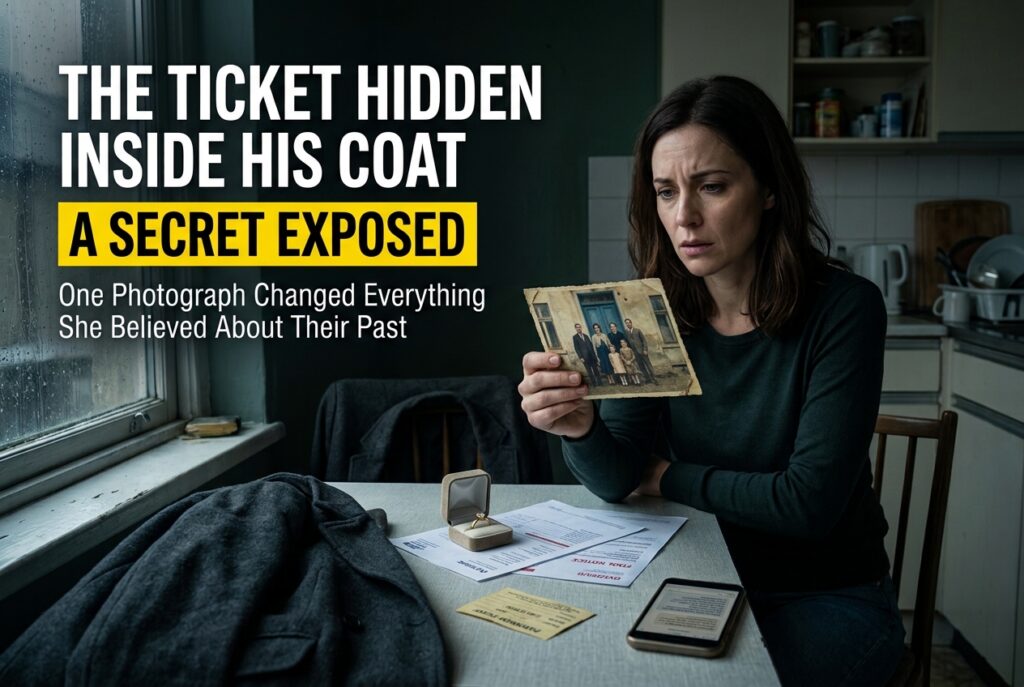
The morning Sofia found the pawnshop ticket, the apartment was cold enough that she could see her breath near the kitchen window.
The heating had stopped working two days earlier, and the landlord had promised to send someone to inspect it. Sofia had stopped believing promises that began with the word tomorrow.
Two unpaid bills lay on the kitchen table. Beside them sat a mug of tea she had forgotten to drink and a small envelope containing the money she had earned during the previous week. She had counted it three times already.
It was not enough.
She had been trying to stretch every dollar until payday, telling herself that one difficult month did not have to become a difficult life. She had repeated those words so often that they had begun to sound like something another person had told her.
Then Daniel had returned the engagement ring.
He had arrived on a rainy Thursday evening, carrying a small velvet box and wearing the same dark jacket he had worn on their first date. Sofia remembered noticing that detail because she had spent months imagining the day he would finally come home and explain why he had become so distant.
Instead, he had placed the box on the table.
“I think you should have this back,” he said.
She had stared at the box.
“What does that mean?”
Daniel rubbed his hands together as though he were cold.
“It means things haven’t worked out the way we planned.”
“Things?”
“Our relationship. The money. Everything.”
Sofia had waited for him to say that he was frightened, overwhelmed, or sorry. She would have accepted almost any explanation if he had looked at her and told her the truth.
Instead, he had spoken about practical matters.
The bills. The rent. The money they had borrowed. The future they could no longer afford to imagine.
“You can’t return a ring as though it’s something you borrowed from a shop,” she had whispered.
Daniel looked down.
“I know.”
“Then why are you doing this?”
He had taken a long breath.
“Because I don’t know how to fix what I’ve done.”
It was the closest thing to an admission she had received.
She had wanted to ask what he had done, exactly, but his expression frightened her. He looked like someone who had rehearsed a difficult conversation so many times that he had forgotten how to speak naturally.
She had taken the box.
Daniel had left without asking whether she would be all right.
For days, Sofia had kept the ring in a kitchen drawer beneath old receipts. She could not bring herself to wear it, but she could not throw it away either.
Their relationship had not been perfect. They had argued about money, about Daniel’s long hours, and about the promises he made whenever she asked why their savings were disappearing.
But they had also shared ordinary happiness.
Daniel used to bring home bread when he finished late shifts. Sofia would cook while he told her stories about customers at the repair shop. On Sunday mornings, they sat at the kitchen table with coffee and discussed the small house they hoped to rent someday.
They had not needed much to imagine a future.
They had only needed to believe they were building it together.
Now Sofia could not even explain where their money had gone.
The pawnshop ticket appeared while she was searching Daniel’s old coat for a spare key.
He had left several belongings behind after returning the ring. She had put them in a box, intending to return them when she felt ready.
That morning, she needed the key to a storage cupboard where she kept cleaning supplies. She remembered Daniel once saying that he had hidden a spare key inside the lining of his winter coat.
She found the coat hanging behind the bedroom door.
Its pockets contained a broken pen, two coins, a receipt from a grocery store, and a folded piece of paper.
At first, she thought the paper was another receipt.
Then she saw the word pawn.
She unfolded it carefully.
The ticket showed a date, an item description, a reference number, and an amount. Some of the print had faded, but one detail was clear enough to make her sit down.
The ticket had been issued three days before Daniel returned her engagement ring.
Sofia read it again.
The item description was partly obscured by a crease. She could make out only a few words: a gold item, a small stone, and a reference to a valuation.
Her fingers tightened around the paper.
She looked toward the kitchen drawer where she had put the ring.
Had Daniel pawned it before returning it?
Had he borrowed money against something else?
Or was the ticket connected to an entirely different item?
She could not tell.
She took photographs of both sides and placed the original inside an envelope.
Then she searched the coat again, checking every pocket and feeling along the lining. There was nothing else.
The ticket did not prove Daniel had pawned the ring. It did not even establish that the transaction had been completed. But it was a detail he had never mentioned, and its date was too close to their separation to ignore.
Sofia returned to the kitchen.
The bills were still waiting.
The heating was still broken.
And the person who had once promised to face every problem beside her had left behind a question she could not answer.
She opened her phone and searched through their old messages.
Most were ordinary: reminders about groceries, apologies for coming home late, jokes about the tiny kitchen, and photographs of meals they had cooked together.
Then she found a message sent the day before the pawnshop ticket was issued.
Daniel had written, I need to handle something tomorrow. Please trust me for one more day.
Sofia had replied, I have trusted you for months. I need you to tell me what’s happening.
His answer was short.
You’ll understand soon.
She had received the ring three days later.
Sofia sat perfectly still.
For months, she had believed Daniel returned the ring because he had stopped loving her.
Now she wondered whether something had happened before that conversation—something he had been trying to handle without telling her.
She looked again at the ticket.
At the bottom, beneath the reference number, was a handwritten note.
It contained a name.
Not Daniel’s.
Part 2
Sofia spent the next hour trying to identify the name written on the pawnshop ticket.
The handwriting was small and hurried. The first letter looked like an M, but the rest of the name had been damaged by a dark mark that might have come from a fingerprint or spilled ink.
She took another photograph, enlarged it, and compared the letters with the names in her old messages.
Nothing matched.
At noon, she called her closest friend, Nina.
Nina had been the person who helped Sofia pack Daniel’s belongings after the breakup. She had also listened to every late-night conversation about the missing money and the returned engagement ring.
When Sofia explained what she had found, Nina became quiet.
“Where did you say the ticket was?”
“Inside Daniel’s coat.”
“What date?”
Sofia told her.
Nina exhaled slowly.
“That’s the week he told me he had to meet someone.”
Sofia straightened.
“What someone?”
“I don’t know. He didn’t give me a name.”
“Why didn’t you tell me?”
“Because I thought it was about the repair shop. He said he was trying to sort out a problem before it became worse.”
Sofia looked at the ticket.
“Did he mention a pawnshop?”
“No.”
“Did he say anything about the ring?”
Nina hesitated.
“Not directly.”
“Nina.”
“I remember asking him whether you two were going to be all right. He said he had made a promise to someone and needed to keep it.”
Sofia felt a chill.
“What promise?”
“He didn’t say.”
The silence that followed seemed to stretch across the miles between them.
Sofia had always believed Nina would tell her if she knew something important. But now she wondered whether Nina had been trying to protect her from a truth she did not fully understand.
“Did Daniel seem frightened?” Sofia asked.
“Yes,” Nina admitted. “But not frightened of you. He seemed worried about someone else.”
“Who?”
“I don’t know, Sofia. I’m telling you everything I remember.”
Sofia wanted to believe her.
She also wanted to stop discovering that people had been having conversations about her life without including her.
After the call, she searched through the papers in the kitchen drawer. Daniel had left behind several receipts and a small notebook containing work schedules, phone numbers, and reminders.
Most entries were ordinary.
Then she found a note written in the margin of a page.
Thursday. Bring the photograph. Don’t discuss it over the phone.
Beneath it was an address.
Sofia recognized the street. It was in the older part of town, near a row of small businesses and a pawnshop she had passed many times without ever entering.
She checked the date.
The note had been written the day before Daniel returned the ring.
Her heart began to race.
The photograph.
The pawnshop ticket.
The promise Daniel had made to someone.
Three separate clues now pointed toward the same week.
She searched their messages for the word photograph. Most references concerned family pictures, meals, and a photograph of the two of them standing outside a restaurant on the night Daniel proposed.
Then she found an exchange from several months earlier.
Sofia had sent Daniel a picture of an old family gathering.
He replied, Where did you get this?
She had answered, Mum gave it to me. Why?
Daniel had not responded for almost six hours.
When he finally did, he wrote, Keep it somewhere safe. Don’t show it to anyone until I explain.
Sofia remembered being annoyed at the time.
She had asked what he meant, but he had changed the subject.
Now she searched for the photograph.
It had been saved in an old folder on her phone, mixed among hundreds of images. She found it after several minutes.
The picture showed a group of people gathered outside a modest house. Sofia was younger, standing beside her mother. Daniel stood near the edge of the group.
Behind them was a man wearing a dark coat.
She enlarged the image.
The man was partly turned away from the camera, but his face was visible enough to suggest that Sofia had seen him before.
She could not remember his name.
She studied the photograph for another minute.
Then she noticed the background.
The group had been standing outside a building with a distinctive blue door and a narrow window above it. Sofia recognized the place from the address in Daniel’s notebook.
The photograph had been taken outside the same building.
Why had Daniel asked her to keep it safe?
Why had he wanted to bring a photograph to a meeting?
And why had someone written a name on the pawnshop ticket?
Sofia called the pawnshop and asked whether they could identify the transaction from the reference number.
The person who answered explained that the shop could not disclose private customer information without the appropriate verification. However, Sofia could visit with the ticket and ask what information could lawfully be provided.
She thanked him.
Before ending the call, she asked whether the shop still kept records from the date printed on the ticket.
“If the record is available, we can check it,” he said.
Sofia placed the ticket, the photograph, and Daniel’s notebook inside her bag.
She would visit the shop the following morning.
That evening, she called Daniel.
His number was still saved in her phone, though she had not contacted him since the night he returned the ring.
He answered after several rings.
“Sofia?”
“I found something in your coat.”
A pause followed.
“What did you find?”
“A pawnshop ticket.”
She heard him breathe in.
“Where are you?”
“At home.”
“Do you still have it?”
“Yes.”
Daniel was quiet for so long that she checked whether the call had disconnected.
Then he said, “Please don’t take it to the shop.”
Sofia’s grip tightened around the phone.
“Why?”
“Because you don’t know what you’re looking at.”
“Then tell me.”
“I can’t explain it over the phone.”
“You said that before. You told me I would understand soon, and then you returned my ring.”
“I know.”
“Did you pawn it?”
“No.”
The answer came quickly.
“Then what does the ticket mean?”
Daniel hesitated.
“I can’t tell you until I know whether the photograph is still safe.”
Sofia stared at the old picture on the table.
“What photograph?”
Daniel went silent.
And in that silence, she realized he had just confirmed something she had only suspected.
The pawnshop ticket and the photograph were connected.
Part 3
Sofia did not sleep much that night.
Daniel’s denial should have reassured her. Instead, it created more questions.
If he had not pawned the ring, what item had been involved in the transaction? Why had he been so worried about the photograph? And why did he believe the two things were connected?
At six in the morning, Sofia placed the pawnshop ticket in her bag and left the apartment.
The shop opened at nine.
She arrived ten minutes early and waited outside, watching the owner unlock the door and switch on the lights. The windows displayed watches, small pieces of jewelry, old cameras, and electronic equipment. Everything looked ordinary.
That made the ticket feel even stranger.
When the owner invited her inside, Sofia explained that she had found the ticket in a coat belonging to her former partner.
She gave him the reference number.
He examined it carefully.
“I can confirm that this format matches our records from that period,” he said. “I’ll need to check what information is available before I can tell you anything else.”
Sofia waited while he went into a back office.
When he returned, he carried a folder.
“The transaction was recorded under a different name,” he explained. “I can’t give you private details about the customer, but I can confirm that the item description doesn’t match an engagement ring.”
Sofia felt a strange mixture of relief and disappointment.
“Then what was it?”
He showed her the part of the record he was permitted to disclose.
It described a small framed photograph.
Sofia stared at him.
“A photograph?”
“That’s what the record says.”
“Was the item sold?”
“The record indicates that it was redeemed before the deadline.”
“By the same person who brought it in?”
“I can’t confirm that from the information I can disclose.”
Sofia thanked him and stepped outside.
A photograph had been pawned.
Not the ring.
The photograph Daniel had been so anxious to protect might have been the very object described on the ticket.
She called Daniel again.
This time, he answered immediately.
“The pawnshop said the ticket was for a photograph,” she told him.
Daniel exhaled.
“Did they tell you who redeemed it?”
“No.”
“Good.”
“Why is that good?”
“Because the person who redeemed it wasn’t the person who originally brought it in.”
Sofia stopped walking.
“How do you know?”
“I was there.”
The words seemed to change the temperature around her.
“You were there?”
“Yes.”
“Then why did you tell me not to go?”
“Because I was afraid you would find the wrong person and ask the wrong questions.”
“Daniel, I have spent months trying to understand why our relationship ended. You returned my engagement ring without telling me what was happening. We lost money we couldn’t afford to lose, and you left me with bills and excuses. I found a ticket that you clearly knew about, and now you’re telling me I should not ask questions.”
“I know how it looks.”
“No, you don’t. You don’t know what it feels like to be the person left behind.”
Daniel did not answer.
Sofia closed her eyes.
“Who took the photograph to the pawnshop?”
“I can’t tell you yet.”
“Why?”
“Because the photograph was part of something I promised to keep confidential until the original could be found.”
“Who asked you to make that promise?”
Daniel hesitated.
Then he said, “Someone who believed the truth would destroy a family.”
Sofia felt anger rise.
“Whose family?”
“Our families.”
The words left her unable to respond for a moment.
Daniel continued, explaining that he had discovered a discrepancy involving a photograph from an old family gathering. The image appeared to show someone in a place where that person had repeatedly claimed never to have been.
The photograph had become important because it contradicted a story that had been repeated for years.
Daniel said he had tried to verify the image before confronting anyone. The pawnshop transaction had been part of an attempt to keep the photograph safe while he arranged for it to be examined.
“Why couldn’t you tell me?” Sofia asked.
“Because I didn’t know who else had seen it.”
“Did you think I was involved?”
“No.”
“Then why shut me out?”
“Because I was trying to protect you from the consequences of what I found.”
Sofia almost laughed.
Everyone seemed to believe that protecting her meant keeping her ignorant.
“And the money?” she asked.
Daniel’s voice changed.
“That is the part I still can’t explain properly.”
“Did you move it?”
“I didn’t take your savings.”
“That isn’t what I asked.”
He sighed.
“I made a payment connected to the photograph. I believed the money would be returned once the evidence had been verified.”
“Was it my money?”
Another long silence.
“Some of it came from our shared account.”
Sofia leaned against a wall.
She felt as though the ground beneath her had shifted.
“You used our money without telling me?”
“I intended to replace it.”
“That doesn’t make it yours to use.”
“I know.”
“Did you pawn the photograph because you needed the money?”
“No. The photograph was used as security in a separate transaction. I was trying to prevent it from disappearing while the dispute was being resolved.”
Sofia rubbed her forehead.
“Who was the person who took it back?”
Daniel said nothing.
She realized she had reached the limit of what he was prepared to tell her.
“Then tell me where you are,” she said. “We need to speak face-to-face.”
“I can’t meet you yet.”
“Why not?”
“Because the person in the photograph has been looking for it.”
Sofia looked down at the image in her bag.
“And what happens if they find it?”
Daniel’s answer was almost a whisper.
“Then the one person who can explain what happened that night may disappear before we can ask them.”
Part 4
Sofia spent the afternoon looking at the photograph.
It showed six people outside a blue-doored building. Her mother stood near the center, smiling at someone outside the frame. Daniel stood beside her, one hand resting on a railing. The man in the dark coat stood at the edge of the group.
The picture was old, but the image was clear enough to identify the location.
Sofia had visited the building once as a child. She remembered a narrow hallway, a room with faded wallpaper, and a back entrance that opened onto a small courtyard.
She did not remember why her family had been there.
She called her mother’s sister, Aunt Claire.
Claire answered cheerfully, but her tone changed when Sofia mentioned the photograph.
“Where did you get that?”
“Mum gave it to me years ago.”
“Why are you asking about it now?”
“Because Daniel said it was important.”
Claire was silent.
Sofia asked whether she remembered the day the photograph was taken.
“Not clearly,” Claire said.
“Do you remember the man in the dark coat?”
“I might.”
“Who was he?”
“I don’t want to guess.”
Sofia felt frustrated.
“Everyone keeps telling me they don’t want to guess. I’m not asking you to invent something. I’m asking you what you remember.”
Claire sighed.
“I remember an argument. Your mother was upset, and Daniel was trying to explain something to a man. I don’t remember the details.”
“Was the argument about money?”
“I don’t know.”
“Was it about the photograph?”
“I don’t think anyone was talking about the photograph at the time.”
Sofia studied the image.
“Then why would Daniel need to protect it years later?”
Claire had no answer.
Before ending the call, Sofia asked one more question.
“Did Mum ever say that someone had lied about where they were that night?”
Claire hesitated.
“She said people remembered things differently.”
“That’s not the same as answering me.”
“No,” Claire admitted. “It isn’t.”
After the call, Sofia searched through her mother’s old letters.
Most concerned ordinary family matters: birthdays, appointments, household expenses, and plans for holidays. She had never examined them closely because she had not expected to find anything important.
Now she read every page.
Near the bottom of a box, she found a letter dated several years earlier. It mentioned a disagreement involving Daniel and a promise that had not been fulfilled.
The letter did not name the person responsible.
But one sentence caught her attention.
The photograph cannot change what happened, but it can change who is believed.
Sofia read the sentence repeatedly.
It was the first time she had found written evidence that the photograph had been discussed before Daniel’s recent problems began.
She placed the letter beside the pawnshop ticket.
The photograph was not simply a reminder of an old family gathering.
It had become evidence in a dispute over what happened that night.
Sofia called Daniel again.
He answered from an unfamiliar number.
“Why are you using another phone?”
“Mine has been having problems.”
“Where are you?”
“I told you I can’t meet yet.”
Sofia took a breath.
“I found a letter from Mum. It says the photograph can change who is believed.”
Daniel was silent.
“Did you know she wrote that?”
“No.”
“Then how did you know the photograph mattered?”
“Because I saw the original.”
“Where?”
“In a place I thought would be safe.”
“Was it the pawnshop?”
“No.”
Sofia felt her patience thinning.
“Daniel, I can’t keep following clues that you refuse to explain.”
“I know.”
“Then tell me what happened the night we separated.”
He took a long breath.
“I found the photograph after someone asked me to help verify a statement. I realized that the person who had been telling everyone they were nowhere near the building might have been there after all.”
“Who?”
“I can’t be certain until the original is examined.”
“But you believe it was someone we know.”
“Yes.”
Sofia looked again at the photograph.
The man in the dark coat was partly turned away from the camera. Beside him stood a woman whose face was almost hidden by the shadow of the doorway.
She enlarged the image.
The woman’s coat looked familiar.
It was a pale coat with a dark button near the collar, the kind Sofia remembered seeing in photographs of her mother’s younger years.
She felt her stomach tighten.
“Daniel, is the woman in the picture Mum?”
“I don’t know.”
“Look at the photograph again.”
“I have.”
“Then tell me what you think.”
He was silent for so long that she thought he had ended the call.
Finally, he said, “I think the photograph shows someone who has been telling us a story that isn’t true.”
Sofia stared at the image.
She wanted him to name the person.
Instead, he said, “Please don’t confront anyone until we know who took the original.”
Then the line went dead.
Part 5
The following morning, Sofia returned to the blue-doored building.
It was now used as an office, but the exterior had barely changed. The paint around the door had peeled, and a narrow window above the entrance was still divided into four small panes.
She stood across the street, comparing the building with the photograph.
The angle was almost identical.
If the photograph had been taken where she thought it had, the group would have been standing near the side entrance, beside a low railing that no longer existed.
She crossed the street and knocked.
A middle-aged woman answered.
Sofia explained that she was researching an old family photograph and asked whether anyone might remember the people who had visited the building years earlier.
The woman looked at the image.
“I’ve seen this place in old photographs,” she said. “But I wasn’t working here at the time.”
“Do you know who used the building?”
“It belonged to a local organization. They held meetings here.”
“Could someone have kept records?”
“Possibly. The organization moved its archives several years ago.”
Sofia asked for the name of the organization.
The woman gave it to her.
Sofia wrote it down and thanked her.
Before leaving, she asked whether there had been a security camera at the entrance in the past.
The woman shook her head.
“Not back then.”
Sofia returned to the street.
She had hoped the building might provide an easy answer, but all it had given her was another direction to follow.
She called the organization and explained that she was looking for records connected to a meeting held years earlier. The person who answered said that older files might still exist but would require a formal request.
Sofia completed the request that afternoon.
While waiting for a response, she reviewed the timeline she had assembled.
The photograph had been taken outside the building.
Daniel had later discovered it and believed it contradicted someone’s account of that night.
The pawnshop ticket showed that a framed photograph had been used in a transaction shortly before the engagement ring was returned.
Daniel denied pawning the ring and said he had been trying to protect the photograph.
The missing money was connected to a payment he had made without Sofia’s knowledge.
Every clue pointed toward a dispute that had begun long before their relationship fell apart.
But there was still no proof of who had been in the photograph, who had taken the original to the pawnshop, or why the transaction had been necessary.
That evening, Nina visited.
Sofia showed her the photograph and explained what Daniel had said.
Nina studied the image carefully.
“I know that coat,” she said.
Sofia looked up.
“Whose is it?”
“My mother had one like that.”
Sofia’s heart began to race.
“Are you sure?”
“Not completely. But the button is the same. She had a pale coat with one dark button near the collar.”
“Was your mother at the building that night?”
“I don’t know.”
Sofia stared at her.
“Could she have known Daniel?”
Nina shook her head.
“They met a few times, but I never heard about anything like this.”
Sofia asked whether Nina’s mother was still in contact with anyone from the old organization.
“She might know someone who kept the records,” Nina said.
“Can you ask her?”
Nina agreed.
Before leaving, she looked at the photograph again.
“There’s something else,” she said.
“What?”
“The man in the dark coat. I think I’ve seen him before.”
“Where?”
Nina frowned.
“I can’t remember. Maybe in one of my mother’s old photographs.”
Sofia felt the mystery widening around them.
The person who had been in the building might have been connected to both families. The photograph might have contradicted a story that someone had repeated for years. And the pawnshop transaction might have been an attempt to keep the evidence safe.
But none of that explained why Daniel had returned the engagement ring.
Sofia asked herself whether he had ended their relationship because he no longer wanted to marry her—or because he believed the investigation would place her in danger.
She did not know.
The next morning, the organization contacted her.
They had located a record from the date in question.
The record did not contain the photograph, but it listed the names of several people who had attended a meeting at the building.
One name was unfamiliar.
Another belonged to someone Sofia had known all her life.
And the third was the name written on the pawnshop ticket.
Part 6
Sofia read the list three times before calling Daniel.
The name written on the pawnshop ticket belonged to Robert Hale, a man who had once worked with her father.
She remembered him vaguely from family gatherings. He had been quiet, polite, and rarely stayed long. After her father’s death, she had heard nothing about him.
Now his name connected the pawnshop transaction to the building where the photograph had been taken.
Daniel answered on the second ring.
“I found the meeting record,” Sofia said.
“What does it say?”
“Robert Hale attended the meeting.”
Daniel fell silent.
“You know him.”
“I met him.”
“When?”
“Before everything happened.”
“Why didn’t you tell me?”
“Because I didn’t know whether he was involved in the original dispute.”
Sofia pressed her fingers against her forehead.
“Daniel, his name is on the pawnshop ticket. He was at the building. He knew about the photograph. How much more do you need?”
“I need to know whether he was the person who took the photograph to the shop or the person who redeemed it.”
“Why?”
“Because those are two different things.”
Sofia hated that he was right.
She had become so desperate for an answer that every new name felt like proof. But the evidence did not yet establish what Robert had done.
She asked Daniel whether he had spoken to Robert recently.
“Yes.”
“When?”
“After I found the photograph.”
“What did he say?”
“He said the photograph should never have been removed from the original file.”
“Why?”
“Because it was supposed to be kept with the meeting records.”
Sofia sat down.
“So someone took it.”
“Yes.”
“Who?”
“I don’t know.”
She felt exhausted.
“Why did you return the ring?”
Daniel did not answer.
She repeated the question.
“Was it because of the photograph? Because of the money? Or because you no longer wanted to marry me?”
Daniel’s voice became quieter.
“I returned it because I thought I had no right to ask you to wait for me while I tried to resolve something I should have explained earlier.”
“That isn’t the same as telling me why you ended the relationship.”
“I know.”
“Did you still love me?”
He took a long breath.
“Yes.”
Sofia closed her eyes.
For months, she had tried to convince herself that Daniel had stopped loving her. It had been easier to be angry than to accept that he might still care about her and had nevertheless chosen to leave.
“Then why didn’t you trust me enough to tell me the truth?”
“Because I was ashamed.”
“Of what?”
“Of using money that belonged to both of us. Of making a promise I couldn’t keep. Of believing I could solve everything before you found out.”
Sofia felt tears gather in her eyes.
“Do you understand what that did to me?”
“Yes.”
“No, Daniel. You left me trying to decide whether I had been loved or used. You let me believe our future had ended because I wasn’t worth fighting for.”
“I never believed that.”
“But you let me believe it.”
He had no answer.
Sofia ended the call and sat quietly for a long time.
She was angry with Daniel, but she could no longer pretend that anger explained everything.
He had made a serious mistake by using shared money without her knowledge. He had made another mistake by deciding that he could protect her through silence. But he had not necessarily ended the relationship because he stopped loving her.
Both things could be true.
She could still care about him and refuse to excuse what he had done.
That afternoon, Nina called with an update.
Her mother remembered Robert Hale. She said he had been involved in a disagreement concerning an old photograph and had once asked whether the family still kept copies of it.
Nina’s mother had not known why he wanted the picture.
But she remembered one detail.
Robert had said that someone was going to be blamed for a night they had never attended.
Sofia wrote the sentence down.
Someone had claimed to be somewhere else that night.
The photograph might prove otherwise.
And if the person had been blamed unfairly, the image might explain why Robert and Daniel had tried to keep it safe.
Sofia called the organization again and asked whether the meeting record contained any additional notes.
The clerk said that another document had been located but had not yet been reviewed.
It was a signed statement from someone who had attended the meeting.
The statement was scheduled to be released to her the following day, subject to verification.
Before hanging up, the clerk added one detail.
“The person who signed the statement requested that the photograph never be separated from it.”
Sofia stared at the pawnshop ticket.
Someone had taken the photograph away from the statement.
And the person who had done so might have been trying to hide what the picture showed.
Part 7
The signed statement arrived the following afternoon.
Sofia opened it at her kitchen table, beside the two unpaid bills that had become familiar landmarks of her financial struggle.
The document described a meeting held at the blue-doored building years earlier. It referred to a disagreement about a promise, a missing item, and a person who had denied being present.
The statement did not name the person directly.
Instead, it referred to a photograph that had been taken during the meeting.
According to the writer, the photograph showed someone standing outside the building at a time when they had claimed to be somewhere else.
Sofia read the statement again.
The final paragraph explained that the photograph had been attached to the original record because the writer believed it was important to establishing the truth.
The statement was signed by Robert Hale.
For the first time, Sofia had a clear explanation of why Robert’s name appeared in the records.
He had been a witness to the dispute.
But the statement did not prove that he had taken the photograph to the pawnshop. It did not establish who had removed it from the file or why Daniel had become involved years later.
Sofia called Robert.
He answered after several rings.
“I received the statement,” she said.
“Then you know why the photograph matters.”
“I know why it was attached to the record. I still don’t know who took it.”
Robert sighed.
“I was hoping Daniel would explain that to you.”
“He has explained very little.”
“I understand.”
“Did you take the photograph to the pawnshop?”
“No.”
“Your name is on the ticket.”
“My name was written there because I arranged the transaction. I did not bring the photograph in myself.”
Sofia paused.
“Who did?”
“I can’t tell you that without confirming what the records show.”
“Then help me confirm them.”
Robert agreed to meet her the following morning.
They met in a small public office where the original meeting records were being held.
Robert looked older than Sofia remembered. His hair had turned almost completely gray, and he walked with a slight stiffness that made him lean on the table when he sat down.
He studied the photograph for a long time.
“That is the picture,” he said.
“Who is the person standing behind my mother?”
Robert shook his head.
“I can’t identify someone from that image with certainty.”
“But you were there.”
“Yes.”
“Then tell me what happened.”
Robert folded his hands.
He explained that the original dispute concerned a promise made between several people. One person had agreed to deliver something important, but when the promise was not fulfilled, the responsibility had been disputed.
The photograph had been taken because it appeared to contradict someone’s account of their movements that night.
Robert said he had tried to preserve the image with the meeting record.
Years later, Daniel discovered that the photograph had been removed.
He began asking questions, eventually finding a copy that had been kept separately.
“Why did Daniel get involved?” Sofia asked.
“Because he believed the person being blamed had never received a fair chance to explain what happened.”
“Who was being blamed?”
Robert looked at her.
“Your father.”
Sofia felt as though the room had gone silent around her.
Her father had died years earlier. She remembered him as a gentle man who worked long hours and rarely spoke about the disagreements that troubled the family.
She had never heard that he had been blamed for breaking a promise connected to the meeting.
Robert explained that the disagreement had affected relationships between several families. Some believed Sofia’s father had knowingly failed to keep his word. Others believed the arrangement had changed without his consent.
The photograph was important because it might establish that another person had been present when the decision was made.
“But who?” Sofia asked.
Robert shook his head.
“The original is needed to answer that.”
“What happened to it?”
“I believe it was taken by the person who feared what it showed.”
“Do you know who that person was?”
Robert looked down at the table.
“I have a suspicion.”
“Tell me.”
He hesitated.
Then he reached into his folder and removed a second photograph.
It showed the same building from a different angle.
A figure stood near the doorway, partly hidden by the shadow.
Robert placed the image beside the first.
“Look at the coat,” he said.
Sofia studied it.
The pale coat.
The dark button.
The woman whose face had been hidden.
Robert pointed to the figure.
“The person in that coat was the last person seen carrying the original photograph.”
Sofia looked up.
“Who was it?”
Robert took a breath.
“It was someone who promised your family they had never been near that building.”
Part 8
Sofia could barely breathe.
She looked from the photograph to Robert, waiting for him to name the person.
But he refused to make an identification based on the image alone.
“I won’t accuse someone without stronger evidence,” he said. “I saw the coat. I remember the person carrying the photograph. But I did not see what happened after they left.”
“Then why tell me?”
“Because you asked what I knew.”
Sofia stared at the photograph.
The figure’s face remained hidden, but the coat was unmistakable.
She had seen it before.
Not in the old family pictures.
In her own home.
Her mother had owned a pale coat with a dark button near the collar. Sofia remembered it hanging beside the front door during winter. She remembered helping her mother repair a loose button when she was a child.
But the coat in the photograph might have belonged to someone else.
She could not treat a resemblance as proof.
“Did my mother attend the meeting?” she asked.
Robert considered the question.
“She was there at the beginning.”
“Why?”
“She wanted to help resolve the disagreement.”
“Did she take the photograph?”
“I don’t know.”
“Did she know who removed it from the file?”
“I can’t say.”
Sofia felt frustration rising again.
Every answer seemed to open another door without allowing her to enter.
Robert gave her copies of the records and suggested that she compare the dates with the family correspondence she had already found.
She returned home and spread the papers across the kitchen table.
The meeting had taken place years before Daniel returned the engagement ring. The photograph had been attached to the original record. Someone had later removed it. Daniel had discovered a copy and tried to preserve it.
The pawnshop ticket showed that a framed photograph had been used in a transaction.
Robert had arranged the transaction but denied being the person who physically delivered the item.
Daniel said he had been present at the pawnshop but had not pawned the engagement ring.
The clues were beginning to form a timeline, but one part remained unclear.
Why had money from Sofia and Daniel’s shared account been used?
She returned to the financial records and found a receipt for a payment Daniel had made several days before their separation.
The receipt referred to storage and preservation fees connected to a disputed item.
The amount was large enough to explain part of the missing money.
Daniel had not used the funds to buy something for himself. He had used them to protect evidence.
That did not make the decision acceptable.
He had still used shared money without her informed consent.
But it changed the question she needed to ask.
The missing money might not have been stolen.
It might have been spent on a desperate attempt to preserve the photograph until the original dispute could be resolved.
Sofia called Daniel.
“I found the payment receipt,” she said.
He was silent.
“You used our money to protect the photograph.”
“Yes.”
“Why didn’t you tell me?”
“I thought I could replace it before you needed it.”
“That wasn’t your decision to make.”
“I know.”
“Did you believe the photograph would clear my father’s name?”
“I believed it might.”
“And if it didn’t?”
Daniel exhaled.
“Then I would have had to admit I had risked our savings for something that might not change anything.”
Sofia closed her eyes.
At last, she had an answer that sounded honest.
Daniel had been trying to correct what he believed was an old injustice. He had convinced himself that he could do it without involving Sofia, and he had allowed his desire to solve the problem to override his responsibility to her.
He had not simply hidden the money.
He had hidden the reason he had used it.
“Why did you return the ring?” she asked.
“Because I knew I had broken your trust. I didn’t want you to marry someone who had made such a serious decision without you.”
“You could have told me the truth and let me decide what to do.”
“I should have.”
“Yes.”
Neither of them spoke for a while.
Then Sofia asked the question that had troubled her from the beginning.
“Who was the person in the photograph?”
Daniel took a long breath.
“I think it was someone close to us.”
“Who?”
“I don’t want to name them until the original is found.”
Sofia felt her anger return, but she also understood why he was cautious.
The photograph had already been removed once. The person who took it might still be afraid of what it showed.
She asked Daniel where the original had last been seen.
He gave her the name of a storage facility.
The original had been placed there after the pawnshop transaction, but the account had since been closed.
Sofia wrote down the address.
“Can you take me there?”
Daniel hesitated.
“Yes.”
“When?”
“Tomorrow.”
Before ending the call, he said, “Sofia, there’s something else you should know.”
She waited.
“The person who promised they were nowhere near that building was the same person who told me the photograph no longer existed.”
Part 9
Daniel met Sofia outside the storage facility the next morning.
For the first time since returning the engagement ring, he looked as though he had slept. He was still tired, but the fear in his expression had eased slightly.
Sofia kept her distance.
They had agreed to work together to locate the original photograph, but that did not mean their relationship had been repaired.
The storage facility manager checked the reference number Daniel provided.
The account had been closed, and the unit had been cleared. Some items had been collected by an authorized person; others had been transferred to a records office.
The manager could not disclose private information without the appropriate verification, but he gave them instructions for requesting the archived inventory.
They submitted the request and waited.
While they waited, Sofia asked Daniel about the person who had claimed never to have been at the building.
“Who was it?” she asked.
Daniel looked at the floor.
“I believed it was someone who had helped your family after your father died.”
“That doesn’t tell me who.”
“I know.”
“Was it someone I knew?”
“Yes.”
Sofia felt her heart beating faster.
“Was it my mother?”
Daniel looked up quickly.
“I don’t know.”
“Was it Nina’s mother?”
“I don’t know that either.”
“Then who do you suspect?”
Daniel hesitated.
“I suspect Robert may know more than he has told us. But I don’t believe he was the person who removed the photograph.”
Sofia frowned.
“Why would he keep information from us?”
“Because he made a promise to the person who took it.”
“Another promise.”
Daniel nodded.
“I know how that sounds.”
“It sounds like everyone has been making promises while I have been left to deal with the consequences.”
He did not argue.
They sat in silence until the storage facility manager returned with a printed record.
The inventory showed that the original framed photograph had been transferred to a separate archive several years earlier.
The transfer had been authorized by a person whose name was partially obscured in the scanned copy.
The visible letters matched the beginning of a name Sofia knew.
She stared at the page.
Daniel leaned closer.
“Can you read it?”
“Not all of it.”
The manager explained that a clearer copy might be available from the original archive.
He gave them the address and a reference number.
They thanked him and left.
On the way, Sofia asked Daniel whether he regretted returning the ring.
He looked at her.
“Every day.”
“Do you regret the money?”
“Yes.”
“Do you regret keeping the photograph secret?”
“Yes.”
“Then why did you make all those choices?”
Daniel took a long breath.
“Because I thought if I could fix the old problem, I could return to you with everything resolved. I imagined explaining the missing money after I had replaced it. I imagined showing you the photograph after I had proved what it meant. I thought that if I brought you answers instead of problems, you wouldn’t have to suffer through the uncertainty.”
Sofia looked out of the window.
“You decided what I could handle.”
“Yes.”
“You decided that protecting me meant keeping me out of my own life.”
Daniel nodded.
“I was wrong.”
She believed that he was sorry.
But she was not ready to decide what his apology meant for their future.
They arrived at the archive shortly before closing time.
The staff checked the reference number and located the inventory record. The original photograph had been stored in a sealed folder alongside the signed statement.
The folder had not been opened in years.
The archivist asked them to verify their connection to the record and explained the procedure for viewing the material.
Sofia completed the required paperwork.
Then the archivist returned with a flat archival box.
Inside was the original photograph.
It was clearer than the copy Sofia had been carrying. The figures stood in sharper focus, and the details of their clothing were easier to see.
She recognized her mother.
She recognized Daniel.
And she recognized the man in the dark coat.
But it was the woman near the doorway who made her hands begin to shake.
The face was no longer hidden by the shadow.
Sofia knew her.
She had spoken to her only a few weeks earlier.
The woman had looked her in the eye and insisted that she had never been near the building that night.
Now the original photograph showed her standing beside the entrance, holding a document in one hand and looking directly toward the camera.
Sofia turned to Daniel.
He had gone pale.
Neither of them spoke.
Then the archivist placed a second sheet beside the photograph.
It was a record of the original meeting, including the names of the people who had signed the statement.
Sofia looked at the signature at the bottom.
The person who had promised they were nowhere near the building had signed the document confirming that the photograph was genuine.
Part 10
Sofia read the signature several times before looking up.
The woman in the photograph was Nina’s mother.
She had attended the meeting, and she had signed the statement confirming that the photograph was genuine. Yet, years later, she had insisted that she had never been near the building.
The contradiction was undeniable.
But Sofia knew that the photograph alone could not explain why Nina’s mother had denied being there, what role she had played in the original disagreement, or why she had later wanted the image to disappear.
She asked the archivist whether the folder contained any additional correspondence.
The archivist checked the inventory and found two letters attached to the record.
The first was from Robert, explaining that the photograph should remain with the statement because it contradicted a disputed account of the meeting.
The second was from Nina’s mother.
It was brief.
She wrote that she had been present at the meeting but had not understood the consequences of the decision made that evening. She claimed that she had kept quiet because she feared the truth would destroy relationships between people who had already suffered enough.
The letter did not explain everything.
It did, however, establish that her later denial had not been an innocent mistake.
She had known about the photograph.
She had known it contradicted her account.
And she had chosen not to tell the truth.
Sofia felt sadness more than anger.
Nina’s mother had been part of her life for years. She had attended family gatherings, offered advice, and comforted Sofia during difficult periods. Sofia had trusted her.
Now she understood that a person could be caring in some moments and dishonest in others.
The discovery did not erase the kindness she had shown.
It did not excuse the lie either.
Sofia asked Daniel why he had been so determined to preserve the photograph.
He explained that the old dispute had damaged her father’s reputation. Several people had believed that her father had knowingly broken a promise, but the photograph suggested that someone else had been present when the decision was made.
Daniel had wanted to establish what happened before the story was repeated again.
He had believed that the photograph could help correct the record.
But he had allowed that goal to become an excuse for hiding the financial decisions he made along the way.
“I thought I could fix it without hurting you,” he said.
Sofia looked at him.
“You hurt me anyway.”
“I know.”
“You made me think our relationship ended because you stopped loving me.”
“I never stopped.”
She took a long breath.
“I believe you loved me. But love didn’t make those decisions fair.”
Daniel lowered his eyes.
“I understand.”
For the first time, Sofia felt that he was listening without preparing an excuse.
She asked whether he would help correct the record and explain the financial arrangement fully.
“Yes,” he said. “Whatever it takes.”
They worked with the archive to ensure that the photograph and signed statement remained together. Robert agreed to provide a fuller account of the meeting. Nina’s mother was contacted and given an opportunity to explain her statement.
The financial matter was reviewed separately. Sofia insisted that every payment be accounted for and that no further decision be made without her informed consent.
The review did not return everything to the way it had been before.
The missing money had been spent on a transaction intended to preserve the photograph and resolve the old dispute. Some of it could not be recovered immediately. The bills remained real, and Sofia still had to rebuild her finances.
But she finally understood what had happened.
Daniel had not pawned the engagement ring. The pawnshop ticket referred to the framed photograph, which had been used as security while he tried to preserve evidence connected to the family dispute.
The photograph showed Nina’s mother at the building where she had claimed never to have been.
And the missing money was connected to Daniel’s attempt to resolve the old matter without telling Sofia what he was doing.
His motive had not been to abandon her or take the money for himself.
But his choices had still hurt her.
That distinction mattered.
A few weeks later, Sofia met Nina for coffee.
Nina was upset about what the photograph had revealed. She said she had never known her mother had been involved in the old dispute.
Sofia listened.
“I don’t know what to think,” Nina admitted.
“Neither do I.”
“Do you hate her?”
Sofia considered the question.
“No. But I can’t pretend she didn’t lie.”
Nina nodded slowly.
They sat together, remembering the people they had trusted and the stories they had accepted without question.
Neither of them could change what had happened years earlier.
But they could decide what to do with the truth now that they knew it.
Sofia eventually spoke to Nina’s mother. The conversation was painful, and the explanation she received did not erase the years of denial. Still, it allowed Sofia to understand that fear and shame had influenced the choices people made.
Understanding was not the same as forgiveness.
And forgiveness, if it came, would take time.
Daniel continued to cooperate with the financial review. He did not ask Sofia to return to the relationship. He answered her questions, provided the records she requested, and acknowledged that he had been wrong to use their shared money without her agreement.
Sofia appreciated the honesty.
She also understood that trust could not be restored simply because someone had finally begun telling the truth.
One evening, she took the engagement ring out of its velvet box.
She sat at the kitchen table, turning it slowly between her fingers.
The ring had once represented a future she thought she understood. After Daniel returned it, she had treated it as proof that everything they had planned was over.
Now it meant something different.
It reminded her that love could be genuine even when the people involved made painful mistakes. It reminded her that intentions did not erase consequences. And it reminded her that she had the right to ask questions before committing her future to another person.
She placed the ring back in the box.
She did not throw it away.
She did not put it on.
She simply allowed it to remain part of her past without letting it decide what happened next.
The two unpaid bills were still on the table.
The apartment was still cold.
There were days when she worried about money and nights when she missed Daniel more than she wanted to admit.
But she no longer believed that keeping a relationship alive meant accepting every explanation or sacrificing her right to know the truth.
She had learned that love could survive hardship, but it could not thrive on secrecy.
She had learned that a photograph could challenge a story repeated for years, but it could not answer every question about the people inside it.
And she had learned that the person who hurt you was not always the person who never loved you.
Sometimes they were the person who loved you, became afraid, and made a terrible decision while trying to control an outcome they could not predict.
That did not mean she had to return.
It meant she could remember the good without denying the harm.
On a quiet Sunday morning, Sofia opened the curtains and let sunlight fall across the kitchen table. She made coffee, paid one of the bills, and placed the pawnshop ticket inside a folder with the photograph and the verified records.
The mystery had changed her life, but it no longer controlled every thought.
She did not know whether she and Daniel would ever build a future together again.
For the first time, she understood that she did not need to decide immediately.
She could take her time.
She could rebuild.
She could let the truth remain complicated without allowing uncertainty to take away her peace.
And she could love someone without surrendering the right to protect herself.
The engagement ring stayed in its box.
The photograph remained with the record.
The bills would be paid one at a time.
And Sofia, who had once believed that the truth would hurt more than being broke, finally understood that the greater danger had been living without it.