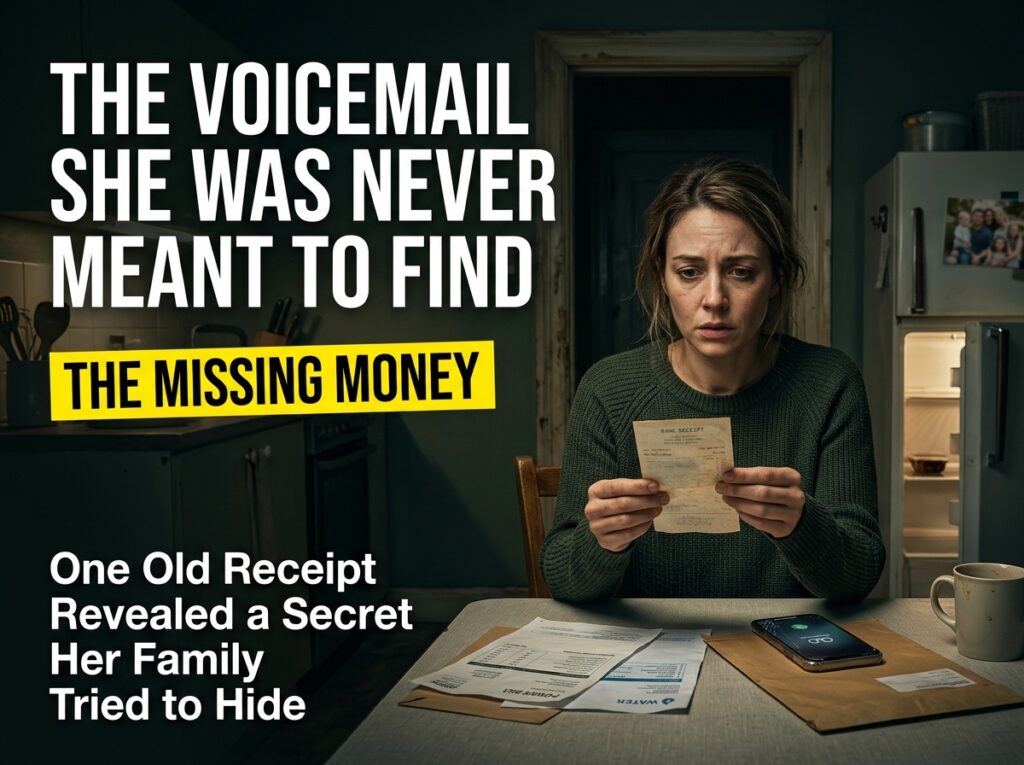
The Bills on the Kitchen Table
The first thing I learned about being broke was that silence could become more expensive than money.
When the refrigerator stopped humming, I stood in the kitchen for several seconds, listening to the sudden quiet. I had become so accustomed to the sound that its absence felt like another bill arriving without warning.
I opened the refrigerator anyway.
Half a carton of milk, three eggs, a container of leftover rice, and a jar of mustard. I closed the door and looked at the two unpaid bills on the table.
Electricity. Rent.
Both had red lettering across the top.
I had promised myself I would handle them before Friday. I had made the same promise the previous Friday, and the one before that. Each time, I found another expense, another delay, another reason the money I expected never appeared.
I was Tessa, and until a few months earlier, I had believed that my life was difficult but manageable. I had a job, a small apartment, and a relationship I thought was moving toward marriage. My older sister, Hannah, had always been the person I called when something went wrong.
Now Hannah wasn’t answering her phone.
And Daniel, the man I had planned to marry, had returned my engagement ring in a small paper envelope and left our apartment before I could understand what had happened.
I could still remember how he stood beside the kitchen counter that morning.
“You’ll be all right,” he had said.
I had looked at the ring in his hand.
“That’s what people say when they don’t want to explain why they’re leaving.”
He had closed his fingers around the envelope.
“Tessa, I never wanted things to end this way.”
“Then tell me why they are ending.”
He looked toward the window instead of at me.
“I can’t explain everything right now.”
“Can’t, or won’t?”
He had no answer.
When he finally left, I sat at the kitchen table for almost an hour. I didn’t cry immediately. I kept thinking there had to be something practical I could do, some phone call that would make the confusion stop.
I called Hannah.
Her phone rang until the call ended.
I sent a message asking whether she knew what was happening with Daniel. I told her I wasn’t asking her to take sides. I only wanted someone to tell me whether I had missed something important.
She read the message.
She didn’t reply.
That hurt more than I wanted to admit.
Hannah and I had grown up in a house where money was always discussed in whispers. Our mother believed children shouldn’t have to worry about adult problems, but she had never understood that children heard things even when adults thought they were being quiet.
We knew when the electricity bill was late. We knew when our mother counted coins before going to the grocery store. We knew when she smiled at the landlord and promised that next month would be easier.
Hannah was three years older than me. When I was frightened, she made plans. When I was embarrassed, she told me not to worry. When our mother couldn’t afford something for school, Hannah often gave up something of her own.
I had spent years believing that was what love looked like: someone quietly carrying a burden so another person wouldn’t have to.
Perhaps that was why I struggled to recognize the difference between being loved and being kept in the dark.
During the weeks after Daniel left, I worked extra hours whenever I could. I stopped buying coffee on my way to work. I walked home when the weather allowed it. I canceled a small subscription and sold two pieces of furniture I didn’t need.
I told my family everything was fine.
I told my coworkers I was simply trying to save money.
I told myself Daniel would eventually call and explain.
The money had been disappearing before our relationship ended. At first, I thought we were simply struggling. We had discussed moving to a larger apartment and saving for a wedding. Daniel had taken responsibility for certain payments, while I handled groceries, utilities, and most of our everyday expenses.
Whenever I asked why our savings seemed lower than expected, he blamed unexpected costs.
“The car needed work.”
“Insurance went up.”
“I had to cover something at work, but I’ll get it back.”
I believed him because I loved him.
I also believed him because Hannah had told me he was trustworthy.
Now I wasn’t sure what to believe.
On Thursday evening, I emptied the drawer beneath my bed, searching for an old bank statement. I found expired coupons, a broken watch, photographs, and a phone I hadn’t used in years.
It was an old smartphone with a cracked corner and a battery that had long since stopped holding a charge.
I nearly put it back.
Then I remembered that Hannah had borrowed it once, during a weekend when her own phone had stopped working.
I couldn’t remember exactly when.
I plugged it into the charger beside my bed.
The screen remained black for several minutes. I was about to give up when a small battery symbol appeared.
I waited until the phone had enough power to turn on.
There were old photographs, forgotten conversations, and dozens of notifications that no longer mattered. I searched through the messages, hoping I might find something from Hannah that would explain why she had stopped answering me.
Then I noticed a voicemail.
It had been saved rather than deleted.
The date was from several weeks before Daniel returned my engagement ring.
I pressed play.
At first, there was only static.
Then I heard my sister’s voice.
“Tessa, if you’re listening to this, please don’t make any decisions until you find the envelope.”
I stopped breathing.
Hannah continued, speaking so quietly that I had to hold the phone against my ear.
“I should have told you before. I’m sorry. I thought I could fix it without hurting anyone, but I think I’ve made everything worse.”
There was a pause.
Then she said something that changed the meaning of every conversation I had had with Daniel during the previous year.
“The money wasn’t lost. It was moved.”
The recording ended.
I listened to it again.
And again.
By the third time, I was no longer wondering whether Hannah knew something.
I was wondering what she had done.
Because if the money hadn’t been lost, someone had decided where it would go.
And I had a terrible feeling that the decision had been made long before Daniel walked out of my life.
PART 2
The Sister Who Stopped Answering
I spent the next morning trying to reach Hannah.
I called before work, during my lunch break, and again when I returned to my apartment. Each time, the result was the same.
Her phone rang without an answer.
I left two messages, then deleted the third before sending it. I didn’t want to sound desperate. I didn’t want her to hear anger when what I felt was mostly fear.
Finally, I wrote, “I found the old phone. I heard your voicemail. Please call me.”
For the first time in weeks, I saw the message marked as delivered.
No reply came.
I began to remember the small changes I had ignored.
Hannah had stopped visiting on Sundays. She used to bring groceries when she knew I was working extra shifts, claiming she had bought too much for herself. She had always asked about Daniel, but in the months before our breakup, her questions became strangely specific.
Had he changed banks?
Was he still working late?
Did we keep our savings in one account or two?
At the time, I thought she was worried about me.
Now every question felt like a door I had walked through without looking behind me.
I opened my laptop and logged into the bank account Daniel and I had once used for shared expenses. The account was still accessible to me, although the balance was far lower than I remembered.
I downloaded the available statements.
Most transactions were ordinary. Rent. Groceries. Utilities. Small withdrawals.
Then I found a transfer that didn’t belong.
The amount was $4,800.
The description was abbreviated, and the receiving account number was partially hidden. The transfer had taken place six weeks before Daniel returned my ring.
I searched the statements for similar amounts.
There were two smaller transfers, both made within a month of the first.
I added them together.
The total was more than I had expected, but the number itself wasn’t the most frightening part.
It was the date.
The first transfer happened on the same day Daniel had told me he needed money to repair his car.
I remembered that evening clearly. He had arrived home late, dropped his keys into the bowl beside the door, and kissed my forehead.
“Everything’s handled,” he had said.
I had asked whether the repair had been expensive.
“More than I expected.”
I offered to help.
He shook his head.
“No. You’ve already got enough to worry about.”
I had mistaken that sentence for kindness.
Now I wondered whether he had been trying to keep me from asking questions.
I printed the statements and placed them beside the unpaid bills. The kitchen table began to look less like a place where I ate and more like an investigation I didn’t know how to finish.
I checked the voicemail again.
The envelope.
What envelope?
Hannah had never mentioned one.
I searched the old phone’s messages, looking for the word. I found an exchange between Hannah and Daniel from the previous year, but only part of the conversation had been saved.
Daniel: Did you get it?
Hannah: Yes.
Daniel: Keep it somewhere safe.
Hannah: I don’t think Tessa should find out this way.
Daniel: Neither do I.
There were no further messages in the thread.
I stared at the screen until it dimmed.
Why had my sister been talking to my fiancé about an envelope?
And why had they both agreed that I shouldn’t discover it?
I tried calling Daniel. His number went straight to voicemail.
I didn’t leave a message.
Instead, I opened the closet and searched the pockets of the coats we had once shared. I checked the boxes beneath the bed, the old folders in the kitchen cupboard, and the drawers where I kept receipts.
I found nothing.
That evening, I called our mother.
“Have you heard from Hannah?”
“Not today,” she said. “Why?”
“I found something that might belong to her.”
“What sort of thing?”
I hesitated.
“A voicemail.”
There was a pause long enough for me to notice the television playing in the background.
“Is she all right?” Mother asked.
“I don’t know. That’s the problem.”
“Maybe she needs time.”
“She’s had weeks.”
“People don’t always know how to explain themselves when they’re ashamed.”
The sentence struck me as oddly specific.
“Do you know what she’s ashamed of?”
“No, Tessa. I was speaking generally.”
I wanted to believe her.
But I remembered that Hannah had visited our mother the weekend before Daniel left. Mother had said they were discussing family matters. When I asked what matters, she changed the subject.
I had thought nothing of it.
Now I wondered whether the conversation had involved me.
“Mom, did Hannah ever leave anything at your house? A letter, a folder, an envelope?”
Another pause.
“Not that I remember.”
It wasn’t a convincing answer.
Before I could press her, she said she needed to go.
I sat alone after the call, looking at the bank statements.
The voicemail had given me one fact: the money had been moved.
It hadn’t told me who moved it, where it went, or why.
I needed someone who knew the truth.
I needed Daniel.
But when I opened my messages, I found something I had never noticed before. An old message from him, sent the night before we separated.
“I hope one day you’ll understand why I couldn’t tell you.”
At the time, I had read it as an excuse.
Now I wondered whether he had been referring to the money.
I opened the message details and checked the timestamp.
It had been sent at 11:47 p.m.
The same night Hannah’s voicemail was recorded.
And beneath Daniel’s message was a reply from my number that I had no memory of sending.
“I know about the envelope.”
PART 3
The Message I Didn’t Remember Sending
I read the reply several times, trying to make the words feel familiar.
“I know about the envelope.”
It was a sentence I might have written, but I couldn’t remember doing so. The message was sent at 11:53 p.m., six minutes after Daniel’s.
I checked the date.
That night had been one of the worst evenings of my life. Daniel and I had argued about money, then about trust, then about the future we had promised each other.
I remembered crying in the bathroom because I didn’t want him to see how frightened I was.
I remembered him standing in the doorway.
I remembered asking whether there was another woman.
He had looked almost offended.
“No,” he said. “This isn’t about another woman.”
“Then tell me what it’s about.”
“I can’t.”
“Why not?”
“Because if I tell you now, you’ll think I made every decision for the wrong reason.”
I had stared at him.
“What does that even mean?”
He rubbed his face with both hands.
“Tessa, please. I need you to trust me.”
“Trust you with what? You won’t even tell me what’s happening.”
He said nothing.
I told him that I couldn’t keep living with half-truths. He told me that he couldn’t keep making promises he wasn’t sure he could fulfill.
At some point, he took his jacket from the chair and walked out.
I had thought that was the moment our relationship ended.
But the message suggested something had happened afterward.
I checked my call history. There had been an outgoing call to Hannah at 11:39 p.m., lasting almost four minutes.
I couldn’t remember making it.
The next morning, Daniel returned the ring.
I had spent months remembering that night as the moment he abandoned me. Now I wondered whether something had happened between the argument and the morning that I had forgotten, misunderstood, or deliberately refused to examine.
I wasn’t comfortable with any of those possibilities.
I called my mobile provider and asked whether I could recover older messages from a backup. The representative explained that some records might be available, but the content of old messages depended on how they had been stored.
I spent the afternoon recovering what I could from an old backup.
Most of it was useless.
Then a conversation appeared between me and Hannah.
Tessa: What envelope?
Hannah: Please don’t ask me over text.
Tessa: You said you would explain.
Hannah: I will. Just not yet.
The messages were dated three days before our breakup.
I had no memory of this conversation either.
There was one more message from Hannah, sent at 8:16 the following morning.
Hannah: I’m sorry. I thought there was still time.
I leaned back in my chair.
Still time for what?
I wanted to believe that the missing messages would give me a simple explanation. Perhaps Hannah had borrowed money and hidden the paperwork because she was embarrassed. Perhaps Daniel had helped her, and their secrecy had created a misunderstanding.
But the more I searched, the less convincing those explanations became.
The transfers were too large to dismiss.
The envelope had been discussed by both of them.
And someone had apparently used my phone to send messages I didn’t remember writing.
That evening, I went to the small café where Hannah and I used to meet after work. She had once told me that if we ever became too busy to talk, we should come back to that table and start again.
I sat there for almost an hour.
She never came.
Before leaving, I asked the waitress whether she’d seen my sister recently.
The woman thought for a moment.
“Your sister? The one with the dark hair?”
“Yes.”
“I saw her a few weeks ago. She was with a man.”
“Do you remember who?”
“Not clearly. They were sitting near the window. They seemed upset.”
I thanked her and stepped into the evening rain.
On the way home, I passed a cash machine and remembered another detail. Months earlier, Daniel had asked me to withdraw money because his card wasn’t working.
He had stood beside me while I entered my PIN.
When the machine dispensed the cash, he took the envelope and put it in his pocket.
I had never asked where the money went.
At home, I opened the remaining bank statements and searched for withdrawals around that date.
There was one.
The amount was $1,200.
The description included a reference number I didn’t recognize.
I copied it into my notebook.
Then I noticed something written in the margin of an old statement. The handwriting was mine, or at least close enough to make my stomach tighten.
“Ask H about the second account.”
I had written it months before the breakup.
I couldn’t remember why.
I had no second account.
At least, none that I knew about.
I called Daniel again.
This time, he answered.
For several seconds, neither of us spoke.
Finally, I said, “I found the voicemail.”
His breathing changed.
“What voicemail?”
“From Hannah.”
He went quiet.
I told him about the transfers, the envelope, and the message I didn’t remember sending.
When I finished, he asked a question I wasn’t prepared for.
“Did you find the receipt?”
“What receipt?”
He closed his eyes, or at least sounded as though he had.
“Tessa, listen to me. Don’t go to your mother’s house yet.”
“Why?”
“Because if the receipt is still there, she’ll know you’ve found it.”
PART 4
The Envelope in My Mother’s House
I didn’t sleep that night.
Daniel had given me a warning without explaining what it meant, and I had spent too many months accepting that kind of answer.
The following morning, I called him again.
He didn’t answer.
I sent a message asking him to meet me. I told him I wasn’t interested in another argument. I needed the truth, even if it changed everything.
He replied an hour later.
“Tomorrow. The old café. Four o’clock.”
I wanted to ask why we couldn’t meet sooner, but I agreed.
Until then, I decided to investigate the envelope.
I began with the one place I hadn’t searched: my mother’s house.
Mother lived in the same modest home where Hannah and I had grown up. The hallway still smelled faintly of furniture polish, and the small wooden cabinet beside the stairs still held old family photographs.
When I arrived, she was sorting laundry.
“You look tired,” she said.
“I haven’t been sleeping.”
She put down a towel.
“Is this about Daniel?”
“It’s about Hannah.”
Mother’s face tightened.
“What happened?”
“I need to find something she left here.”
“What?”
“An envelope.”
For a moment, I thought she might deny knowing anything about it. Instead, she walked to the cabinet, opened the bottom drawer, and stood looking inside.
“I don’t know whether it’s still here,” she said.
My heart began to beat faster.
“Then you remember it.”
She didn’t answer.
“Mom, what is going on?”
She pulled out a stack of papers, moved them aside, and finally removed a thin brown envelope.
It had no name on the front.
I recognized the handwriting immediately.
Hannah’s.
Mother held it against her chest.
“She asked me to keep this safe.”
“Why?”
“Because she was afraid.”
“Afraid of what?”
Mother looked toward the window.
“Of losing you.”
I stared at her.
“She hasn’t spoken to me in weeks. Daniel left me. We lost money we were supposed to be saving for our future. What could she possibly have been protecting me from?”
Mother’s eyes filled with tears.
“I don’t know how to explain it.”
“Then let me read what’s inside.”
She hesitated before handing me the envelope.
Inside were three sheets of paper, a photocopy of a bank document, and a small receipt folded into quarters.
The first sheet was a handwritten list of dates and amounts.
Some matched the bank transfers I had found.
Others were unfamiliar.
Beside several entries, Hannah had written the words “paid,” “returned,” and “still missing.”
At the bottom was a total.
$12,600.
I checked the numbers twice.
“What is this?”
Mother sat down slowly.
“I was hoping she would explain it to you herself.”
“Did Hannah take this money?”
“I don’t know.”
“Did Daniel?”
“I don’t know, Tessa.”
“Then what do you know?”
Mother pressed her fingers against her forehead.
“I know that your sister came here one night and told me she had made a mistake. She said she was trying to put something right before you discovered it.”
“What mistake?”
“She wouldn’t tell me everything.”
“Did you ask?”
“Of course I asked.”
“And?”
Mother looked at me with an expression I had never seen before. It wasn’t quite guilt, but it was close.
“She said that if I told you before she was ready, I might destroy the only chance she had to fix it.”
I felt anger rising in my chest.
“You both made decisions about what I was allowed to know.”
“We were trying to protect you.”
“From what? My own life?”
She began to cry.
I wanted to comfort her. That instinct was so familiar that I nearly followed it automatically.
Instead, I looked at the papers.
The receipt was from a storage facility across town. It showed a payment made several months earlier for a small storage unit. The name on the account had been partially covered by a fold in the paper.
The unit number was still visible.
I placed the receipt beside the bank document.
“What’s in the storage unit?”
Mother shook her head.
“I don’t know.”
“Has anyone been there recently?”
“I couldn’t tell you.”
I put the papers back into the envelope, keeping the receipt in my hand.
At the door, Mother called after me.
“Tessa, please don’t assume the worst about your sister.”
I turned.
“Then give me a reason not to.”
She had no answer.
The storage facility was open until six. I drove there immediately, carrying the receipt in my bag.
The clerk examined the unit number and checked the computer.
“I’m sorry,” he said. “That unit was cleared last month.”
“Cleared by whom?”
He checked again.
“The person authorized on the account.”
“Can you tell me their name?”
He hesitated, then explained that he couldn’t disclose the account holder’s private information without proper authorization.
I showed him the receipt and explained that I was trying to locate property belonging to my family.
He couldn’t give me the information I wanted, but he agreed to take my contact details in case the account holder returned.
I walked back to my car, feeling as though another door had closed.
Then I noticed something on the back of the receipt.
A handwritten note.
It was only four words.
“Ask Daniel about March.”
I stared at it.
March was the month Hannah had stopped answering my calls.
It was also the month Daniel had first told me our savings were disappearing.
I put the receipt into my bag and drove home.
Tomorrow, I would meet Daniel.
And this time, I wouldn’t let him leave until he answered the question he had avoided for months.
PART 5
The Man Who Knew About the Money
Daniel arrived at the café ten minutes late.
He looked thinner than I remembered. His hair was longer, and there were dark circles beneath his eyes. For a moment, I felt the old instinct to ask whether he was eating properly, whether he was sleeping, whether he needed anything.
Then I remembered the unpaid bills.
I remembered the ring.
I remembered the voicemail.
I placed the bank statements on the table between us.
“Start explaining.”
He looked at the papers but didn’t touch them.
“You found the transfers.”
“I found some of them. I also found Hannah’s envelope.”
His face changed.
“Where?”
“My mother’s house.”
He looked toward the window.
“Is the receipt still there?”
“No. I have it.”
I placed it on the table.
He read the note on the back.
“Ask Daniel about March.”
For a long time, he said nothing.
“Did you move the money?” I asked.
“Some of it.”
The answer was so direct that I almost didn’t understand it.
“You moved our savings?”
“Yes.”
“How much?”
“Not all of it.”
“That’s not an answer.”
He rubbed his hands together.
“I transferred money into another account because I thought I could prevent a bigger problem.”
“What problem?”
He looked at me.
“Hannah had borrowed money from someone who wasn’t supposed to know about it.”
“Borrowed money for what?”
“She was trying to help someone.”
“Who?”
“I can’t tell you that without explaining the rest.”
“Then explain the rest.”
He took a breath.
“Last year, Hannah came to me because she had discovered that a financial agreement she’d been involved in was not what she believed it to be. She had signed papers without understanding the consequences. She thought the money would be returned quickly, but it wasn’t.”
“How much money?”
“At first, a few thousand dollars.”
“And then?”
“More.”
I stared at him.
“How much more?”
He told me that the total obligation had grown as fees and repayments accumulated. Hannah had panicked. She had approached him because she didn’t want our mother to know and didn’t want me to become involved.
“Why would she come to you instead of me?”
“Because she thought you were already under too much pressure.”
“And you agreed to help her.”
“Yes.”
“With our money.”
He lowered his head.
“Yes.”
I felt something inside me harden.
“Did you ask me?”
“No.”
“Did you tell me?”
“No.”
“Then don’t call it helping. You made a decision with money that wasn’t yours alone.”
“I know.”
“Do you?”
He looked up.
“I know now.”
I wanted to believe that his regret was real. I also knew that regret didn’t pay rent or explain why I had been left to discover everything alone.
“Why did you return my ring?”
He closed his eyes.
“Because I couldn’t keep pretending we were building a future while I was hiding this from you.”
“You could have told me.”
“I was afraid you’d never forgive me.”
“So you decided for me.”
He didn’t argue.
I asked him about the account mentioned in my old notes.
He explained that he had opened a separate account to keep track of the money he was trying to recover. It was supposed to be temporary. He had planned to return everything before I noticed the difference.
But the repayments didn’t arrive as promised.
The situation became more complicated, and he kept transferring money in an attempt to cover the shortfall.
Each time, he believed the next payment would solve the problem.
Each time, it failed.
“Why didn’t you stop?” I asked.
“Because by then, I was trying to hide my first mistake with another one.”
I looked down at the table.
That was the first honest sentence he had said.
I asked whether Hannah had repaid any of the money.
“Some.”
“How much?”
“I don’t know the exact total without checking the records.”
I showed him the list from the envelope.
He read the entries carefully.
Then he stopped at one date.
“This payment didn’t come from Hannah.”
“Who paid it?”
“I don’t know.”
He turned the paper over, searching for another note.
“Where did you get this?”
“From my mother.”
He looked troubled.
“There’s something else you need to know.”
I waited.
“Before we separated, I received a message from your number. It said you knew about the envelope and wanted me to leave.”
“I never sent that.”
“I know.”
“How?”
“Because the message came from a device Hannah had access to.”
The room seemed to grow smaller.
“You’re saying my sister used my phone?”
“I think she might have.”
“Why would she do that?”
“I don’t know.”
I stared at him, struggling to make sense of what he was telling me.
He reached into his jacket and took out a folded sheet of paper.
“I kept this because I thought you’d eventually need it.”
It was a copy of a transfer confirmation.
The money had been sent to an account registered to a business I didn’t recognize.
The transaction date was March 14.
Beneath the account details was a reference number matching the one on the bank statement I had found at home.
“Who owns this business?” I asked.
Daniel shook his head.
“I couldn’t establish that.”
“Then why keep the document?”
“Because I thought the money might be recovered.”
He looked at me with an expression I could no longer read.
“Tessa, I know you think I left because I didn’t love you enough to tell you the truth. But I left because I had reached a point where every answer I gave you would reveal another lie.”
“That doesn’t excuse anything.”
“No. It doesn’t.”
He pushed the paper toward me.
“I should have trusted you with the truth before it became impossible to explain.”
For the first time since our separation, I believed he understood what he had done.
But there was still one question.
“Where is Hannah?”
He stared at the transfer confirmation.
“I don’t know.”
Then he said something that made my hands go cold.
“The last time I saw your sister, she told me she was going to make one final payment. She said that afterward, everything would be settled.”
“When was that?”
“March 14.”
The date on the transfer confirmation.
I picked up the paper.
“Did she make the payment?”
Daniel shook his head.
“That’s what I’ve been trying to find out.”
PART 6
The Voice Behind the Missing Months
I left the café with Daniel’s transfer confirmation in my bag and more questions than I had brought with me.
For months, I had imagined that one explanation would make everything fall into place. I had believed that if I could identify the missing money, I would understand why Daniel left and why Hannah disappeared.
Instead, each answer had uncovered another decision made without me.
I returned home and searched the old phone again.
This time, I listened to the voicemail with a notebook beside me. I wrote down every pause, every change in Hannah’s voice, and every word that might have meant something different from what I had first assumed.
“I should have told you before.”
Before what?
“I thought I could fix it without hurting anyone.”
Who had she hurt?
Then the final sentence.
“The money wasn’t lost. It was moved.”
I searched the phone’s files for anything created on March 14. There were photographs, a few downloaded documents, and an audio recording that I hadn’t noticed before.
It was only eleven seconds long.
I pressed play.
A man’s voice said, “The receipt is the only proof we have.”
Then Hannah answered, “I know. But if Tessa finds it before I can explain, she’ll think we planned everything.”
The recording ended.
I played it again.
The man sounded familiar, but I couldn’t place him.
I checked the date attached to the recording. It was from the same week as the first unexplained transfer.
I searched the phone for the word “receipt.” One message appeared in a conversation with an unknown number.
Unknown: You said the original was destroyed.
Hannah: It was supposed to be.
Unknown: Then we have a problem.
Hannah: No. We have a chance to make it right.
The messages stopped there.
I copied the number into my notebook and tried searching my contacts. Nothing matched.
I called Hannah again.
This time, her phone rang only once before going to voicemail.
I left a message.
“I know you were trying to help someone. I know you moved money, and I know Daniel helped you. I’m angry, but I’m not calling to punish you. I need to know whether you’re safe. Please call me.”
I waited.
No answer came.
The next morning, I contacted the bank and asked about the transfers. They confirmed that certain transactions had been made, but they couldn’t disclose information about accounts that weren’t mine.
I asked whether there was a way to report a disputed transaction and request an investigation.
The representative explained the process and advised me to collect the statements, receipts, and any written evidence I had.
For the first time in weeks, I had something practical to do.
I organized the documents by date.
The transfers began in January.
The unexplained withdrawals continued through March.
Then the activity stopped.
There was one final entry on March 14, but it wasn’t a transfer out of our shared account.
It was a deposit.
The amount was $3,600.
The source was listed as an external payment.
I checked the account number. It matched neither mine nor Daniel’s.
Someone had returned money.
But who?
I called Daniel and asked him whether he had seen the deposit.
He was quiet for several seconds.
“No,” he said. “I didn’t know about that.”
“Then the money wasn’t all gone.”
“No.”
“Could Hannah have returned it?”
“Possibly.”
“Could someone else have?”
“Possibly.”
I felt my patience slipping.
“Daniel, I need more than possibilities.”
“I know. I’m trying to remember everything that happened that week.”
He asked me to read the reference number.
When I did, he went silent.
“What is it?” I asked.
“I’ve seen that number before.”
“Where?”
“In the paperwork Hannah showed me. It was connected to the agreement she signed.”
“Can you find it?”
“I’ll look.”
I spent the afternoon contacting the storage facility again. The clerk explained that the unit had been cleared, but he could provide a formal record of the account closure if I submitted a request with the proper documentation.
I completed the request.
Then I returned to the old phone.
I searched the photographs by date.
Most were ordinary pictures of Hannah, our mother, and places we had visited. One photograph showed a table covered with paperwork. The image was blurry, but I could make out a bank receipt, a folded envelope, and the corner of a document bearing a business logo.
I enlarged the picture.
The logo was the same one printed on Daniel’s transfer confirmation.
I stared at it.
Someone had photographed the documents before the storage unit was cleared.
And someone had kept the picture on a phone that Hannah knew I might eventually find.
I checked the file information.
The photograph had been taken on March 14, at 9:42 p.m.
That was the night of the final deposit.
I looked at the screen, feeling the first real thread of understanding begin to form.
Hannah hadn’t simply disappeared after making a mistake.
She had been gathering evidence.
And whatever she had discovered, she had believed it was important enough to hide from everyone—including me.
PART 7
The Name on the Receipt
Daniel called the next afternoon.
“I found the agreement,” he said.
I sat down at the kitchen table.
“Tell me.”
He explained that Hannah had been introduced to a financial arrangement by someone she trusted. She believed she was helping resolve an urgent debt. The paperwork promised that the money would be returned after a short period, but the agreement contained conditions she hadn’t fully understood.
The person who arranged it had assured her that everything was legitimate.
When the money failed to return, Hannah panicked.
She borrowed money to cover the first payment, then borrowed more to meet the next obligation. By the time she understood the situation, the amount had grown beyond what she could repay.
“Who introduced her to the arrangement?” I asked.
Daniel hesitated.
“I don’t want to guess.”
“Did you see the person’s name?”
“Yes.”
“And?”
“I need to check the document before I tell you. I don’t want to make another mistake.”
I hated waiting, but I understood why he was being careful.
He promised to send me a copy of the relevant information.
That evening, I went through our mother’s envelope again. I examined the handwritten list, comparing each date with the bank statements.
At the bottom of the last page, I noticed a sentence I had overlooked.
“If the original receipt survives, the payment can be traced.”
I read it twice.
The receipt wasn’t merely evidence that money had changed hands. It was proof that someone had made a payment connected to the disputed agreement.
If the original had been destroyed, the person responsible might have believed the transaction could no longer be proven.
But the receipt had survived.
I thought about the storage unit. It had been cleared last month. I thought about the old phone and the photograph of the documents. I thought about Hannah’s voicemail, recorded before the relationship ended.
She had known the truth was hidden somewhere.
Perhaps she had left clues because she was afraid she wouldn’t get another chance to explain.
I called our mother again.
“Did Hannah ever tell you where she was going?”
“She said she needed to sort something out.”
“Did she mention a receipt?”
Mother sighed.
“She asked whether I remembered a payment your father made years ago.”
Our father had died when we were young. He had worked long hours and kept most of his financial matters private. After his death, Mother had managed what remained of the household finances, but there were still parts of his life we never fully understood.
“What payment?”
“I don’t know. She didn’t explain.”
“Did she say why she was asking?”
“She wanted to know whether he had ever used a particular bank.”
I asked which bank.
Mother named the institution printed on the transfer confirmation.
My stomach tightened.
“Did you tell her anything?”
“I told her your father had an account there for a short time. I thought it had been closed after he died.”
I looked at the logo on the photograph.
The same bank.
“Mom, do you still have his old papers?”
“Somewhere.”
“Can you look for them?”
“I’ll try.”
We ended the call.
I searched online for the business named on Daniel’s document. Its registration information was limited, but I found an address and a contact number.
The address belonged to an office building on the other side of town.
I wrote it down.
I wasn’t ready to visit yet. I wanted to know what I was walking into.
At eight o’clock, Daniel sent me a photograph of the agreement.
The first page contained Hannah’s signature.
The second page listed the payment schedule.
The third page named the person who had arranged the transaction.
I recognized the name.
It belonged to someone who had attended our family gatherings for years, someone who had been present at our father’s funeral, someone who had once offered to help Mother with her paperwork.
I sat perfectly still.
I had always thought of this person as dependable.
The kind of person who remembered birthdays, carried groceries without being asked, and spoke gently when someone was grieving.
I had never imagined that the same person could be connected to the missing money.
At the bottom of the document was a handwritten note.
“Final settlement subject to original receipt.”
I called Daniel immediately.
“Why didn’t you tell me this person was involved?”
“I only confirmed the name today.”
“Did you know them?”
“Yes.”
“Did you trust them?”
He took a long breath.
“I did.”
I looked again at the photograph from the old phone.
The receipt lay beside the envelope.
Someone had tried to destroy the evidence, but the photograph remained.
And if the receipt still existed, it might reveal who had received the money and where it had gone.
I finally understood why Hannah had hidden the voicemail.
She hadn’t been trying to protect a secret forever.
She had been trying to protect the evidence until someone could understand what it meant.
PART 8
The Person Waiting at the Door
I spent the following morning collecting everything I had found.
I put the bank statements into a folder, along with the transfer confirmation, the photograph, and the receipt from the storage facility. I printed the voicemail transcript I had made and wrote down the dates of every unexplained transaction.
I didn’t know whether the documents would lead to an answer, but I knew I could no longer afford to rely on memory.
At noon, Mother called.
“I found your father’s papers,” she said.
“Anything about the bank?”
“Yes. There are some old statements and a letter. I think Hannah was looking for the same thing.”
“What letter?”
“I haven’t read it all. It’s addressed to your father, but it was never sent.”
I asked her to keep it safe.
Then I asked whether she would come to my apartment.
She agreed.
At three o’clock, there was a knock at my door.
I expected Mother.
Instead, Daniel stood in the hallway.
He held a thin folder beneath his arm.
“I thought we should talk before you go any further,” he said.
I stepped aside.
He sat at the kitchen table, looking at the unpaid bills I had never managed to put away.
“I found something else,” he said.
He opened the folder and removed a photocopy of an old bank receipt.
The paper was faded, but the date and amount were still visible.
The payment had been made years earlier.
The name printed on the receipt belonged to our father.
I looked at Daniel.
“What does this have to do with Hannah?”
“I think she discovered that the agreement she signed was connected to an older transaction.”
“What older transaction?”
He placed another document beside the receipt.
It was a letter from the same business named in the agreement. The letter referred to a payment that had supposedly been settled years ago.
But the receipt showed something different.
The money had been transferred into an account that should no longer have been active.
“Is that account still open?” I asked.
“I don’t know.”
“Then why are you here?”
“Because Hannah told me something the night we separated.”
I waited.
“She said that if anything happened to her, I should make sure you found the original receipt.”
My heart began to race.
“What did she mean by ‘anything happened’?”
“I don’t know. She wouldn’t explain.”
“Why didn’t you tell me this before?”
“Because I thought she was simply frightened. I didn’t realize she had disappeared until I tried to contact her.”
I stared at him.
“You let me believe she had abandoned me.”
“I thought she wanted distance.”
“And you thought I didn’t deserve to know why?”
He looked down.
“No. I thought I could fix the problem before it reached you.”
I almost laughed at the familiar excuse.
Everyone had been trying to fix things for me.
Everyone had been deciding what I could handle.
And somehow, every secret had become another burden I had to carry.
I stood and walked to the window.
“What happens now?”
Daniel gathered the papers into a neat stack.
“We need the original receipt. The copy isn’t enough to establish everything.”
“Where is it?”
“I don’t know.”
I remembered Hannah’s voicemail.
The envelope.
The storage unit.
The photograph.
The final deposit.
I turned back to him.
“What if the receipt is the thing we’ve both been told doesn’t exist?”
He looked at me sharply.
“What do you mean?”
I explained what I had found on the old phone and showed him the photograph.
For several seconds, he didn’t speak.
Then he pointed to a small detail in the corner of the image.
A handwritten number.
It was the number of a bank branch, not the one we had used for our shared account.
Daniel recognized it immediately.
“I’ve been there,” he said.
“When?”
“March. Hannah asked me to accompany her, but she wouldn’t tell me why.”
“Did you go inside?”
“Yes.”
“What happened?”
He shook his head, frustrated.
“I waited in the lobby. She went to speak to someone. When she came back, she said the receipt was safe.”
“Did she give it to you?”
“No.”
“Did you see who she spoke to?”
He hesitated.
“Yes.”
“Who?”
Before he could answer, the doorbell rang.
We both turned.
I went to the door and looked through the peephole.
My mother stood outside, holding a small cardboard box.
I opened the door.
She looked past me and saw Daniel at the table.
For one brief moment, she looked as though she might turn around and leave.
Then she stepped inside.
“I found the letter,” she said.
She placed the box on the kitchen table.
“And I think I know why Hannah was afraid.”
PART 9
The Letter Our Father Never Sent
Mother sat down without removing her coat.
The box contained old bank statements, photographs, insurance documents, and several letters tied together with string. Most were ordinary records from the years when our father was still alive.
One envelope was different.
It was addressed to him in handwriting I didn’t recognize.
The return address belonged to the same financial business named in Hannah’s agreement.
Mother explained that the letter had arrived shortly before our father died. He had placed it among his personal papers and never mentioned it again.
“Why didn’t you read it?” I asked.
“I thought it was related to his work. After he died, there were so many things to settle. I kept the papers because I couldn’t bring myself to throw them away.”
She looked at the envelope.
“Then Hannah asked me about them, and I realized there might be something important inside.”
I carefully opened it.
The letter referred to an outstanding payment and a promise to return certain funds once a dispute had been resolved. It did not explain the entire arrangement, but it mentioned an account number and a receipt that was supposed to serve as proof of settlement.
I compared the account number with the documents Daniel had brought.
Several digits matched.
I felt a chill move through me.
“Did Dad know the person who arranged Hannah’s agreement?” I asked.
Mother shook her head.
“I don’t know.”
Daniel examined the letter.
“This could explain why Hannah was looking into the old account.”
“Could it also explain the missing money?” I asked.
“Possibly. We need to verify the records.”
I was tired of that word.
Possibly.
Every answer seemed to take me one step closer to the truth without allowing me to reach it.
I opened the cardboard box again and found a small notebook. It contained our father’s handwritten notes about household expenses, payments, and appointments.
Near the back was a page dated several months before his death.
One line had been underlined twice.
“Never accept a settlement without the original receipt.”
Below it was a name.
The same name printed on Hannah’s agreement.
I showed it to Mother.
She covered her mouth.
“I remember that person,” she whispered.
“Who are they?”
“Someone your father trusted. Someone who helped him with financial paperwork.”
“Did Dad ever say there was a problem?”
Mother shook her head, but tears had begun to gather in her eyes.
“He said he was trying to correct a mistake. He told me not to worry.”
The sentence sounded painfully familiar.
Daniel sat very still.
“If Hannah found this connection,” he said, “she might have believed the old payment could settle the newer debt.”
“Then why did she disappear?” I asked.
Neither of them answered.
I looked again at the receipt from the storage facility. The note on the back said to ask Daniel about March.
Daniel had already told me he accompanied Hannah to the bank that month.
I asked him to describe the visit in detail.
He explained that Hannah had received a call that morning. She had seemed frightened, then determined. She asked him to drive her to the branch near the courthouse.
When they arrived, she told him to wait outside the office where she was meeting someone.
He had waited for nearly forty minutes.
When Hannah came out, she looked exhausted.
“Did she have the receipt?” I asked.
“She had an envelope.”
“Did you see what was inside?”
“No.”
“Did she say anything?”
“Only that she had found proof of a payment everyone claimed had never happened.”
The room fell silent.
I remembered the final sentence in my own voicemail.
“The money wasn’t lost. It was moved.”
Perhaps the missing money had been moved to cover an old mistake. Perhaps Hannah had discovered that the same person responsible for the original problem had become involved in her attempt to fix it.
But I still didn’t know who had paid the final $3,600.
I returned to the bank statements and looked at the deposit again.
The reference number was the same one printed on the old letter.
I placed the documents side by side.
The numbers matched.
Someone had made a payment connected to our father’s old account, and the payment had appeared in our shared financial records.
That meant the money hadn’t simply disappeared.
It had been used to settle something.
Something our family had been told no longer existed.
Mother reached into the box and removed one final envelope.
“This was with the letter,” she said. “I didn’t open it because it was addressed to you.”
My name was written across the front.
The handwriting looked like mine.
I turned it over.
There was no seal, only a strip of old tape.
Inside was a single sheet of paper and a small, faded receipt.
The paper contained one sentence.
“If you’re reading this, ask the person who paid the debt why they used your name.”
I looked up.
Daniel had gone pale.
Mother stared at the receipt.
And suddenly, I understood why the person who had tried hardest to protect me had also been the person most afraid of the truth.
PART 10
The Receipt That Changed Everything
I held the receipt in both hands.
It was old enough that the edges had begun to crumble. The printed details were faded, but the payment date remained legible.
March 14.
The same day as the final deposit.
The same day Hannah had visited the bank.
The same day Daniel had told me she was trying to make one last payment.
At the bottom of the receipt was a name.
Not Hannah’s.
Not Daniel’s.
Mine.
I stared at it, unable to understand why my name appeared on a transaction I had never made.
“Mom,” I whispered, “did I have an account I didn’t know about?”
She shook her head.
“Not that I remember.”
Daniel leaned forward.
“Let me see.”
I handed him the receipt.
He examined the account number, then compared it with the photocopy he had brought.
“This is the account connected to the old agreement,” he said.
“Whose account?”
He looked at me.
“Yours.”
The word seemed to echo around the kitchen.
I had never opened an account at that branch. I had never authorized a payment from it. Yet the receipt showed that money had been deposited into an account bearing my name.
I asked Daniel whether someone could have opened it without my knowledge.
He said he couldn’t know without obtaining the official records.
I looked at Mother.
“Did Dad ever open an account for me when I was little?”
She thought for a long time.
“He may have. He wanted to save money for your future, but I don’t remember the details.”
That possibility changed the direction of everything.
If the account had existed for years, the old transaction might have been connected to my father’s financial arrangements. Hannah might have discovered it while trying to resolve her own debt. Daniel might have moved our savings because he believed the money would eventually be returned.
But none of that explained why my name had been used on the final payment.
I called the bank and requested information about the account. The representative explained that I would need to verify my identity and submit a formal request for historical records.
I completed the necessary steps.
The process would take time.
For the first time, I accepted that I might not get every answer in a single afternoon.
I placed the receipt in a protective sleeve and returned the other documents to the folder.
Then I turned to Daniel.
“I need you to understand something. I don’t know whether you were trying to help Hannah, protect me, or protect yourself. Maybe it was a little of all three. But you took money that belonged to our future and made decisions without asking me.”
He nodded.
“I know.”
“You let me believe I wasn’t worth an explanation.”
His eyes filled with tears.
“I never believed that.”
“But you made me feel it.”
He looked down at his hands.
“I’m sorry.”
It was the apology I had wanted for months, but it didn’t make the pain disappear. I realized that an apology could acknowledge a wound without healing it immediately.
“I can’t promise we’ll get back together,” I said.
“I understand.”
“And I can’t promise I’ll forgive you for everything.”
“I know.”
“But if you want to help, tell the truth. All of it. Even the parts that make you look bad.”
He agreed.
Mother reached for my hand.
“I’m sorry, too,” she said. “I thought I was protecting you by keeping quiet. I didn’t realize that silence was making you feel more alone.”
I squeezed her fingers.
“I don’t need everyone to solve my problems. I need them to let me know when the problems are real.”
She began to cry.
I did, too.
Not because everything was suddenly fixed, but because, for the first time in months, I wasn’t the only person in the room who understood how much the silence had cost us.
We spent the rest of the evening organizing the evidence. Daniel wrote down everything he remembered about the transfers. Mother recorded what she knew about our father’s old account. I made a list of questions to ask the bank when the records became available.
We agreed not to accuse anyone until we had verified the facts.
The following week, I received confirmation that the historical account records were being reviewed. The bank could not give me an immediate answer, but the request had been accepted.
I also received a message from an unfamiliar number.
It was Hannah.
“I’m sorry I disappeared. I know you have questions. I can’t explain everything in a message, but I’m safe. I need you to understand that I never wanted you to lose anything.”
I read it several times.
Then I replied.
“I don’t need you to be perfect, Hannah. I need you to stop deciding what I can handle. Please come home and tell me the truth.”
She didn’t answer immediately.
I placed the phone on the table and looked at the two unpaid bills. They were still there. The rent was still due, and I still had to decide what to do about the apartment.
Nothing about my financial situation had magically improved.
But something inside me had changed.
For months, I had believed that being loved meant being protected from the truth. I had mistaken secrecy for sacrifice and silence for loyalty.
Now I understood that love could not survive on good intentions alone. It needed honesty, even when honesty was uncomfortable. It needed the courage to admit mistakes before they became someone else’s burden.
Three days later, Hannah called.
Her voice sounded tired.
“Can we meet?” she asked.
“Yes.”
“I don’t know where to begin.”
“Begin with what happened to the money.”
She was quiet for a moment.
“All right.”
We arranged to meet at the café where we used to sit together after work. I didn’t know what she would tell me, and I didn’t know whether our relationship would ever return to what it had been.
But I knew I would listen.
I would ask questions.
And this time, I would not accept silence as an answer.
The receipt remained in my folder, the bank records were still being reviewed, and the mystery surrounding our father’s old account had not been completely resolved. I knew there could be more difficult conversations ahead, and I knew the truth might reveal mistakes that none of us could easily forgive.
Yet I no longer felt compelled to choose between love and the truth.
I could care about my sister and still demand an explanation. I could acknowledge Daniel’s regret without pretending he hadn’t hurt me. I could love my mother without allowing her fear to decide what I deserved to know.
That evening, I paid the electricity bill and made a small payment toward the rent.
Then I sat at the kitchen table with the old phone beside me.
I played Hannah’s voicemail one final time.
Her voice was still frightened. The words were still incomplete. The envelope and receipt still raised questions that would require patience to answer.
But I heard something I hadn’t noticed before.
Beneath the fear, my sister sounded hopeful.
She had believed that if the evidence survived, there might still be a way to put things right.
I didn’t know whether she had been correct.
I only knew that I was no longer willing to let the people I loved carry the truth alone.
For the first time in months, I turned off the phone without waiting for another message.
I opened the window, let the cool evening air into the kitchen, and began making plans for the morning.
The bills would still need to be paid. The missing money would still need to be traced. The old account would still need to be explained.
But I had stopped believing that I had to solve everything before I was allowed to breathe.
And when Hannah finally came through the door, I would be ready to hear her story—not because I was no longer afraid of the truth, but because I had finally learned that not knowing could hurt just as much.